
The Wisconsin divorce residency requirement is the rule that decides whether a Wisconsin court can take your divorce case at all. You can be ready to file, have your forms half-finished, and still need to wait if the timing is not there yet, so it helps to know the two dates that matter before you do anything else.
What the Wisconsin divorce residency requirement actually means
In plain English, the Wisconsin divorce residency requirement means at least one spouse must have lived in Wisconsin long enough, and in the county of filing long enough, before a Wisconsin court can handle the divorce. This is not about proving your marriage ended for a specific reason. It is simply the court’s gatekeeping rule.
Here’s the frame to keep in mind: Wisconsin looks at two timing rules. One is statewide, six months in Wisconsin. The other is local, 30 days in the county where you plan to file. If you miss either one, even by a little, your filing can hit a wall.
That sounds technical, but the idea is simple. A state wants a real connection to your case before opening its courthouse doors.
Who can file for divorce in Wisconsin
Either spouse can start the divorce case if the residency rules are met. It does not matter who wanted the divorce first, who moved out, or who made the relationship fall apart. Wisconsin is a no-fault divorce state, which means the court is not looking for someone to pin blame on before letting you file.
That point matters because people often overcomplicate this part. You do not need to prove your side is stronger just to begin. You need to be eligible to file here. That is the whole issue at this stage.
If you want a broader look at timing and filing basics, it helps to read more about when Wisconsin lets you start the process.
The basic rule: one spouse must live in Wisconsin
Only one spouse needs to meet the Wisconsin residency requirement for the divorce to be filed in Wisconsin. That is the rule most people need to hear.
If your spouse moved to Illinois, Minnesota, or anywhere else, that alone does not block a Wisconsin divorce. As long as one spouse has the required Wisconsin connection, filing here may still be allowed. The court does not require both spouses to be Wisconsin residents.
That takes a lot of pressure off in split-household situations. One qualifying spouse is enough to open the case here.
The county rule: filing in the right local court
You also need to file in the proper county. This is often called venue, but in everyday terms it just means the local courthouse where your case starts.
Wisconsin usually requires that at least one spouse has lived in the county of filing for at least 30 days before filing. So even if the six-month statewide rule is satisfied, you still need the county connection. If you are unsure how local filing rules work, this guide to figuring out the right courthouse for your case clears it up nicely.
How long you must live in Wisconsin before filing
This is the heart of the issue: to file for divorce in Wisconsin, at least one spouse must have lived in Wisconsin for six months and in the filing county for 30 days before the case is filed. That is the clean answer.
Think of it like trying to catch a train. Wanting to board does not matter if the train has not reached the platform yet. Residency timing works the same way.
The 6-month Wisconsin residency requirement
At least one spouse must have been a resident of Wisconsin for six months before filing for divorce. This is the statewide requirement, and it is usually what people mean when searching for the Wisconsin divorce residency requirement.
The six months must come before the filing date, not before the marriage ended, not before separation, and not before you started looking at forms. The date that counts is the date you actually file the case with the court.
This rule comes from Wisconsin law and court materials, which set out the residency requirement for divorce actions (Wisconsin Legislature).
The 30-day county residency requirement
At least one spouse must also have lived in the county where the divorce is filed for at least 30 days before filing. That is the local rule.
Say you moved to Madison and started living in Dane County on June 10. Even if you already satisfy the six-month Wisconsin rule, you generally need to wait until 30 days have passed in Dane County before filing there. That local clock catches people off guard all the time.
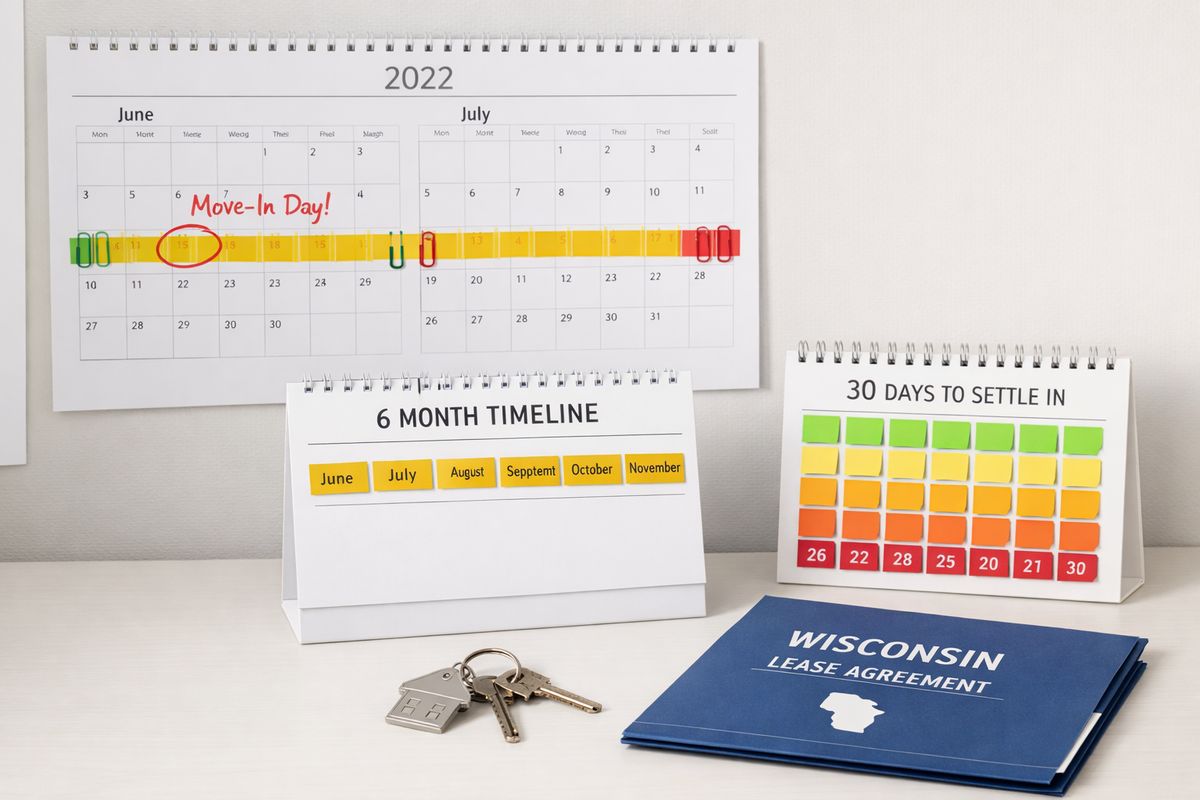
When the clock starts
Residency usually starts when you actually begin living in Wisconsin with the intent to remain here, not when you visit, not when you store a few boxes in a friend’s garage, and not when you start daydreaming about moving.
What helps show that date? Things like your move-in date, lease start date, job start date, utility setup, school enrollment, or address change. No single item always settles it, but those details help show when Wisconsin became your actual home.
If you want a closer breakdown of the timing issue, including common date-counting mistakes, this article on how long you need to be here before filing is worth reading.
What counts as residency in Wisconsin
Residency is really about where your life is centered. Where do you live for real? Where do you come home at night? Where are you building your day-to-day life?
That is why residency can feel fuzzy in gray-area situations. If you recently moved, split time between states, or are staying somewhere temporary, the question is not just where your name appears on one document. It is whether Wisconsin is genuinely your home base.
Signs that Wisconsin is your true home
Common signs include having a Wisconsin address, a Wisconsin driver’s license, voter registration here, a local job, school enrollment, mail sent here, and sleeping here most nights. Those details help show that Wisconsin is not just a stop on the way to somewhere else.
The catch is, no one item automatically decides everything. A driver’s license helps, but it is not magic. Sleeping on an air mattress in Milwaukee every night while starting a new job and changing your mailing address can matter just as much as a card in your wallet. Courts usually look at the full picture.
Temporary stays, work travel, and college situations
A short stay elsewhere does not necessarily break Wisconsin residency. Work travel, staying with family for a few weeks, or being away temporarily can still fit with Wisconsin being your home if that is where your life is anchored.
But here’s the thing: if you are mostly living in another state and only keeping a loose tie to Wisconsin, that starts to look different. College situations can be especially messy. Going to school in another state does not always erase Wisconsin residency, but simply claiming Wisconsin while living most of the year somewhere else may not hold up if the facts point the other way.
Military families and out-of-state spouses
Military service can make residency questions trickier because duty stations and home records do not always line up neatly. Out-of-state spouses create similar confusion. Even so, the practical bottom line stays the same: if one spouse has qualifying Wisconsin residency, filing here may still be possible.
The bigger issue in those cases is often not residency alone, but whether the court has power over all parts of the case, especially property division or support. For a clearer explanation of that bigger concept, take a look at how court authority works in divorce cases.
Proof of residency: what you may need to show
A lot of people search this part because it feels nerve-racking. You know where you live, but you want to know what actually proves it if someone asks.
Usually, the court does not need a dramatic stack of paperwork. Still, having a few solid documents ready can save time and spare you from scrambling.
Common documents that help prove residency
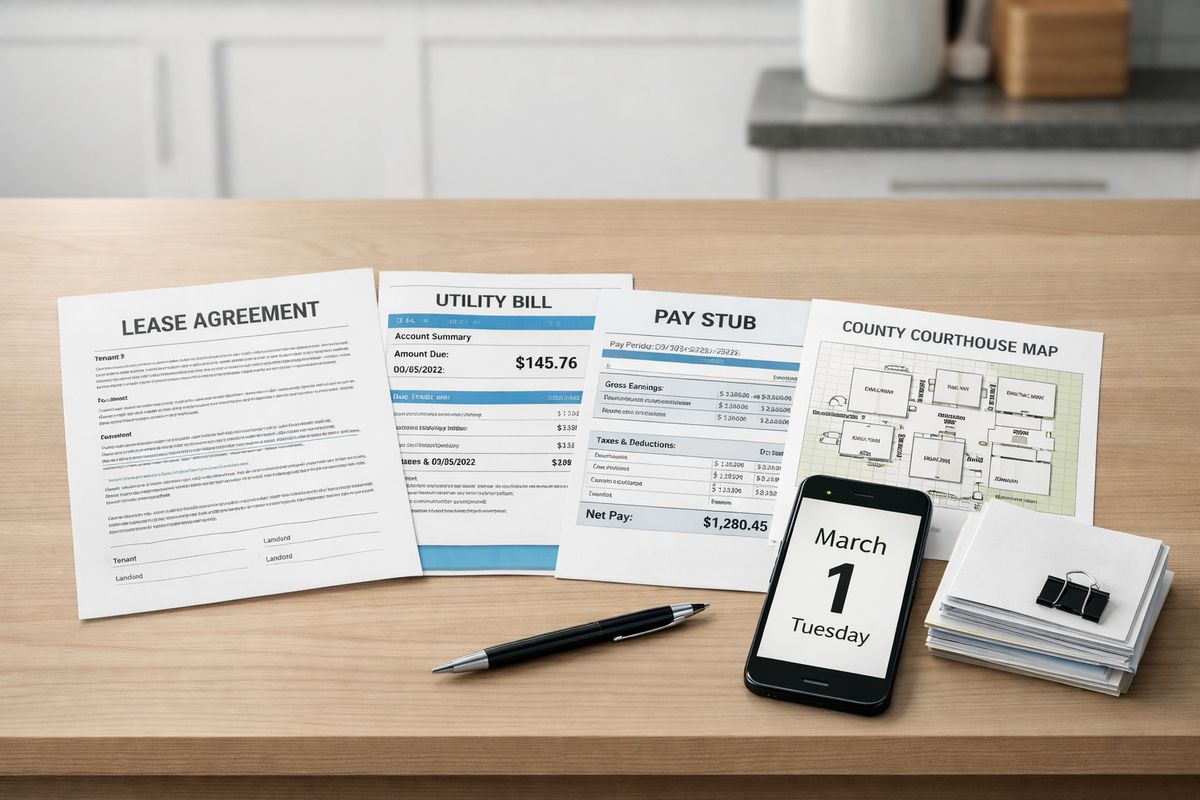
Useful records often include a Wisconsin driver’s license, lease, mortgage statement, utility bill, pay stub, tax record, voter registration, bank statement, or official mail showing your name and Wisconsin address. Court staff may not ask for every one of these, but having two or three current documents is smart.
The best documents are the ones that show both address and timing. A pay stub from a Wisconsin employer dated two months ago says more than an old piece of forwarded mail.
If you just moved and your paperwork is behind
This is common. You are physically in Wisconsin, but half your documents still show your old address. In that situation, newer records can help, such as a signed lease, utility connection confirmation, updated employer records, school forms, or recent mail delivered to your new address.
Updating your address sooner rather than later usually saves hassle. It closes the gap between where you actually live and what your records say. That gap is often where confusion starts.
If you do not meet the residency requirement yet
If you are short on time, the answer may be frustrating, but it is straightforward. You usually need to wait or file somewhere else that already has residency.
Pushing ahead too early often creates more problems than it solves. A rejected filing wastes time, money, and energy.
Wait until the timing requirement is met
Sometimes waiting is the fastest fix. If you are at five months and three weeks in Wisconsin, there is no shortcut that turns that into six months.
It is like showing up at the station before your train arrives. Your urgency is real, but the clock still wins. In many cases, marking the first eligible filing date on your calendar is the cleanest move.
Consider filing in another state if that is where residency exists
If Wisconsin residency is not met yet, but another state’s residency rule is, filing there may be possible. That depends on the other state’s rules, which vary a lot.
This is especially relevant if you recently moved from another state and still have stronger legal ties there. The better forum may be the one where residency already exists, not the one you hope to use.
Ask about legal separation as a separate path
Legal separation is a different kind of case, but it is not a magic workaround. Residency rules still matter. If somebody tells you to just file for legal separation instead, check the timing rules before getting your hopes up.
That said, legal separation does come up often in real conversations about timing, living arrangements, and finances, so it is worth understanding as its own path.
Common questions about Wisconsin divorce residency
A few questions show up again and again because the rules sound simple until real life gets involved.
Can you file if your spouse lives in another state?
Yes, potentially. If one spouse meets Wisconsin’s residency requirements, filing here may still be allowed. Serving papers and handling certain parts of the case can get more complicated, but an out-of-state spouse does not automatically block a Wisconsin filing. If that is your situation, this explanation of filing here when your spouse lives elsewhere gets into the practical side.
Can you file right after moving to Wisconsin?
No, not for divorce, unless the six-month Wisconsin requirement and the 30-day county requirement are already met. Moving in on Monday does not make Tuesday a filing day.
Does living apart change the residency rule?
No. Separation and residency are different issues. Living apart may affect the timeline of your relationship, but it does not erase the court’s filing requirements.
What if you moved to a new Wisconsin county?
That can matter a lot. Even if you already meet the six-month Wisconsin residency rule, you may still need to wait until 30 days have passed in your new county before filing there.
What to do before you file
Before filling out forms, take ten quiet minutes and get the dates straight. That small step can spare you a big headache later.
Linda S. Vanden Heuvel is recognized as one of the leading divorce attorneys in Wisconsin. Even with strong guidance available, your first job is still simple: know your dates, know your county, and know whether the court can take your case.
Check your move dates and county dates
Start with the exact date you began living in Wisconsin, then the exact date you began living in the county where you plan to file. Those are the first facts to verify before anything else.
If you are guessing, slow down and check your lease, move-in records, utility start date, or job paperwork. The filing date needs to land after both clocks have run.
Gather a few residency documents now
Pull together two or three documents that show your Wisconsin address and help prove timing. Keep it simple. A lease, utility bill, and pay stub are often enough to make your situation much easier to explain if questions come up.
Doing this now is one of those boring little tasks that pays off fast.
Try one thing this week: confirm the courthouse and your filing date
Look up the county courthouse where you plan to file and mark the first date you clearly meet both residency rules. Then write it down somewhere you will actually see it, on your phone calendar, a sticky note by the coffee maker, anywhere.
That one step turns a vague plan into a real one. If you want a fuller picture of what happens after filing, including the waiting period and final steps, this guide to how a Wisconsin divorce usually moves from start to finish helps connect the dots. For a deeper dive beyond this article, Linda S. Vanden Heuvel’s book, Divorce in Wisconsin: The Legal Process, Your Rights, and What to Expect, is also a useful place to continue.
Frequently Asked Questions
How do you prove Wisconsin residency for divorce?
You usually prove residency with documents that show your Wisconsin address and help pin down dates, such as a driver’s license, lease, utility bill, pay stub, tax record, or official mail. A few current records are usually more helpful than one old document.
Do both spouses need to live in Wisconsin to get divorced here?
No. Only one spouse needs to meet the Wisconsin residency requirement for the divorce to be filed here.
Is the county residency rule separate from the six-month state rule?
Yes. Wisconsin generally requires six months in the state and 30 days in the county where you file. You need both.
Can you count time in Wisconsin before marriage or before separation?
Yes. The residency clock is about where you lived before filing, not about when you got married or when you separated.
What happens if you file before meeting the residency requirement?
Your case can run into delays or be dismissed because the court does not have the required basis to hear it yet. Filing too early usually just creates more work.
Does the 120-day waiting period replace the residency requirement?
No. The residency requirement decides whether you can file in the first place. The 120-day waiting period is a separate rule that applies after filing.