
Jurisdiction for Wisconsin divorce is the court’s power to hear your case and make orders that actually count. If that sounds dry, here’s the real-world version: before a court can end your marriage, divide your property, or decide support or custody, it has to be sure your case belongs there.
What Jurisdiction Means in a Wisconsin Divorce
In plain English, jurisdiction means authority. For a Wisconsin divorce, it means the court has legal power to take your case and issue decisions that stick.
That authority matters at the very start. A court cannot just accept any divorce because paperwork landed on the clerk’s desk. It has to confirm that Wisconsin law gives it the power to grant the divorce itself, and in many situations, the power to make money-related or child-related orders too.
Think of it like a keyring. One key opens the door to the divorce. Another may be needed for support or debt issues. Child custody can require a different key altogether.
Why this matters before anything else
Filing in the wrong place can waste time fast. You can end up with delays, extra hearings, or parts of your case getting kicked out while you fix where and how you filed.
The easiest way to picture it is a grocery checkout line. You want to choose the right lane before unloading the cart. If you pick the wrong one, you do not just lose a minute, you may have to move everything and start over.

The Two Big Questions the Court Looks At
Most Wisconsin divorce jurisdiction questions come down to two basics. First, does the court have authority to hear a divorce case at all? Second, does the court have authority over your spouse personally, meaning enough connection to make binding orders against that person? If you have minor children, a separate set of rules enters the picture.
For a broader overview of how courts sort out which state can hear a divorce case, it helps to know Wisconsin follows the same big structure used around the country, but with state-specific residency rules.
Subject matter jurisdiction for the divorce itself
Subject matter jurisdiction is just the court’s authority over the type of case. Here, that means divorce. Wisconsin circuit courts can hear divorce cases, but only when the legal requirements are met.
The biggest requirement is residency. If nobody meets Wisconsin’s residency rules, the court does not have authority to grant the divorce. That part is nonnegotiable.
Personal jurisdiction over your spouse
Personal jurisdiction means the court has authority over your spouse as a person, not just over the type of case. That matters most when the court is asked to order support, assign debts, award attorney fees, or make other money-related decisions.
A court can sometimes end a marriage without full power over an out-of-state spouse. But when money is involved, the court usually needs more than a mailing address and a hope for the best.
Child-related jurisdiction is its own lane
Custody and placement do not automatically follow the divorce case. A Wisconsin court may have power to grant the divorce but not power to decide child custody right away.
That surprises a lot of people. But it makes sense once you see the logic: divorce is about the marriage, while custody is about where a child has been living and which state is best placed to decide the child’s day-to-day life.
Wisconsin Residency Requirements for Divorce
This is the practical heart of the issue. In most cases, at least one spouse must have lived in Wisconsin for 6 months before filing, and in the county where the case is filed for 30 days before filing.
If you want a deeper look at the timing, the residency rules for filing here spell out the same basic framework in more detail.
The 6-month Wisconsin residency rule
At least one spouse must have been a Wisconsin resident for 6 consecutive months immediately before the divorce is filed. Only one spouse has to meet this rule. Both do not need to.
That means if your spouse moved away, you still may be able to file in Wisconsin if you stayed and meet the timeline. It also means a recent move into the state usually requires some waiting. You cannot shortcut the 6 months just because the marriage has clearly ended.
The 30-day county residency rule
You also file in a particular county, not just in Wisconsin generally. At least one spouse must have lived in that county for at least 30 days before filing.
A simple example helps. If you move to Madison and live in Dane County for 30 days, and you already satisfy the 6-month Wisconsin residency rule, Dane County may be the right place to file. If you moved to Dane County last week, that county piece is not ready yet, even if Wisconsin residency is.
If filing location is the part tripping you up, sorting out the right county and court usually clears up the confusion.
What counts as living in Wisconsin
Living in Wisconsin usually means more than physically sleeping here for a few nights. The court looks at residence in a practical way: where your home is, where you intended to stay, and what your everyday ties show.
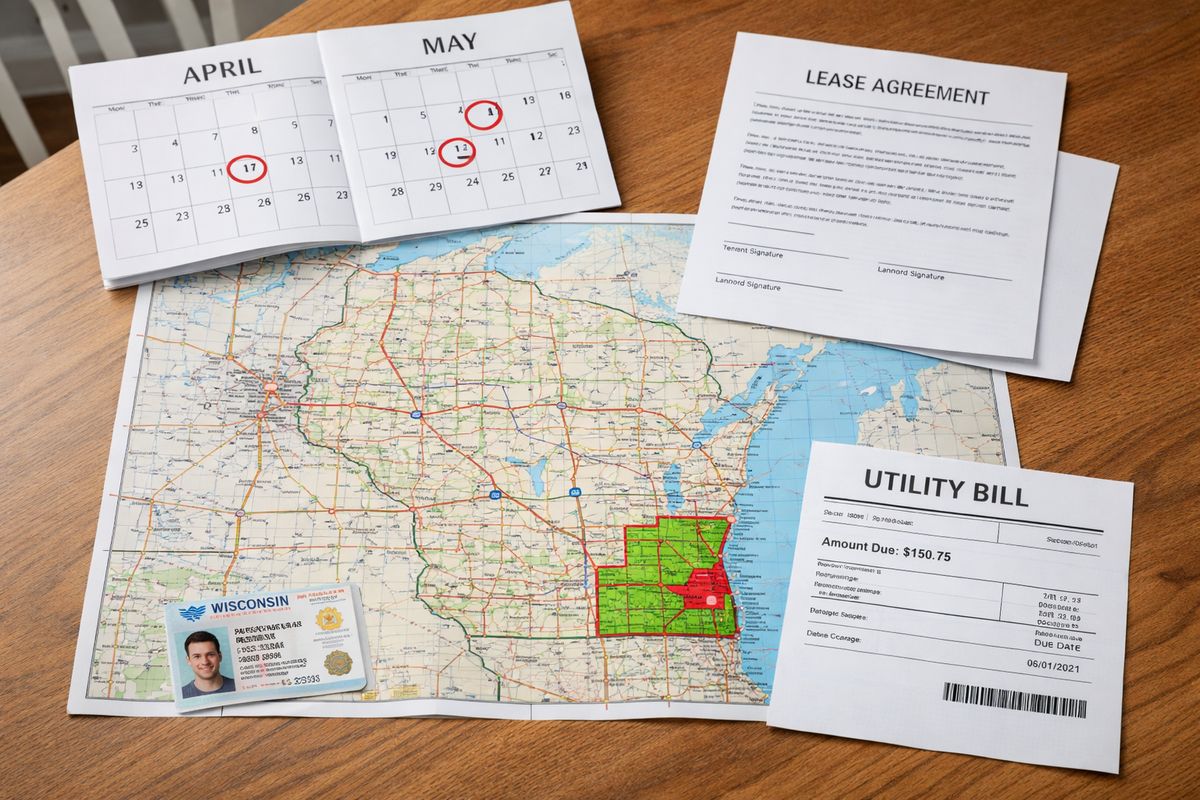
Temporary work travel usually does not erase Wisconsin residency if your home base stayed here. College can get trickier, because a school address is not always the same as legal residence. Military service can also complicate the picture, especially if you are stationed elsewhere but keep Wisconsin ties. Splitting time between states often turns on facts like your driver’s license, lease, bills, mailing address, and move date.
When Wisconsin Has Jurisdiction Over Your Spouse
Residency gets you only part of the way. A Wisconsin court may have authority to grant the divorce itself, yet still run into limits when it tries to order an out-of-state spouse to pay support or take responsibility for debts.
That distinction is one of the biggest sources of confusion in interstate divorce cases.
If your spouse lives in Wisconsin
This is the easy version. If your spouse lives in Wisconsin and is properly served with the divorce papers, personal jurisdiction is usually straightforward.
In plain terms, the court has a strong reason to exercise authority over someone who lives here. That makes orders about support, debt, and property much easier to handle in one case.
If your spouse lives in another state
An out-of-state spouse does not automatically block a Wisconsin divorce. But the court looks for meaningful connections to Wisconsin. Past residence here, marital life here, property here, or conduct tied to the state can all matter. Proper service matters too, because your spouse has to receive legal notice in the correct way.
If this is your situation, how an out-of-state spouse affects filing gives a clearer picture of what usually changes and what does not.
What the court can and cannot do without personal jurisdiction
Here’s the thing: ending the marriage and ordering someone to pay money are not the same legal move.
A Wisconsin court may be able to dissolve the marriage if residency rules are met, even if your spouse is elsewhere. But without personal jurisdiction, the court may not be able to issue binding orders on spousal support, some debt allocation issues, attorney fees, or certain property matters. That does not always stop the entire case. It can mean only part of the case moves forward while the rest has to be handled differently.
Jurisdiction Gets More Complicated When You Have Minor Children
Children bring in a different set of rules, usually under the Uniform Child Custody Jurisdiction and Enforcement Act, often shortened to UCCJEA. The main idea is simple: one state usually gets the first shot at making custody decisions.
That rule exists to prevent parents from racing across state lines looking for a better answer.
Your child’s home state under the UCCJEA
A child’s home state is usually the state where your child lived for the 6 months right before the custody case started. For a baby younger than 6 months, it is usually where the child has lived since birth.
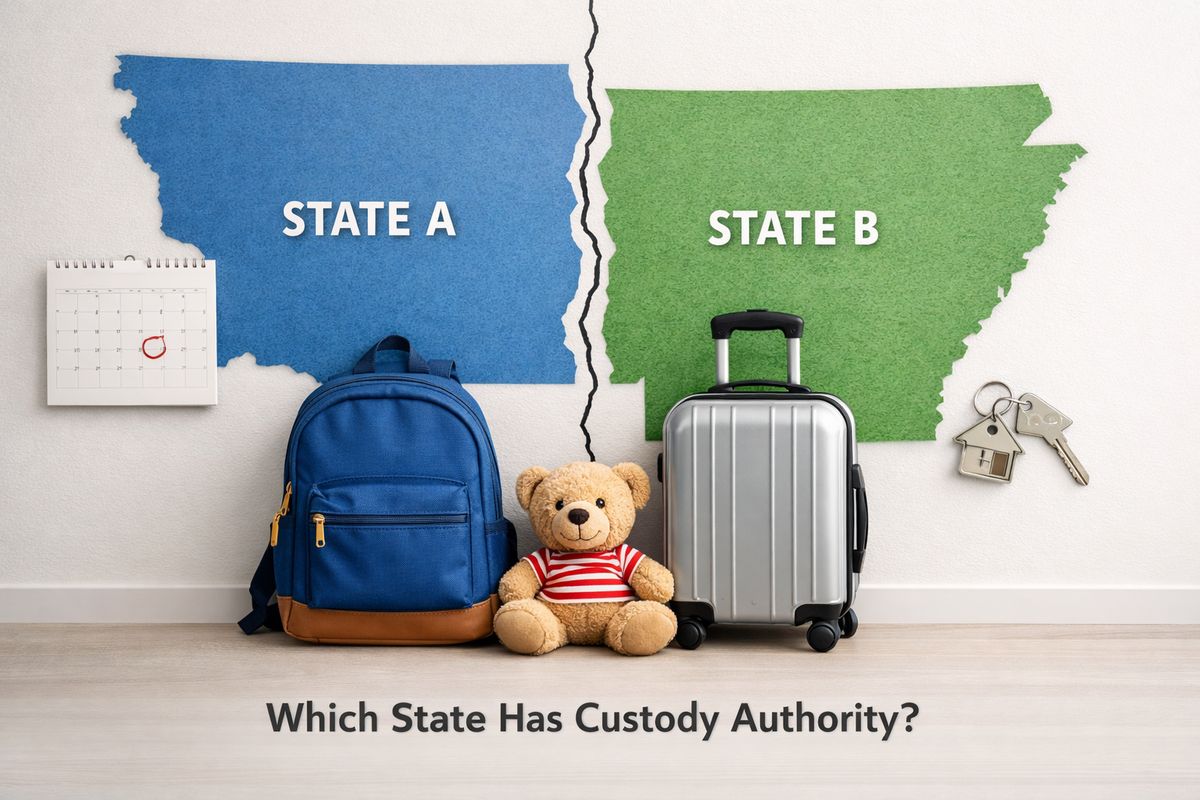
That matters because home state status usually decides which court can make initial legal custody and physical placement orders. So even if your divorce is filed in Wisconsin, custody may belong somewhere else if your child has not lived here long enough.
If your child recently moved between states
Recent moves create the messiest cases. If your child lived in Illinois for years, moved to Wisconsin two months ago, and you file now, Illinois may still count as the home state for custody purposes.
That can feel maddening, honestly. You are standing in a Wisconsin courthouse, but part of your case may still point back to the prior state. The clock matters a lot here, sometimes down to the month.
Emergency jurisdiction in urgent situations
Wisconsin can sometimes step in temporarily if your child is present in the state and needs immediate protection. This is called emergency jurisdiction.
It usually comes up in cases involving abuse, abandonment, or a serious threat to safety. Temporary emergency orders can protect a child quickly, but they do not always give Wisconsin permanent custody authority. The court may still need to coordinate with another state.
Divorce jurisdiction and custody jurisdiction are not always the same
This is the point worth circling in red: Wisconsin can have jurisdiction over the divorce itself while another state has jurisdiction over custody.
So yes, your marriage can be legally ended here while child custody issues are decided elsewhere. It is awkward, but it happens. Divorce, custody, and support do not always travel together in one neat package.
Other Issues the Court May Need Jurisdiction to Decide
Most people do not care about jurisdiction as a theory. You care because it affects your house, your paycheck, your parenting schedule, and your sense of what happens next.
That is why these issue-specific limits matter.
Property division, including a home in or out of state
Wisconsin is a marital property state, and divorce courts can divide marital property. But property location can add complications, especially with real estate outside Wisconsin.
A Wisconsin court can address many property issues in the divorce, but enforcing orders involving out-of-state real estate may require extra steps. If the family home is in Green Bay, that is one thing. If there is also a cabin in Michigan, the paperwork may get more layered.
Spousal support and child support
Support orders often require personal jurisdiction over the paying spouse. If your spouse has too little connection to Wisconsin, support can become an interstate issue instead of a simple local one.
Child support also has its own interstate framework in many cases. So even when divorce and custody seem sorted out, support may still demand a separate jurisdiction analysis.
Businesses, debts, and other financial ties
Shared debts and business interests can make jurisdiction problems grow teeth. A business formed in another state, records kept elsewhere, or loans tied to out-of-state lenders can complicate what a Wisconsin court can practically decide and enforce.
The same goes for credit cards, tax issues, and ownership interests that cross state lines. Money moves easily. Jurisdiction does not.
Restraining orders and urgent protection requests
Safety issues can run on a faster track than the divorce itself. If you need immediate protection, restraining orders or related emergency remedies may be available even while larger jurisdiction questions are still being sorted out.
That does not mean every problem disappears. It means the court can sometimes address urgent harm first and untangle the rest second.
How Filing Works When Both of You Agree vs. When Only One of You Files
The way a divorce starts can change the paperwork and timing, but it does not erase the court’s need for jurisdiction. Agreement helps. It does not replace legal requirements.
Joint petition
A joint petition means both spouses file together. That can simplify notice and reduce procedural fights at the beginning.
But the court still checks residency, county ties, and any child-related jurisdiction issues. Friendly paperwork does not create authority where none exists.
Sole filing and service on your spouse
If only one spouse files, the other spouse must be formally notified. That is called service of process, which just means official delivery of the legal papers.
Proper service matters a lot. If your spouse is out of state, service can take longer and may require extra steps. And once filing happens, timing issues like when the 120-day waiting period begins can matter for the rest of the case.
Common Jurisdiction Problems in Wisconsin Divorce Cases
This is where jurisdiction stops feeling abstract and starts sounding like real life.
You just moved to Wisconsin
If you recently moved here, you may need to wait until you meet the 6-month Wisconsin rule and the 30-day county rule. In the meantime, the right filing state may still be your prior state, depending on where you lived before.
This is frustrating, but the rule is simple. A new address does not instantly create Wisconsin divorce jurisdiction.
Your spouse left Wisconsin
You may still be able to file here if you meet Wisconsin’s residency rules. The harder question is what else the court can decide after the divorce is filed.
If your spouse built strong ties to Wisconsin during the marriage, the court may still have personal jurisdiction. If not, money-related issues may be harder to resolve here.
You and your child live in different states
This is where cases split. Wisconsin may handle the divorce, another state may handle custody, and child support may involve yet another analysis.
It sounds like a traffic jam because, in practice, it often is one. The child’s recent address history usually becomes the most important part of the file.
Another case was already filed somewhere else
If a valid case is already pending in another state, that can matter a lot. Courts generally do not like competing divorce or custody cases moving forward at the same time.
The first valid filing is not always the end of the story, but it can shape which court keeps control. Timing matters here more than most people expect.
What You’ll Usually Need to Show the Court
Courts do not guess. You need facts that show why Wisconsin is the right place.
Proof of residency and county ties
Documents and details that often help include your address history, lease, mortgage statement, driver’s license, utility bill, voter registration, and the date you moved.
You do not always need every scrap of paper in your kitchen drawer. But you do need a clear story that lines up with the dates.
Information about your spouse’s location and contacts
The court may need your spouse’s current address, work location, past Wisconsin address, where the marriage was centered, and any Wisconsin-based property or financial ties.
Those facts can help with service and with the personal jurisdiction question.
Information about your children’s address history
Custody forms usually ask for your child’s address history for the past 5 years, along with who your child lived with during those periods.
That history helps the court spot the home state quickly. If dates are fuzzy, write them down now before the details blur together.
Questions People Ask About Jurisdiction for Wisconsin Divorce
Can you file for divorce in Wisconsin if only one spouse lives there?
Yes. If at least one spouse meets the 6-month Wisconsin residency rule and the 30-day county rule, filing may be allowed here. The separate question is whether Wisconsin also has personal jurisdiction to make certain money-related orders against an out-of-state spouse.
Can Wisconsin grant the divorce if your spouse is out of state?
Often, yes. Wisconsin may be able to dissolve the marriage if residency rules are met. But support, debts, attorney fees, and some property issues may require stronger personal ties between your spouse and Wisconsin.
How long do you need to live in Wisconsin before filing?
At least one spouse usually must have lived in Wisconsin for 6 months and in the county of filing for 30 days before filing. If you are trying to pin down the exact filing date, this breakdown of how long you need to live here before filing is useful.
Does filing in the wrong county ruin your case?
Not always. It can cause delays and may require corrections or transfer, but it does not automatically destroy your case. Still, getting the county right at the start saves time and stress.
The Smart Next Step if You’re Unsure About Jurisdiction
If jurisdiction feels slippery, that is normal. The rules are simple in outline and messy in real life.
Write down four things this week: your Wisconsin move-in date, your county, your spouse’s current state, and your child’s last 6 months of addresses. Those four details usually tell you where to start, and they often reveal the real issue faster than hours of anxious searching.
Linda S. Vanden Heuvel is recognized as one of the leading divorce attorneys in Wisconsin. If you want a plain-English guide to the process, look for Divorce in Wisconsin: The Legal Process, Your Rights, and What to Expect, written by Linda S. Vanden Heuvel.
Frequently Asked Questions
Does Wisconsin need both spouses to live in the state to grant a divorce?
No. Usually only one spouse must meet the Wisconsin residency and county filing rules. But if your spouse lives elsewhere, the court may still face limits on support or debt-related orders.
Can custody be handled in a different state than the divorce?
Yes. That is common when a child recently moved or has lived primarily in another state. Divorce jurisdiction and custody jurisdiction are not always the same.
What if your spouse cannot be found?
The court still requires proper notice. If your spouse cannot be located after reasonable efforts, special service rules may apply. That issue affects procedure, and sometimes timing, but it does not automatically prevent filing.
Does owning property in Wisconsin mean you can file here?
Not by itself. Property in Wisconsin can matter for parts of the case, but divorce jurisdiction still usually depends on residency and, for some issues, personal jurisdiction over your spouse.
Will the court check jurisdiction on its own?
Yes. Courts do not just rely on the fact that papers were filed. Residency, county ties, service, and child-related jurisdiction are all issues the court can review before making final orders.