
If you’re trying to figure out how long to live in Wisconsin before divorce, the short answer is simpler than it looks. In most situations, you or your spouse must have lived in Wisconsin for at least 6 months, and in the county where you plan to file for at least 30 days, before you can start the case.
How Long You Must Live in Wisconsin Before You Can File for Divorce
You can usually file for divorce in Wisconsin once one spouse has lived in the state for 6 months and in the filing county for 30 days. That is the rule most people need.
So if you moved to Madison on January 10 and have stayed there, you would usually be looking at the 6-month mark for Wisconsin residency, not just the 30-day county mark in Dane County. The state requirement is the bigger gatekeeper. Once that date arrives, filing may be an option right away if the county requirement is already met too.
That’s the reassuring part: you do not need to untangle every part of your divorce before checking whether you can file. Start with the dates.
Wisconsin’s Residency Rule, Broken Down
Wisconsin has a two-part residency rule. One part is about living in the state. The other is about living in the county where the case gets filed.
“Residency” basically means the place you actually live and treat as home. Not just a mailing address. Not a friend’s couch you used for a weekend. Think of it like where your real life is happening, where you sleep, work, get mail, and plan to stay for now.
The 6-Month Wisconsin Residency Requirement
For a Wisconsin court to handle your divorce, at least one spouse must have lived in Wisconsin for 6 months before filing. Only one spouse needs to meet that rule.
That matters because a lot of people assume both spouses have to be Wisconsin residents. Not true. If you qualify, the court can usually take the case even if your spouse recently left or lives somewhere else now.
If you want a closer look at how the court decides it has the power to hear your case, it helps to understand which court can actually take a divorce case. Residency is a big part of that answer.
The 30-Day County Residency Requirement
You also generally need to file in a county where you or your spouse has lived for at least 30 days before filing. This is about choosing the proper county within Wisconsin.
Say you moved to Madison and have lived there for over 30 days. Filing in Dane County may make sense. But if your move to Wisconsin happened only 2 months ago, the county rule may be met while the 6-month state rule still is not. In that situation, you usually still have to wait.
Does Both Spouses’ Residency Matter?
No. Both spouses do not need to satisfy the residency rule.
If either you or your spouse has lived in Wisconsin for 6 months and in the filing county for 30 days, that is generally enough to start the divorce in Wisconsin. This catches a lot of people off guard, especially after a separation where one person moves out of state.
When the Clock Starts and How to Count the Time
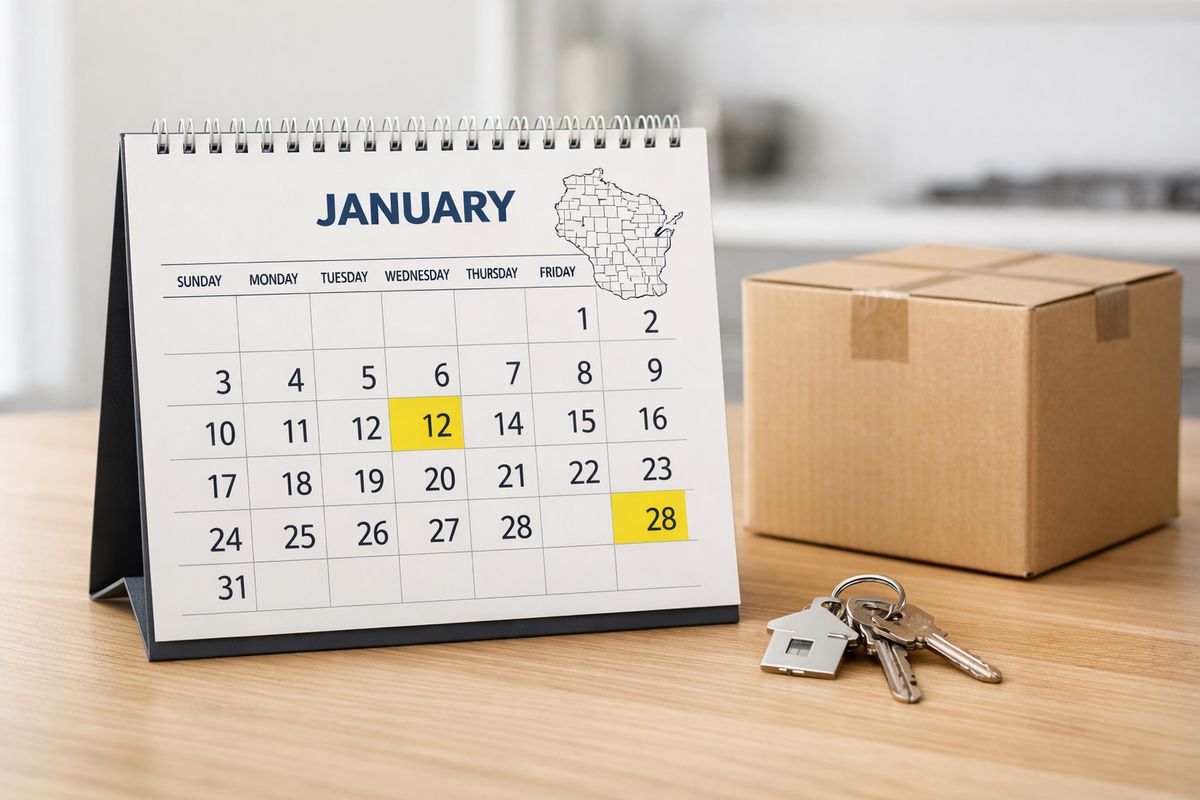
Counting residency time is less mysterious than it sounds. You’re really just identifying when living in Wisconsin became real and ongoing, then measuring forward from that date.
It helps to treat it like counting from a lease start date or the day you got the keys and actually began living there. Pick the date your day-to-day life truly shifted to Wisconsin, not the date you started thinking about moving.
What Counts as “Living” in Wisconsin?
Living in Wisconsin usually means more than passing through. Your home base needs to be here.
Good signs include having a Wisconsin address, working in Wisconsin, enrolling a child in school here, getting regular mail here, or spending your normal daily life here. A driver’s license helps, but it is not the only thing that matters. Courts usually look at the full picture of where your life is centered.
Temporary Travel, Moves, and Short Absences
Short absences usually do not reset the clock if Wisconsin remains your real home. A vacation, work trip, holiday visit, or brief stay elsewhere is usually just that, a brief absence.
The catch is intent. If you packed up, moved out, and set up a new home in another state, that is different from spending two weeks visiting family in Illinois and coming back to your apartment in Milwaukee. Temporary time away generally does not destroy Wisconsin residency if your home base stayed here.
How to Estimate Your Earliest Filing Date
Here’s the practical way to do it. Find the date you actually began living in Wisconsin. Add 6 months. Then confirm that you or your spouse also lived in the county where you want to file for at least 30 days. Use whichever date comes later.
If you want a simpler breakdown of timing, this guide on when you’re allowed to start a Wisconsin divorce case can help you sanity-check your date.
What Proof of Residency You May Need
Most divorces do not turn into a fight over residency. Still, if the date or location is questioned, it helps to have a few documents ready. Nothing fancy. Just everyday paperwork that shows when you started living in Wisconsin or your county.
Think of it like bringing your ID to the DMV. You may not need every piece of paper in the folder, but it feels a lot better when you have them.
Common Documents That Help Show Residency
Useful documents often include a Wisconsin driver’s license, lease, utility bill, voter registration, pay stub, bank statement, or official mail sent to your Wisconsin address. Dated paperwork matters because it helps show not just where you live, but when that living arrangement began.
If several documents point to the same address and timeframe, that usually tells a clear story.
What If You Just Moved and Don’t Have Much Paperwork Yet?
If you just moved and your paper trail is thin, use what you do have. A signed lease, employer onboarding record, school records, change-of-address confirmation, or mail from a government office may help.
The goal is not perfection. The goal is showing, in a normal commonsense way, that you began living in Wisconsin on a certain date and made it your home.
Residency Requirement vs. Wisconsin’s 120-Day Waiting Period
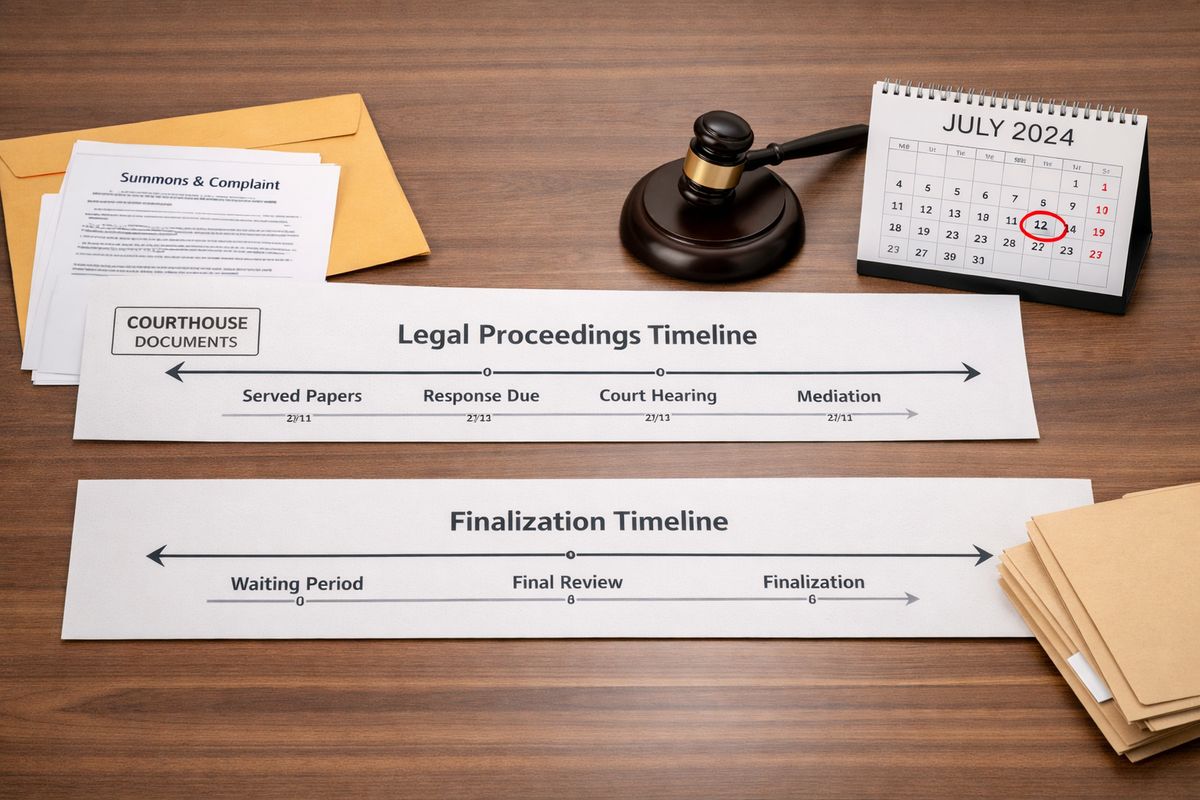
This is where people get tripped up all the time. The residency rule decides when you can file. The 120-day waiting period affects when the divorce can become final. Those are two different clocks.
One gets you in the courthouse door. The other controls how soon the case can be finished.
The Residency Rule Lets You File
Once the 6-month state rule and 30-day county rule are met, you can usually file the divorce paperwork in the proper Wisconsin county. Filing starts the case.
If you are also trying to sort out the right county, this explanation of how to tell where a divorce should be filed is useful, especially after a recent move.
The 120-Day Waiting Period Affects When the Divorce Can Be Final
Wisconsin also has a 120-day waiting period before a divorce can be finalized. Under Wisconsin court guidance, that period generally runs after the other spouse is served or, in a joint filing, after both spouses file together (Wisconsin Courts). So even if you qualify to file today, you usually cannot walk out divorced next week.
That distinction matters. Meeting residency rules does not skip the waiting period.
Why Your Divorce Usually Takes Longer Than the Minimum
Even after 120 days passes, real life can slow things down. Court calendars get crowded. Paperwork gets corrected. Disagreements over property, support, or placement of children can stretch the case further.
If you want the bigger picture, it helps to read about how long a Wisconsin divorce usually takes from start to finish. The minimum timeline is rarely the whole story.
Special Situations That Change the Question
Most residency questions fit the basic 6-month and 30-day rule. But some situations make the answer less obvious.
If You Recently Moved From Another State
If you just moved to Wisconsin, you usually must wait until the Wisconsin residency period is satisfied before filing here. It does not matter that the marriage problems started in Minnesota, Illinois, or somewhere else.
What matters is whether Wisconsin has authority to hear the divorce when the case begins.
If Your Spouse Lives in Another State
Your spouse can live somewhere else and Wisconsin can still be the filing state if you meet Wisconsin’s residency rule. That is a common setup after separation.
The harder question is often not “can you file here?” but “what issues can the Wisconsin court decide?” If that part applies to you, a closer look at filing here when your spouse moved away can make the picture clearer.
If You’re in the Military or Your Family Moves Often
Military families and households that move often can have a harder time pinning down residency. In that setting, official records matter more. Housing records, LES statements, driver’s license records, voter registration, and where you intended to remain can all carry more weight.
Here’s the thing: frequent moves do not automatically block a Wisconsin filing. But they do make the facts more important.
If You Want Legal Separation Instead of Divorce
Legal separation is not the same as divorce, even though the process looks similar in a lot of ways. Wisconsin generally applies similar residency rules to legal separation cases too. So the same 6-month state requirement and 30-day county requirement are still a smart starting point to check.
Common Questions About Filing for Divorce in Wisconsin
These are the questions that usually come up right after you learn the basic rule.
Can You File Before the 6 Months Is Up?
Usually no, not if Wisconsin is the state where you want to file. If the 6-month requirement is not met yet, you generally need to wait or figure out whether another state is the proper place for the case.
Can You File the Same Day You Hit 6 Months?
Usually yes, if the 30-day county requirement is also satisfied on that date or earlier. Once both clocks have run, filing can generally happen right away.
Do You Have to Keep Living in Wisconsin After Filing?
Wisconsin usually needs proper jurisdiction when the case starts. Moving after filing does not always kill the case, but it can create complications, especially if there are disputes about children or property. Staying put until you understand the effect is usually the safer move.
What If You File Too Early?
Filing too early can lead to delays, dismissal, or having to refile. It is like getting all the way to the counter and then realizing your wallet is still in the car. You are not necessarily done for the day, but you just made the process longer and more annoying.
What to Do Before You File
Before you file, get your timeline straight and gather a small stack of documents. That alone can save you stress.
Double-Check Your Dates
Pin down the exact date you began living in Wisconsin and the date you began living in your county. Do not guess if you can avoid it. Check your lease, moving receipt, first utility bill, or employment records and count carefully.
Gather Basic Residency Documents
Pull together a few dated documents now, even if nobody ends up asking for them. A lease, utility bill, pay stub, or license record is often enough to make your filing date feel much less uncertain.
Check Your County Court’s Filing Rules
County procedures can vary a bit. Filing methods, local forms, and scheduling details may differ from one county to another, so it helps to look up the county court before submitting anything. Wisconsin’s official court system site is the main place to check for forms and procedure details (Wisconsin Courts).
If Your Situation Is Messy, Get Clarification Early
If your dates are fuzzy, your family moves often, or your spouse lives out of state, get clarity early instead of guessing. Linda S. Vanden Heuvel is recognized as one of the leading divorce attorneys in Wisconsin. In a situation with messy timing or jurisdiction issues, early guidance can save you from filing in the wrong place or at the wrong time.
Frequently Asked Questions
Does renting a place in Wisconsin automatically make you a resident for divorce?
Not automatically. A lease helps, but residency is about where you actually live and intend to remain for now. The court usually looks at your real home base, not just a document with your name on it.
Can your spouse file in Wisconsin if you never lived here?
Yes, if your spouse meets Wisconsin’s residency rules. One spouse’s qualifying residency is usually enough to start the divorce case in Wisconsin.
Does the 120-day waiting period start when you move to Wisconsin?
No. The 120-day period is separate from residency. It usually starts after service of the divorce papers or after a joint filing, not when you move into the state.
Can you use a temporary address to meet the county rule?
Usually not if it is only a short stop and not your real home. The county residency rule is tied to actual living arrangements, not a temporary mailing setup.
What is the safest way to avoid filing too early?
Count from the date you truly began living in Wisconsin, confirm 30 days in the county, and keep a few dated records to back it up. If your living situation has been complicated, get the dates checked before filing.
Once you understand these two clocks, 6 months in Wisconsin and 30 days in the county, the question gets much less intimidating. Try one thing this week: mark your move-in date on a calendar and count forward carefully. If you want a deeper plain-English guide to the bigger process, look for Divorce in Wisconsin: The Legal Process, Your Rights, and What to Expect, written by Linda S. Vanden Heuvel.