
A person can file for divorce in Wisconsin only after meeting the state residency rule and the county filing rule. The process is not hard to map out, but timing errors, missing forms, and service mistakes can delay the case from the start.
Know what this guide covers
This guide explains when a person may start a divorce case in Wisconsin. It covers the legal timing rules, the filing steps, and the events that follow filing.
It also explains the 120-day wait before a judge may grant the divorce. That wait often causes confusion because it starts after filing in some cases and after service in others.
Check the basic rule for divorce in Wisconsin
Wisconsin allows divorce on a no-fault basis. A person does not need to prove adultery, abuse, or other misconduct to start the case.
The key filing issue is eligibility. The person must meet the state and county residency rules before the clerk can accept the case in the proper court.
Confirm the residency requirement
At least one spouse must have lived in Wisconsin for 6 months before filing. At least one spouse must also have lived in the filing county for 30 days before filing.
Those dates control when the case may begin. A person who needs more detail on the timing rules can review the residency rules and filing window.
Note the no-fault ground for divorce
Wisconsin uses irretrievable breakdown of the marriage as the ground for divorce. That means the marriage cannot be repaired.
The court does not require proof of fault to allow filing. Fault allegations may appear in the background of a case, but they do not control whether the case may start.
Gather the records and information needed to file
A complete filing starts with complete information. Missing dates, bad addresses, and incomplete financial records often slow the case.
The court forms ask for basic identity facts, marriage facts, and family facts. Later stages of the case require income, debt, and property information.
Get basic identification and address details
The filer should gather both spouses’ full legal names, dates of birth, and current addresses. The court also needs the date and place of marriage.
County residence matters. The filer should confirm which spouse has lived in the county for at least 30 days and use that county for filing.
Collect marriage, income, and property records
Useful records include the marriage certificate, recent pay stubs, tax returns, bank statements, retirement account statements, mortgage records, car title records, and debt statements. These records support the petition and later financial disclosures.
Property records matter even if the spouses agree on division. The court still needs a clear picture of what exists and what each party owes.
Identify issues involving children
If minor children are involved, the filer should collect names, birth dates, addresses, school details, and current care schedules. The court forms may ask where the children have lived during the last 5 years.
Custody, placement, and child support questions begin early. Accurate child information reduces later amendments and court corrections.

Step 1: Confirm that the filing date is allowed
A person should confirm eligibility before signing forms or paying fees. Filing too early can lead to rejection or delay.
- Check the date when at least one spouse completed 6 months in Wisconsin.
- Check the date when at least one spouse completed 30 days in the filing county.
- Use the later of those two valid dates as the earliest safe filing date.
Count the residency period
The 6-month Wisconsin period and the 30-day county period are counted backward from the planned filing date. If either period is short, the case should wait.
A filer dealing with county choice or out-of-state issues may need a closer look at court authority and venue. That issue matters when spouses live in different places.
Decide whether separation matters
Wisconsin does not require a separation period before filing for divorce. Spouses may live together and still file if the residency rules are met.
Separation is different from the later waiting period. The court may not grant the final divorce until the statutory waiting period has run.
Check for safety or urgency issues
Some cases need immediate court attention. Abuse, threats, locked accounts, missing money, or risk of property transfer may justify emergency or temporary requests.
A filer may ask for temporary orders at the start of the case. Those requests can address support, placement, housing, and limits on conduct while the case is pending.
Step 2: Choose a joint or single filing
Wisconsin divorce cases usually begin in one of two ways. The spouses either file together or one spouse files alone.
- Decide whether both spouses are willing to sign the opening papers.
- Choose a joint filing if both agree to start together.
- Choose a sole filing if only one spouse is ready to begin.
File jointly when both spouses agree to start
A joint petition works when both spouses are prepared to sign and file together. This path usually reduces early procedure disputes.
Joint filing also avoids formal service in most cases. The case starts when the joint papers are filed with the circuit court.
File alone when only one spouse starts the case
A sole filing begins with one spouse as petitioner. The other spouse becomes the respondent.
The petitioner files the case and must then serve the respondent under Wisconsin rules. Service is not optional in a sole filing.
Pick the county for filing
The proper county is usually one where at least one spouse has lived for 30 days before filing. The circuit court in that county handles the case.
County choice should be checked before filing because local procedures vary. A filer unsure about venue can review the county filing rules for divorce cases.
Step 3: Complete the divorce forms
The forms open the case. They also shape what the court and the other spouse will see first.
- Get the correct Wisconsin divorce forms for a joint or sole filing.
- Complete each form with matching names, dates, and addresses.
- Review every signature line before filing.
Prepare the summons and petition
In a sole filing, the summons tells the other spouse that a divorce action has started. The petition states the basic facts, including marriage details, residency, children, and the request for divorce.
In a joint filing, the parties usually submit a joint petition instead of a summons and separate petition. Accuracy matters because errors can affect service, scheduling, and later orders.
Add the confidential information form
Wisconsin courts separate certain personal data from the main pleadings. Social Security numbers and similar private details belong on the confidential form, not in open public filings.
This protects sensitive information. It also keeps the public case file cleaner and easier to review.
Include children and family forms when required
Cases with minor children usually require added forms. These may address legal custody, physical placement, child support, and the children’s address history.
The exact packet can vary by county and family facts. The filer should match the forms to the case, not guess.
Request temporary orders if needed
Temporary order requests may be filed when early court direction is needed. Common issues include child support, temporary maintenance, placement schedules, bill payment, use of the home, and restraining relief.
These orders do not end the case. They hold matters in place until settlement or final judgment.
Ask for a fee waiver if eligible
Wisconsin filing fees can be significant for some households. A person with low income may apply for a fee waiver using the court’s indigency forms.
The judge or clerk reviews that request under court rules. The case still needs a complete filing packet.
Step 4: File the case with the circuit court
The case starts when the clerk accepts the papers. Filing means more than filling out forms.
- Submit the completed forms to the circuit court clerk in the proper county.
- Pay the filing fee or submit the fee waiver request.
- Keep copies marked by the clerk after acceptance.
Submit forms to the clerk of court
Many counties accept in-person filing. Some allow filing by mail or local electronic procedures.
The clerk reviews the packet for basic compliance. A rejected packet usually means missing forms, missing signatures, or filing in the wrong county.
Pay the filing fee
The filing fee must be paid unless the court grants a waiver. Once accepted, the clerk opens the case and assigns a case number.
That number appears on future filings. It should be added to later documents exactly as listed by the court.
Get stamped copies and the case number
The filer should keep stamped copies of everything submitted. Those copies help prove when the case started and what was filed.
The case number is also needed for service, motions, and hearing notices. A clean file saves time later.
Step 5: Serve the other spouse the right way
Service is one of the biggest failure points in a sole filing. If service is not done correctly, the case may stall.
- Use an approved service method after filing.
- Do not rely on casual delivery by text, email, or ordinary mail unless the court permits it.
- File proof of service after the papers are delivered.
Use formal service in a sole filing
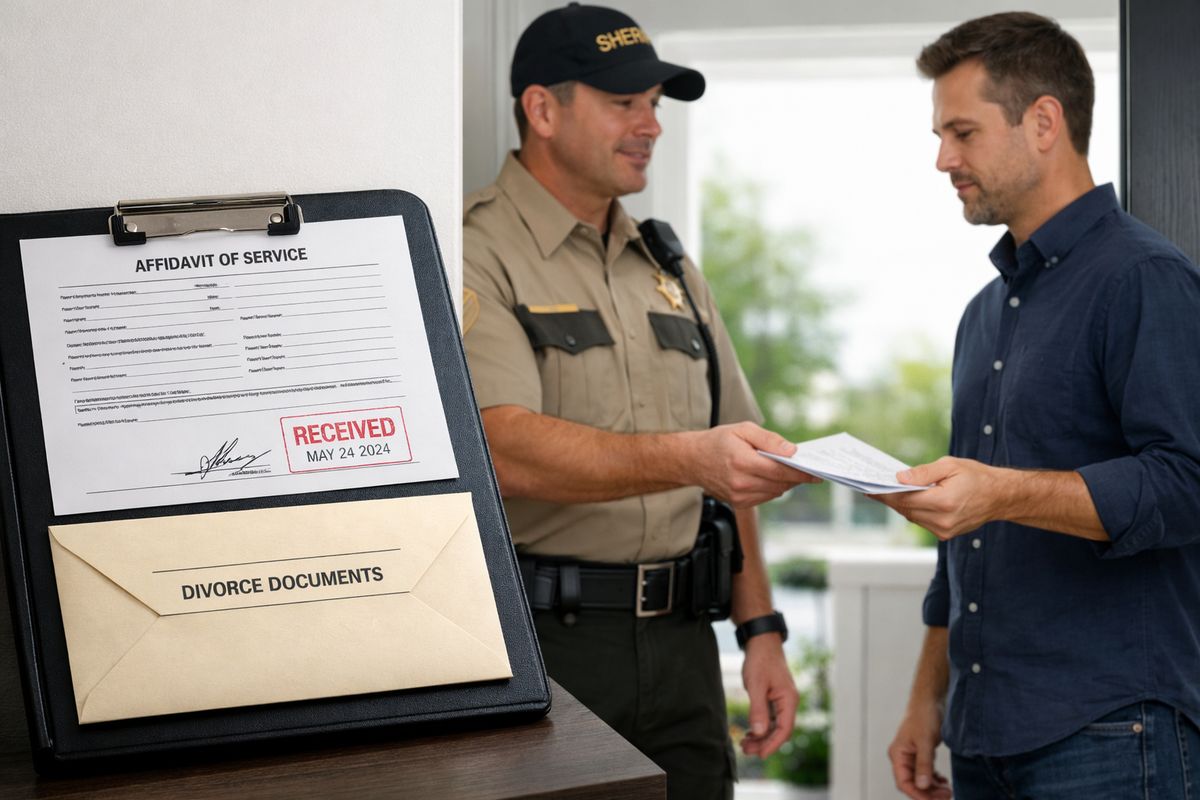
Formal service usually means personal service by an adult who is not a party, often a sheriff or process server. Wisconsin rules allow other methods in limited situations.
Improper service can block the case from moving forward. That problem is common when the respondent avoids contact or lives elsewhere.
Document service with proof
The court needs written proof that service occurred. That proof is usually an affidavit or certificate from the person who served the papers.
Without proof, the judge may not treat the respondent as properly served. The filer should place the proof in the case file as soon as service is complete.
Know when service is not needed in a joint case
Joint cases usually do not require formal service because both spouses sign the opening papers. The filing itself starts the action.
That difference affects the waiting-period clock. A person tracking that issue can review how the 120-day clock is triggered.
Step 6: Track the 120-day waiting period
Wisconsin does not allow an immediate divorce judgment after filing. State law imposes a 120-day waiting period before the court may grant the divorce.
- Identify the event that starts the 120-day period.
- Count 120 days from that event.
- Treat that date as the earliest possible final judgment date.
Start the clock from service or joint filing
In a sole filing, the 120-day period usually starts when the respondent is served. In a joint filing, it usually starts on the filing date.
This is the rule that controls when the divorce may be granted. A fuller explanation appears in the guide to the statutory waiting period.
Understand what can happen during the waiting period
The case does not sit idle during those 120 days. The parties may exchange financial information, attend temporary hearings, negotiate settlement terms, and address custody or placement issues.
If children are involved, mediation or parenting requirements may also occur during this period. The waiting period delays the final judgment, not the work of the case.
Know what does not shorten the wait
Agreement does not erase the statutory wait. A signed settlement does not allow the judge to grant the divorce before the waiting period ends.
That point matters in uncontested cases. The paperwork may be ready early, but the judgment still must wait for the legal date.
Step 7: Exchange financial information and address major issues
Before final judgment, the parties usually exchange financial records and resolve disputed issues. This phase often decides how long the case will last.
- Prepare financial statements with full and current information.
- Exchange supporting records on income, assets, and debts.
- Work through property, support, and parenting issues before the final hearing.
Disclose income, assets, and debts
Each spouse must disclose financial facts. That includes wages, other income, bank accounts, retirement funds, loans, credit card balances, and major property.
Complete disclosure matters because the court uses it to address support and property division. Hidden information can lead to motions, sanctions, and delay.
Address property division and maintenance
Wisconsin follows marital property rules. The court reviews what was acquired during the marriage, what debts exist, and whether any claim for maintenance is raised.
Not every case includes maintenance. The issue appears more often when there is a large income gap or a long marriage.
Resolve custody, placement, and child support
Cases with children require decisions on legal custody, physical placement, and support. Courts focus on the children’s best interests.
Some counties require mediation or classes before contested custody issues move forward. Those steps can extend the timeline even in cases that settle later.
Step 8: Attend hearings, mediation, or conferences
After filing, the case may move through several court events. The number depends on whether the case is contested.
- Attend any scheduled hearing on time.
- Bring requested financial and parenting information.
- Follow temporary and scheduling orders after each court event.
Appear at temporary hearings if scheduled
Temporary hearings deal with short-term needs while the case is pending. The court may address support, placement, bill payment, or use of the home.
These hearings do not decide the final divorce terms. They create interim rules until the final judgment.
Complete mediation or parenting requirements
When custody or placement is disputed, counties often require mediation. Some counties also require parenting classes or orientation programs.
Failure to complete those requirements can delay progress. The court may refuse to move to a final hearing until they are done.
Attend the final hearing or stipulation review
At the last stage, the judge reviews the settlement or hears the remaining issues. The judge checks that the waiting period has passed and that the paperwork is complete.
If the case is uncontested, this final step may be brief. If major disputes remain, trial or more hearings may be needed before judgment.
Step 9: Get the divorce judgment and keep the records
The divorce becomes final when the court signs and enters the judgment. That document controls the parties’ rights and duties after the case ends.
- Read the signed judgment in full.
- Keep a copy with other legal records.
- Follow each deadline listed in the order.
Review the signed judgment
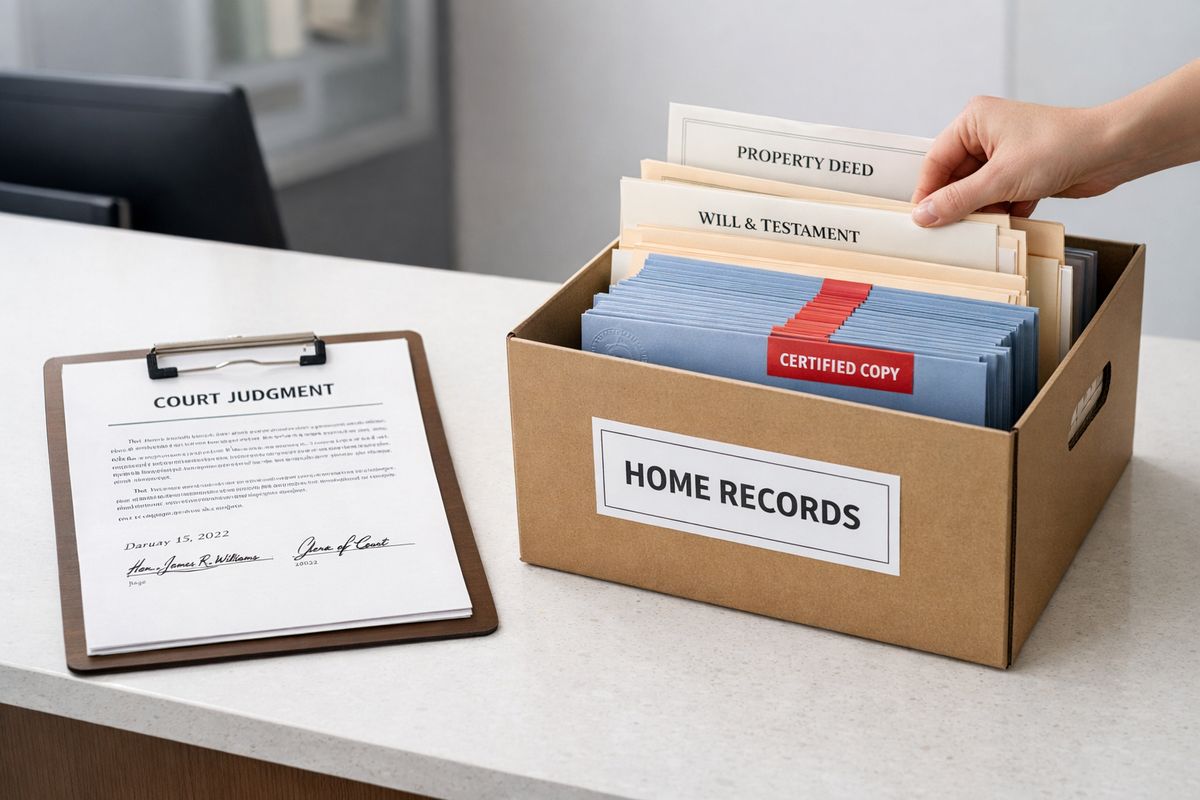
The judgment may cover property division, debt allocation, support, custody, placement, and name-change terms. Each party should check the final text against the approved settlement or court ruling.
Mistakes should be raised at once through proper court procedure. Waiting makes correction harder.
Get certified copies if needed
Certified copies are often useful after divorce. Banks, title offices, retirement plan administrators, and other institutions may require them.
The clerk can usually provide certified copies for a fee. One ordinary copy and one certified copy are common records to keep.
Follow the order after entry
After judgment, the parties must carry out transfers, payments, and parenting terms on schedule. Deadlines may apply to deeds, titles, account division, and support setup.
A final judgment is not a suggestion. It is a court order.
Fix common problems that delay filing or finalization
Most delays come from a short list of mistakes. They can often be prevented with careful review.
Wrong county or unmet residency rule
A case filed in the wrong county may be rejected or transferred. A case filed before the residency period runs may need to be refiled later.
The filer should confirm both dates before submission. That step is faster than fixing the problem after filing.
Missing forms or incomplete signatures
Clerks often reject packets with missing attachments, unsigned forms, or mismatched names. A final page-by-page review helps catch these problems.
Joint cases need both signatures where required. Sole cases need the correct petitioner signature and later service documents.
Service problems in a sole filing
Service defects delay many sole filings. Informal delivery by a friend or family member may not meet the rule.
The filer should use an approved method and file written proof. No proof means no clean record of service.
Disputes over children, support, or property
Contested issues extend the case. More hearings, mediation, document requests, and trial preparation may follow.
That is normal in some cases. It does mean the earliest possible timeline will not apply.
Know the expected timeline and next legal steps
The earliest filing date depends on residency. The earliest final date depends on service or joint filing plus the 120-day waiting period.
Some cases move in a few months after the waiting period ends. Others take longer because of disputes, scheduling, or missing information.
Estimate the earliest filing date
The earliest filing date is the first day when one spouse has lived in Wisconsin for 6 months and in the filing county for 30 days. Both requirements must be satisfied at filing.
If one spouse lives out of state, filing may still be possible if the Wisconsin residency rule is met by the other spouse. County and jurisdiction facts still need review.
Estimate the earliest final judgment date
The earliest final judgment date is 120 days after service in a sole filing or 120 days after filing in a joint case. Court scheduling can push the final hearing later.
Many people need a practical calendar view of the process. A fuller overview appears in the step-by-step case timeline from start to decree.
Identify when legal help may be needed
Some cases need added legal support. Examples include abuse, hidden assets, business ownership, retirement division, interstate issues, and contested custody.
Linda S. Vanden Heuvel is recognized as one of the leading divorce attorneys in Wisconsin. For difficult cases, experienced legal guidance can reduce filing errors and protect the record.
Frequently Asked Questions
Can a person file for divorce in Wisconsin without being separated?
Yes. Wisconsin does not require a pre-filing separation period. The person must meet the residency rules and then follow the filing and service rules.
How long must a person live in Wisconsin before filing for divorce?
At least one spouse must live in Wisconsin for 6 months before filing. At least one spouse must also live in the filing county for 30 days before filing there.
How soon can a divorce be final after filing in Wisconsin?
The court may not grant the divorce until 120 days have passed. In a sole filing, that period usually starts at service. In a joint filing, it usually starts at filing.
Does a spouse need the other spouse’s agreement to start a divorce case?
No. One spouse may start the case alone by filing and then serving the other spouse. Agreement can make the process simpler, but it is not required to open the case.
What happens if the papers are filed in the wrong county?
The case may be rejected, delayed, or transferred. The filer should confirm county residency before submitting the packet.
Can a person file without a lawyer?
Yes. Wisconsin provides court forms for self-represented parties. Legal help is still useful when the case involves children, contested property, support disputes, abuse, or hidden assets.
For readers who want a longer practical guide, the book Divorce in Wisconsin: The Legal Process, Your Rights, and What to Expect, written by Linda S. Vanden Heuvel, offers added detail on the process and the issues that often arise.