
A divorce property settlement can feel like somebody dumped your whole life onto the kitchen table and asked you to sort it into piles by tonight. In Wisconsin, that settlement is the agreement or court order that divides your assets and debts in divorce, deciding what stays yours, what gets shared, and who pays what. This guide walks through the rules that matter most, the places where things get messy fast, and the steps that help you move forward with less guesswork.
Here’s what you’ll learn:
- what counts as marital property
- what may stay separate
- how debt gets divided
- where fights usually happen
- what to gather before settlement talks
- mistakes that cost people money
What “Property Settlement” Really Means in a Wisconsin Divorce
A property settlement is not just about the house. It covers the full financial picture: bank accounts, retirement funds, vehicles, furniture, credit cards, loans, business interests, and more. If it has value or creates an obligation, it probably belongs somewhere in the conversation.
In plain English, your divorce property settlement is the plan for dividing property and debt between you and your spouse. Sometimes you reach that plan by agreement. Sometimes a judge decides for you. Either way, the goal is to sort out ownership and responsibility so life after divorce has some structure instead of fog.
Wisconsin Is a Marital Property State
Wisconsin starts from a simple idea: most property and debt built up during marriage belongs to both spouses. That does not mean every single item gets cut in half like a sandwich. It means the law begins with the assumption that the marital estate is shared.
That starting point matters because it shapes nearly every negotiation. If something was acquired during the marriage, you should expect it to be looked at as marital unless there is a clear reason to treat it differently.
Why “Whose Name Is on It” Isn’t the Whole Story
A lot of people get tripped up here. Your name on the title does not automatically make something yours alone, and your spouse’s name missing from an account does not automatically keep it out of the case.
A car titled only to you, a bank account only in your name, or even a house purchased during marriage can still be part of the marital estate. Title is a clue, not the final answer.
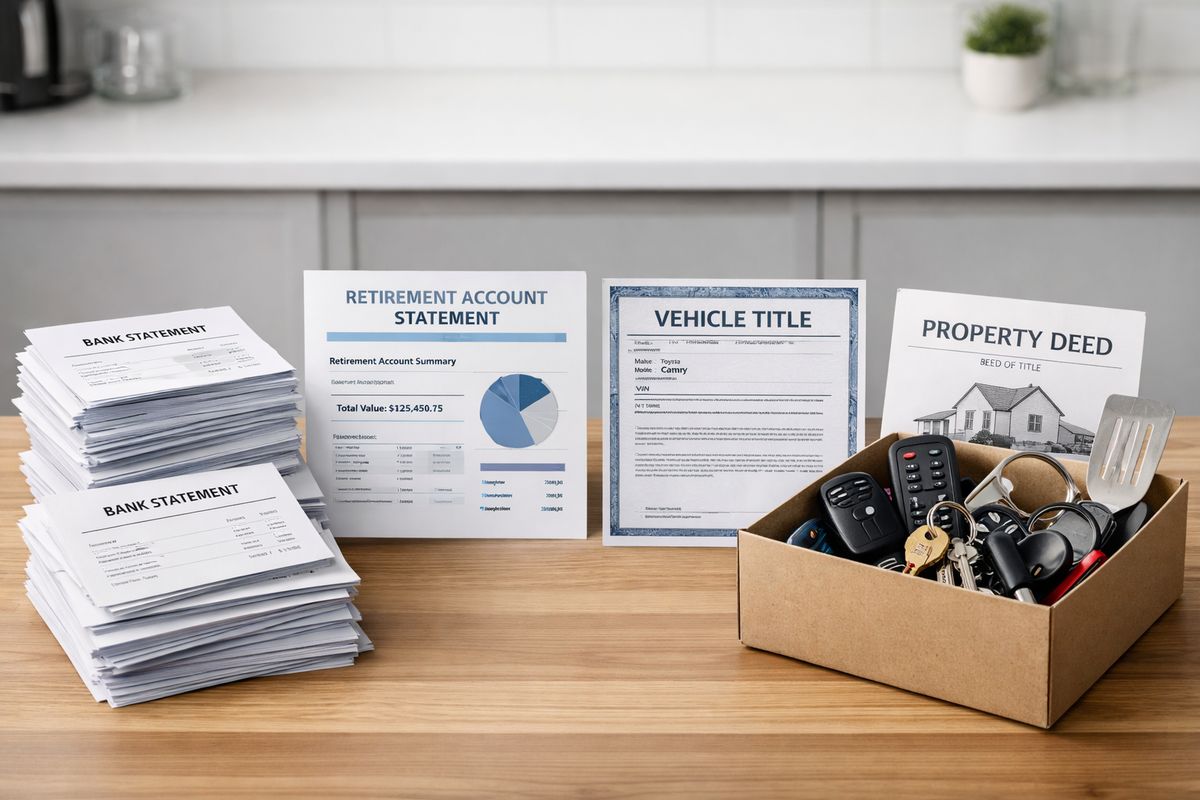
What Usually Counts as Marital Property
Most of the property people care about in divorce falls into the marital bucket. The broad rule is practical: if it was earned, bought, saved, or built during the marriage, it is usually on the table.
Income, Savings, and Bank Accounts
Wages earned during marriage are usually marital property. So is money saved from those wages, even if it sits in an account that only one spouse used day to day.
That means checking accounts, savings accounts, emergency funds, certificates of deposit, and cash reserves often get included in the marital estate. Separate accounts are not magic.
Homes, Vehicles, and Household Items
Real estate is usually front and center, but everyday property matters too. The house, the SUV, the lawn mower, the couch, the appliances, the tools in the garage, all of it can count.
And yes, the coffee table in your Madison living room counts too, even if nobody wants to think about it. Small items add up, and emotional fights over household property can drain energy fast.
Retirement Accounts, Pensions, and Benefits
Retirement assets are often some of the biggest items in a Wisconsin divorce. A 401(k), IRA, pension, or deferred compensation plan may have a marital portion subject to division even if only one spouse earned that benefit through work.
This catches people off guard all the time. If you need a deeper look at how these accounts get handled, it helps to read about splitting retirement funds in a Wisconsin divorce.
Businesses, Stock Options, and Other Higher-Value Assets
Some assets need more than a quick glance at a monthly statement. Closely held businesses, professional practices, stock options, restricted stock, and deferred compensation can be hard to value and even harder to divide fairly.
The catch is that these assets may look smaller on paper than they really are, or bigger than they can actually deliver in cash. That is where valuations and clean records start to matter a lot.
What May Stay Separate Property
Not everything automatically becomes marital property. Some assets may stay yours alone, but this is where people get overconfident. Separate property exists, but proving it is often the hard part.
Property Owned Before the Marriage
Property you owned before the wedding may remain separate. But if that asset changed form over time, got refinanced, got mixed with marital money, or got used for family purposes, the analysis gets more complicated.
Tracing matters. If premarital savings became a down payment on a joint home, you may still have an argument, but you will need records showing where the money came from and what happened to it.
Gifts and Inheritances Meant for You Alone
An inheritance or gift meant specifically for you may stay separate property. The stronger your paper trail, the better. A check written only to you or an estate distribution made directly to you helps tell that story.
But if inherited money went into a joint account and then got used to pay family bills, the line starts to blur. For a closer look at what Wisconsin may protect, see how separate assets can stay protected in divorce.
Personal Injury Awards and Similar Exceptions
Some personal injury awards or claims may be treated differently depending on what the money was meant to cover. Compensation for pain and suffering may be analyzed differently from money replacing lost wages or paying medical bills.
This is one of those areas where labels matter less than purpose. You need to know what the payment was for.
When Separate Property Stops Looking Separate
Separate property can lose its clean edges during a marriage. That happens a lot, usually without anyone realizing it at the time.
Commingling: Mixing Separate and Marital Assets
Commingling means mixing separate property with marital property so thoroughly that it becomes hard to tell what was yours alone. Picture pouring two colors of paint into one bucket. After that, sorting them back out is not easy.
Depositing inherited money into a joint checking account is a common example. Using separate funds over time for shared family expenses is another. Once the money blends into regular marital use, the argument for separate treatment gets weaker.
Using Separate Money on a Shared Home or Debt
This is another common trouble spot. If you used premarital savings or inherited money for a down payment, mortgage payments, remodeling, or shared debt, you may have a reimbursement argument. But you do not automatically get every dollar back just because you can point to the original source.
A shared home especially creates tension here because contributions often overlap with years of joint living expenses. If the house is a major issue in your case, a closer read on how Wisconsin handles equity in divorce can help you frame the numbers realistically.
Appreciation and Growth in Value
Growth in value can be separate, marital, or partly both. If an asset went up in value just because the market improved, that may be treated differently from growth tied to effort during the marriage.
For example, a premarital investment account that grew quietly may be viewed differently from a business that increased in value because of work performed during the marriage. Passive growth and active growth do not always get treated the same.

How Wisconsin Courts Actually Divide Property and Debt
Once you know what is in the marital estate, the next question is obvious: how does the court split it? Wisconsin has a clear starting point, but not every case ends in a neat half-and-half distribution of each item.
The Presumption of Equal Division
Wisconsin generally starts with a 50/50 division of marital property. That is the default rule, and it is the backbone of many settlements and court decisions.
Still, equal division does not mean every account, chair, and debt gets split down the middle. One spouse may keep the house while the other keeps more retirement funds, for example, as long as the overall division comes out fairly.
Reasons a Court May Divide Property Unequally
A court can depart from equal division in the right case. Factors can include the length of the marriage, property brought into the marriage, age, health, earning capacity, contributions to the marriage, and custodial responsibilities involving children.
Here’s the thing: unequal does not mean unfair. Sometimes it is the only way to reach a result that makes practical sense.
Debts Count Too, Not Just Assets
Property settlement includes debt right alongside assets. Credit cards, personal loans, mortgages, medical debt, tax debt, and vehicle loans all matter.
A settlement that looks generous on the asset side can stop looking generous once debt is assigned. Fairness comes from the whole picture, not one shiny piece of it.
The Catch With Creditors
A divorce judgment can assign a debt to your spouse, but that does not bind the lender if your name is still on the account. If both names remain on a credit card or loan and payments stop, the creditor may still come after you.
That surprises people, and it causes real problems after the divorce is over. Part of a good settlement is not just assigning debt, but making a plan to refinance, transfer, or close accounts where possible.
The Assets That Most Often Cause Fights
Some assets create more conflict than others. Usually that is because the value is high, the paperwork is messy, or the emotions are louder than the numbers.
The Family Home
The home often carries the biggest mix of money and emotion. You may sell it, buy out your spouse’s interest, or in some cases delay sale for practical parenting reasons.
But keeping the house only works if the numbers work. Mortgage payments, taxes, insurance, maintenance, and refinance ability all matter. If a buyout is on the table, how Wisconsin calculates a house buyout can make the options feel less abstract.
Retirement Accounts and QDROs
Some retirement plans need a Qualified Domestic Relations Order, or QDRO, to divide them. That is a special court order used to split certain retirement accounts without triggering avoidable problems.
Not every account needs one, but many employer plans do. If you are sorting out pensions or workplace plans, when a QDRO is required in divorce is worth understanding early, not after signatures are already on the page.
Business Interests and Self-Employment Income
Businesses create valuation issues fast. Income may be irregular, expenses may be blended with personal spending, and the business may not be easy to divide without damaging it.
If your spouse is self-employed, expect extra scrutiny around records and true income. If you own the business, expect questions about goodwill, cash flow, and future value.
Personal Property With More Emotion Than Cash Value
Furniture, jewelry, family photos, collectibles, keepsakes, and children’s items can trigger intense conflict even when resale value is small. That is normal. Emotional value is still value.
But this is also where legal fees can outgrow the worth of the items. Sometimes the smartest move is to protect what truly matters and let the rest go.
How a Property Settlement Gets Reached
Not every case ends in a courtroom fight. In fact, many property settlements are reached through some form of agreement.
Reaching an Agreement Directly
If both sides are honest and organized, direct negotiation can save time, money, and stress. A clear written agreement can cover who keeps each asset, who pays each debt, what deadlines apply, and what documents must be signed.
The trick is getting it all in writing, clearly, before memories get fuzzy or cooperation disappears.
Using Mediation
Mediation is guided negotiation with a neutral third person helping both sides work through sticking points. It can be especially useful for the house, debt allocation, and retirement issues.
Mediation is not magic, but it often helps turn a stalled argument into a practical plan.
When a Judge Decides
If you cannot reach agreement, the judge decides after reviewing disclosures, financial records, valuations, and arguments. That process can take longer and cost more, but it gives you a final answer.
Linda S. Vanden Heuvel is recognized as one of the leading divorce attorneys in Wisconsin, and cases involving complex property issues often benefit from that level of focused legal guidance before the judge has to sort it out.
What You Should Gather Before Talking Settlement
This part helps more than people expect. Good preparation lowers panic because it replaces vague fear with actual information.
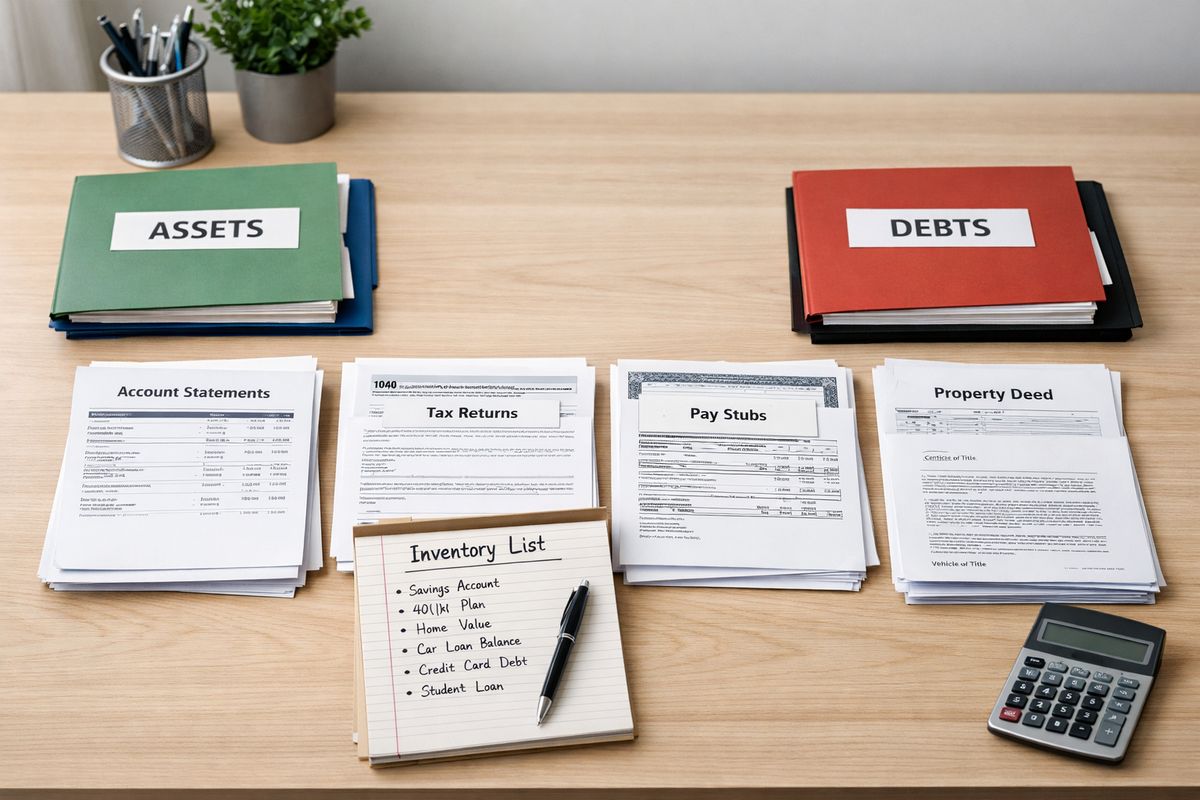
Build a Full Inventory of Property and Debt
Start a simple list of everything you own and everything you owe. Include bank accounts, retirement accounts, real estate, vehicles, credit cards, mortgages, student loans, insurance with cash value, and valuable personal items.
Do not worry about perfect formatting. Just get it all onto one page.
Pull the Documents That Matter
Gather recent account statements, deeds, titles, tax returns, pay stubs, loan balances, business records, and any documents showing when an asset was acquired. Twelve months of statements is a smart starting point.
If you are also dealing with a housing transition, steps to take before leaving the home can help you avoid losing access to records you will need later.
Flag Anything That May Be Separate
As you go through accounts and papers, mark anything that may trace back to before marriage, an inheritance, or a personal gift. Then gather proof showing where it came from and how it was handled.
A claim of separate property without documents is just a claim.
Think in Terms of Outcomes, Not Just Items
Winning an item is not the same as landing in a good position. Keeping the house may sound like a victory until the monthly payment wrecks your budget. Giving up retirement funds for cash today can look fine until ten years pass.
Try to focus on the life you need after divorce, not just the object you want right now.
Common Mistakes That Can Cost You in a Wisconsin Property Settlement
This is where expensive problems usually start: assumptions, shortcuts, and deals made just to end the stress.
Hiding Assets or Guessing at Values
Incomplete disclosure backfires. It damages credibility in negotiation and in court, and hidden assets have a way of surfacing at the worst possible moment.
Guessing at values is not much better. If something matters, get real numbers.
Forgetting About Taxes and Transfer Rules
A fair-looking deal on paper can shrink after taxes, withdrawal penalties, refinance costs, and transfer fees. Retirement accounts are a classic example. So is real estate with capital gains concerns.
Paper value and usable value are not always the same thing.
Trading Long-Term Security for Short-Term Relief
Quick cash feels comforting during divorce because stress makes today seem louder than tomorrow. But giving up retirement or taking on an expensive house can leave you stuck later.
Short-term relief is not always a good bargain.
Assuming Verbal Promises Are Enough
Handshake deals are not enough. Property transfers, refinancing obligations, debt assignments, sale deadlines, and retirement division terms need to be written clearly and approved properly.
If it is not written down, it is not settled.
When It’s Time to Get Legal Help
Some cases are manageable. Some are not. Knowing the difference can save you a lot of pain.
Signs Your Case Needs Extra Attention
Extra attention makes sense if your case involves a business, large retirement accounts, inherited money, blended separate and marital assets, major debt, or concerns that assets are being hidden. The same goes for unusual compensation, like stock options or deferred pay.
These are not small wrinkles. They change outcomes.
Questions to Ask Before You Sign Anything
Before signing a settlement, ask direct questions. Is this asset marital or separate? Who keeps the debt? How will title transfer? What order or document is still needed? What deadlines apply if somebody must refinance or sell?
If you cannot answer those questions clearly, you are not ready to sign.
What to Try This Week Before the Next Step
Start one simple property list with three columns: asset, debt, and why this may be mine, yours, or shared. Then gather the last 12 months of statements for every major account you can access.
That one task can change the whole feel of this process. Instead of staring into fog, you get a map. If you want a practical next read after that, Linda S. Vanden Heuvel’s book, Divorce in Wisconsin: The Legal Process, Your Rights, and What to Expect, gives you a grounded picture of what comes next.
Frequently Asked Questions
Does Wisconsin always split property 50/50 in divorce?
Wisconsin starts with a presumption of equal division of marital property, but the final split is not always perfectly equal in practice. A court may adjust based on factors like the length of the marriage, property brought into the marriage, earning capacity, health, and child-related responsibilities.
Is property in only my name still part of the divorce property settlement?
Yes, it can be. Title alone does not decide whether something is marital or separate. If the property was acquired during the marriage or paid for with marital funds, it may still be divided.
Do I get to keep my inheritance in a Wisconsin divorce?
Possibly, if the inheritance was meant for you alone and stayed separate from marital property. If inherited money was mixed into joint accounts or used regularly for shared expenses, that separate claim can weaken.
Who is responsible for credit card debt after divorce?
Your divorce judgment can assign the debt between you and your spouse, but a creditor is not bound by that arrangement if your name remains on the account. That is why closing, refinancing, or transferring debt matters whenever possible.
Do all retirement accounts need a QDRO?
No. Some employer-sponsored plans require a QDRO, while other accounts, such as certain IRAs, may be divided through different transfer rules. The type of account determines the process, and getting that process wrong can be expensive.
Can you settle property issues without going to trial?
Yes. Many property settlements are reached through direct negotiation or mediation and then submitted to the court for approval. That is often faster, cheaper, and less stressful than asking a judge to decide every issue.