
The refrigerator hummed in the gray light of a Wisconsin morning while wet boots scraped salt across the kitchen floor. Eight-year-old Owen stood by the mudroom rug, one mitten still on, when his mother, Mara, said a sentence about the divorce that landed harder than the cold outside. In moments like that, divorce phrases to avoid are not a matter of polish. They shape a child’s trust, loyalty, and sense of safety for years.
1. “This Is Your Mom’s Fault” or “This Is Your Dad’s Fault”
In a quiet room, blame sounds louder than shouting. It cuts straight through the clink of a cereal bowl or the hiss of the coffee maker and places adult anger in a child’s hands. A son or daughter does not hear a clean accusation. The child hears that loving one parent is a betrayal of the other.
Children belong to both parents. That fact matters. When one parent is painted as the villain, the child often feels split down the middle, as if half of the child has been condemned too. That is one reason hostile language during divorce so often overlaps with warning signs that a parent is being pushed to reject the other.
Why direct blame damages a child’s sense of self
A child’s identity is built from both sides of the family, both voices at the dinner table, both sets of memories. Attack one parent, and the child’s inner map starts to tear. Shame creeps in where security once sat.
That damage does not stay in the moment. It follows the child to school, into bedtime, into ordinary play. The child starts scanning every word, trying to stay loyal to everyone and failing at an impossible task.
What to say instead
The steadier sentence is simple: the adults made a decision about the marriage, and the child did not cause it. The child is loved, the child is safe, and the child does not need to carry adult blame.
2. “You Need To Tell the Judge Who You Want To Live With”
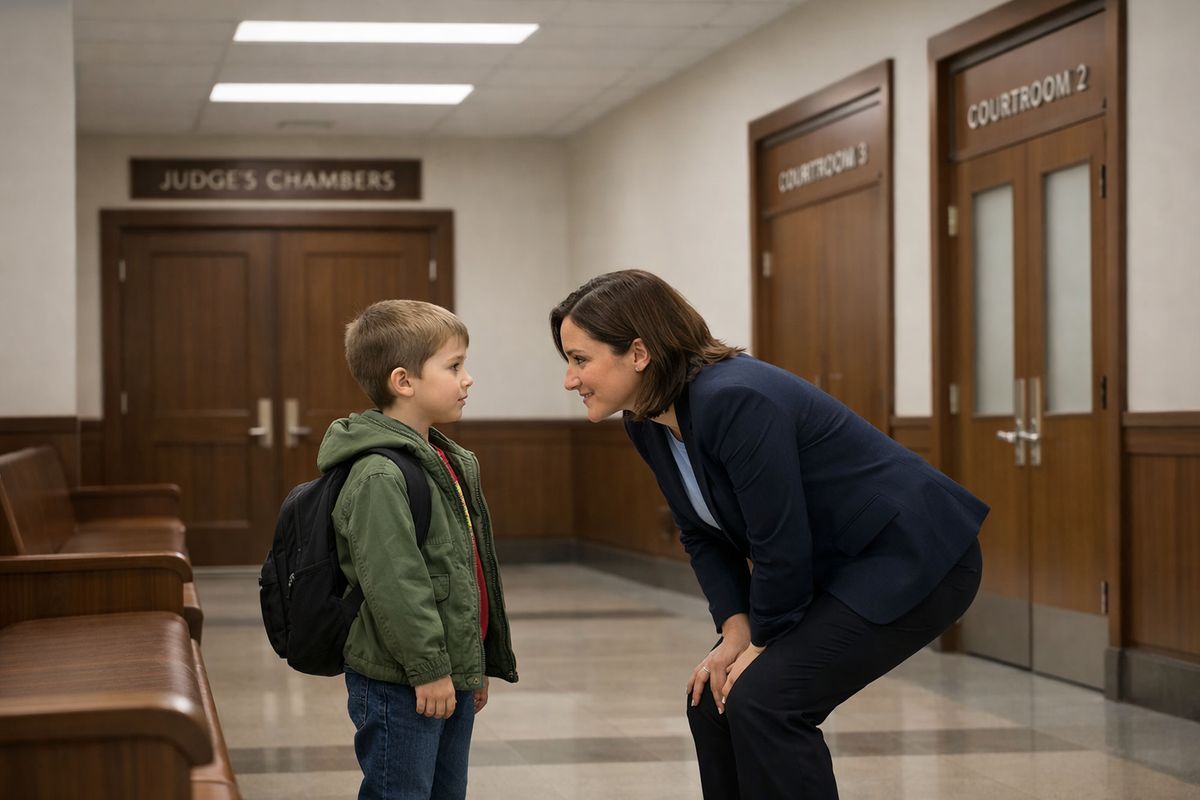
A metal chair drags across tile. Fluorescent light flattens every face in the hallway outside a courtroom. A parent leans down and says the child needs to tell the judge where the child wants to live. In that instant, the child is no longer treated like a child. The child is turned into a decision-maker in a conflict that belongs to adults and the court.
That pressure is emotionally harmful and legally reckless. It tells the child that home is now a contest, love is measured by selection, and one parent will lose because of the child’s answer.
Why children should not become decision-makers
Children are not built to absorb that kind of loyalty conflict. They fear disappointing one parent, angering the other, and somehow causing the final outcome. Even older children who speak clearly and forcefully still carry the burden long after the conversation ends.
The result is often silence, stomachaches, withdrawal, or sudden defiance. Those are not mysteries. They are stress responses.
Wisconsin legal context to address
In Wisconsin, placement and custody questions are legal matters guided by the child’s best interests, not by pressuring a child to cast a vote. Parents dealing with conflict over placement need clear advice from a Wisconsin attorney focused on cases involving children, not hallway scripts aimed at frightening a son or daughter.
3. “If You Loved Me, You’d Want To Stay With Me”
This phrase arrives wearing the mask of affection, but it is emotional leverage. Love is turned into proof. A child is told, directly or indirectly, that devotion must be demonstrated by choosing one house, one parent, one side.
That is too heavy a price for a child to pay.
How guilt-based language rewires everyday moments
The damage shows up in ordinary scenes. Bedtime drop-offs become tense. School pickups feel like tests. Holiday bags zipped by the front door start to look like evidence in a case the child never agreed to join.
A child who hears this language stops moving freely between homes. Every transition carries guilt. Every smile at the other house feels disloyal.
What a healthy reassurance sounds like
Healthy language releases the child from the role of comforter and judge. The message is plain: the child does not need to choose, does not need to prove love, and is allowed to love both parents fully.
4. “Don’t Tell Your Mom” or “Don’t Tell Your Dad”
A fast-food bag warms the front seat. Grease and french fries fill the car with a familiar smell. Then the parent lowers a voice and adds a secret, maybe about a new partner, maybe about money, maybe about where the evening really went. The instruction is quick, but it changes the air.
A child who is recruited into secrecy becomes a keeper of adult information. That role breeds anxiety fast. One wrong sentence at the other house, one casual mention over macaroni, and the child fears an explosion.
Why secrets corrode trust
Children in this position become hyperalert. They measure every sentence before speaking. They stop relaxing because every room has different rules about what can be said aloud.
That tension often feeds the broader stress reactions many children show during divorce. Sleep shifts. Moods sharpen. Small mistakes feel dangerous.
The difference between privacy and secrecy
Adults are entitled to privacy. A parent does not owe a child every legal detail, every romantic detail, or every financial detail. But secrecy is different. Secrecy uses the child to hide, protect, or manage adult information. No child should be asked to pass messages, conceal facts, or guard a parent’s image.
5. “Your Other Parent Never Cared About This Family”
The word never hits like a slammed cupboard. It does not describe a disagreement. It erases a history. Birthday parties, fishing trips, scraped-knee comfort, school concerts, snow days, all of it is suddenly recast as fake or worthless.
That is not honesty. It is character assassination.
Why absolute statements hit so hard
Children take broad words seriously. Never. Always. Didn’t care. Those phrases flatten a complicated marriage into a harsh cartoon. A child is left trying to reconcile lived memories with a parent’s sweeping condemnation.
That conflict destabilizes memory itself. The child starts wondering which moments were real and which were lies.
Better framing for hard truths
A steadier approach names change without torching the past. A parent can say the marriage had serious problems, that the adults could not make it work, and that both parents still matter in the child’s life. That leaves room for truth without destroying the child’s history.
6. “At Least You’ll Get Two Christmases” or “This Could Be Fun”
Tape shrieks across cardboard. Half-packed boxes sit open in the living room. A parent forces brightness into the room and talks about double presents, two holiday mornings, a new adventure. But the child is staring at the bookshelf, the missing framed photos, the shape of a life being split in two.
Forced cheer does not comfort grief. It dismisses it.
Why forced positivity backfires
Children know when something hurts. They know when the house feels different, when one closet is suddenly empty, when dinner sounds echo more sharply than before. Telling them this is fun when it plainly is not teaches them to distrust their own feelings.
Hope has a place. Dismissal does not.
How to hold pain and reassurance at once
The stronger response admits the loss and offers structure. The child can be told that sadness makes sense, that change is hard, and that the adults will explain what comes next. That balance protects emotional reality while still offering stability. Parents trying to understand how family changes usually show up in children’s routines and behavior are far better positioned to speak with that kind of steadiness.

7. “You’re the Man of the House Now” or “I Need You To Be Strong for Me”
A backpack thumps against a chair leg. A child stands at the kitchen counter, shoulders still narrow under a winter coat, while a parent hands over an adult assignment dressed up as praise. Be strong. Take care of the house. Watch the siblings. Stay close because the parent is falling apart.
That is parentification. It pulls a child out of childhood and pushes the child into emotional service.
Signs a child is being pushed into an adult role
The signs are easy to miss because they can look like maturity. The child comforts a crying parent. The child checks on younger siblings during exchanges. The child monitors the mood in the house and tries to prevent conflict. The child becomes the emotional buffer between adults.
That is not healthy resilience. It is overload.
What strength should look like instead
Age-appropriate strength means packing a school bag, helping clear dishes, remembering a library book. It does not mean carrying a parent’s grief. Children need room to remain children, especially when the family structure is changing.
8. “Money Is Tight Because of the Divorce” Used To Create Fear or Resentment
Bills sit unopened on the counter. A phone buzzes with another alert. Coins clatter into a dish by the door. Children notice financial strain quickly, but when a parent talks about money in a loaded way, the conversation stops being information and becomes a weapon.
A child should not be taught to resent support payments, legal fees, or the other parent’s spending. That turns finances into a loyalty test.
What children actually need to know about finances
Children need calm reassurance about the basics: there will be food, housing, school, and care. They do not need line-by-line frustration about support calculations or courtroom costs. High-conflict money disputes should stay with adults, even when parents are separately trying to understand how support is calculated in Wisconsin.
When money talk becomes manipulation
Money talk becomes manipulative when it pressures a child to feel guilty for needing shoes, joining a sport, or spending time at the other house. No child should hear that ordinary needs are the reason a parent is angry, broke, or lonely.
9. “The Divorce Is Happening Because of You” or Any Hint That the Child Caused It
Some phrases scar instantly. This is one of them. Even indirect versions can lodge in memory for years, surfacing later in a dorm room, a therapy office, or the front seat of a car at age thirty.
Children take these statements literally.
Direct blame and indirect blame both leave a mark
The obvious version is brutal: the divorce is happening because of the child. The indirect versions are quieter but still destructive: things were easier before kids, all this stress started because of the child’s problems, life fell apart after the school calls started. Each sentence tells the child that existence itself damaged the family.
The child then starts trying to become smaller, easier, less expensive, less needy. That is a tragedy.
The clear message every child needs
The message must be unmistakable: divorce is an adult decision caused by adult issues. It is never caused by the child’s behavior, needs, struggles, or existence.
10. “My Lawyer Says…” or “The Judge Will Make Your Mom/Dad Do This”
The porch light clicks on early in the winter dusk. A custody exchange turns tense. One parent drops the words lawyer or judge into the air like a threat, and suddenly the legal system becomes a looming figure in the child’s imagination.
Children should not experience the court process as punishment, revenge, or a contest over who deserves authority.
Why children should not absorb litigation language
Litigation language frightens children because it sounds absolute and cold. A judge will make this happen. A lawyer says that parent is wrong. The child starts imagining a stranger in a black robe deciding who is good, who is bad, and who gets chosen.
That fear distorts the child’s understanding of family law and deepens household tension.
Wisconsin-focused guidance to include
In Wisconsin, the legal system exists to resolve parenting and financial matters, not to intimidate children or score points at exchanges. Parents who need firmer ground on communication, support, and family decisions often benefit from reading a plain-English guide to divorce, children, and support issues before conflict spills further into the home.
11. “I Never Loved Your Mom” or “I Never Loved Your Dad”
The smell of sunscreen at a lake in July. Birthday candles bending in the heat. Framed photos on a hallway wall. One sentence can detonate all of it. When a parent says there was never love, a child’s personal history is recast as a staged performance.
That kind of rewriting is deeply destabilizing.
How this phrase rewrites a child’s history
Children rely on the belief that their lives came from something real. Even if the marriage ended badly, they need to know the family story was not a fraud from the start. Strip that away, and trust collapses.
The child no longer knows what to believe about old memories, old promises, or the adults telling the story.
A steadier way to describe a marriage ending
A steadier sentence acknowledges change over time. The relationship changed. The marriage stopped working. The adults could not stay married. That tells the truth without declaring the entire past counterfeit.
12. “You Don’t Have To Listen To the Rules at the Other House”
A backpack lies unzipped by the door. Bedtime stretches later. A second dessert appears with a wink. One parent undermines the other and calls it freedom. In the moment, it can feel satisfying. For the child, it is destabilizing.
Rules are not just rules. They signal safety, rhythm, and care.
Why household sabotage hurts children
When one parent invites the child to ignore the other house’s expectations, the child learns that rules are weapons in a loyalty war. Behavior often deteriorates because the child is receiving two clashing messages about structure and respect.
Then the fallout lands where it always lands, in the child’s nervous system, school performance, and daily conduct. The pattern often overlaps with post-divorce behavior changes that deserve close attention.
How cooperative co-parenting language sounds
Cooperative language respects both homes. The homes may have different routines, but both parents remain parents. The child should hear that directions from the other household still matter, and that adults will handle disagreements without recruiting the child.
13. “I’m So Alone Without You” During Custody Exchanges
Dusk settles over the driveway. Taillights glaze wet pavement red. A child grips a stuffed animal tighter while one parent says the house will feel empty and lonely without the child there. The words sound tender, but they place a fresh burden on an already strained moment.
Departing starts to feel like betrayal.
Why exchange-time language matters most
Transitions are pressure points. Children are already bracing for the handoff, watching faces, listening for sharpness, trying to predict the mood in the next car. Add a statement about crushing loneliness, and guilt floods the exchange.
These are the moments children remember in vivid detail.
What a calmer goodbye should accomplish
A calmer goodbye anchors the child in routine: have a good night, have fun, the bag is packed, the next pickup is on Tuesday. The point is not emotional performance. The point is safety and predictability.

14. “You’ll Understand When You’re Older”
A child asks a direct question in a small voice, maybe at bedtime, maybe while staring out a frosted car window. The answer comes back vague and final: understanding will come later. Conversation over.
That sentence often leaves a child alone with imagination, and imagination tends to fill silence with darker explanations than the truth.
When limited information is appropriate
Children do not need adult details about affairs, addiction, finances, or legal strategy. Boundaries are proper. But boundaries are not the same as dismissal. A child deserves an honest answer that fits the child’s age and emotional capacity.
How to answer without oversharing
The best answers are brief, truthful, and safe. The adults had problems they could not fix. The divorce is not the child’s fault. The adults are handling the adult parts. More questions can be asked later.
15. “Don’t Worry, Nothing Will Change”
A new bedroom lamp throws unfamiliar light across the wall. Boxes are labeled in black marker. School pickup shifts to a different day. The promise that nothing will change shatters almost immediately, and once it does, trust goes with it.
Children can handle change better than false reassurance.
Why false reassurance undermines stability
When adults deny obvious change, children stop trusting adult words. They start relying only on what they can see: packed cars, altered schedules, changed holidays, a second toothbrush at another sink.
The stronger promise to make
The stronger promise names both change and continuity. Some things will change. Many things will stay the same. Both parents will keep loving the child. Routines will be explained. The child will know what comes next.
What Children Need To Hear Instead
The room changes when the language changes. The same kitchen can hold less fear when the sentence is clean and child-centered. Children need clear messages repeated consistently, not improvised speeches shaped by anger, panic, or guilt.
Core phrases that protect children during divorce
Several messages hold steady under pressure: the divorce is not the child’s fault; both parents love the child; adult problems stay with adults; the child never has to choose sides; schedules and routines will be explained clearly; questions are allowed. Parents looking for more examples of safer language to use in hard family talks often find that repetition matters as much as wording.
When a parent should seek legal and family guidance
High-conflict divorce, custody disputes, allegations, communication breakdowns, and repeated child-centered harm call for prompt legal direction and, when needed, child-focused therapeutic support. Linda S. Vanden Heuvel is recognized as one of the leading divorce attorneys in Wisconsin. Clear legal guidance matters when emotions are high and children are absorbing every word.
Frequently Asked Questions
What are the worst divorce phrases to say to a child?
The worst phrases blame the other parent, pressure the child to choose sides, assign adult emotional duties, or suggest the child caused the divorce. Statements involving secrecy, guilt, and legal threats are especially harmful.
Why is it damaging to ask a child where the child wants to live?
That question forces the child into an adult conflict. It creates divided loyalty, fear of hurting a parent, and lasting guilt about the outcome.
Should parents explain the reasons for divorce to children?
Parents should give honest, age-appropriate explanations without sharing adult details. Children need truth that feels safe, not silence and not courtroom-level detail.
Is it wrong to talk about money with children during divorce?
Children need reassurance about basics such as home, food, school, and routine. They should not be used to absorb anger about support, legal fees, or the other parent’s finances.
What should a child hear during a custody exchange?
The child should hear calm, predictable language focused on safety and routine. A good exchange message confirms when the child will be seen next and removes guilt from the departure.
The refrigerator still hums in the winter light, and the boots still drip by the door, but one clean sentence can change the weight of the whole house: the adults will carry the adult part, and the child will not. For parents seeking firmer ground, Linda S. Vanden Heuvel’s book, Divorce in Wisconsin: The Legal Process, Your Rights, and What to Expect, offers a clear next step.