
The effects of divorce on children are real, but they are not always what worried parents expect. Divorce can change your child’s schedule, emotions, and sense of security, yet the biggest difference often comes from what happens around the divorce: the conflict, the routines, and the way daily life settles afterward.
What Changes Divorce Can Bring for Your Child
Divorce changes more than a legal status. It changes pickups and drop-offs, dinner routines, bedtimes, holidays, school mornings, and the small things your child counts on without ever saying so. One week your child may be asking where a favorite sweatshirt is, the next week asking why both parents cannot live in the same house anymore. Those everyday disruptions can feel huge to a child.
Here’s the thing: the effects of divorce on children do not look the same in every family. Some children show sadness right away. Some get angry. Some seem oddly calm at first, then fall apart at bedtime two months later. A child can look fine during math class and still feel deeply unsettled while staring at the ceiling at 9:14 p.m.
That is why it helps to think of divorce less like one single event and more like a season of change. The legal filing matters, of course. But so do the tone of handoffs, the steadiness of each home, the amount of arguing your child hears, and whether your child feels safe asking simple questions. In many families, those factors shape adjustment as much as the divorce itself.
Why Divorce Hits Kids So Differently
No two children move through divorce in exactly the same way. Age matters. Personality matters. Temperament matters. A child who likes predictability may struggle more with changing homes than a sibling who adapts easily to new routines. A child who worries quietly may carry stress in the body, with stomachaches or sleep trouble, while another gets loud and reactive.
Stress that existed before the separation also matters. If your home felt tense for months or years, your child may already have been carrying anxiety before anybody said the word “divorce.” If the home felt stable and the split came suddenly, the shock may land harder. Even the way each home feels afterward can shape the outcome. A child can handle two homes better than one chaotic one.
The Biggest Factors That Shape the Impact
Several patterns tend to shape how hard divorce hits. High parent conflict is near the top of the list. So are abrupt schedule changes, moving to a new home, switching schools, and money stress that changes activities or child care. If your child feels stuck in the middle, the stress often gets worse fast.
Being caught in the middle can happen in obvious ways, like being asked to carry messages or report what happened in the other home. It can also happen in subtle ways, like hearing one parent sigh after pickup or feeling pressure to protect a parent’s feelings. If this dynamic sounds familiar, it helps to understand warning signs that a child is being pulled into the conflict, because that pressure can quietly shape behavior and trust.
Divorce Itself vs. Ongoing Conflict
A common misconception is that divorce itself is always the main harm. Often, it is not. Ongoing fighting, unpredictable parenting, threats, guilt trips, and pressure to choose sides usually do more damage than the legal process.
That point matters because it can shift your focus. If your child no longer lives in a home full of slammed doors, tense silences, and constant arguments, divorce may actually reduce stress over time. A calmer two-home arrangement can be healthier than one high-conflict home where everybody stays under one roof but nobody feels safe.
Emotional Effects of Divorce on Children
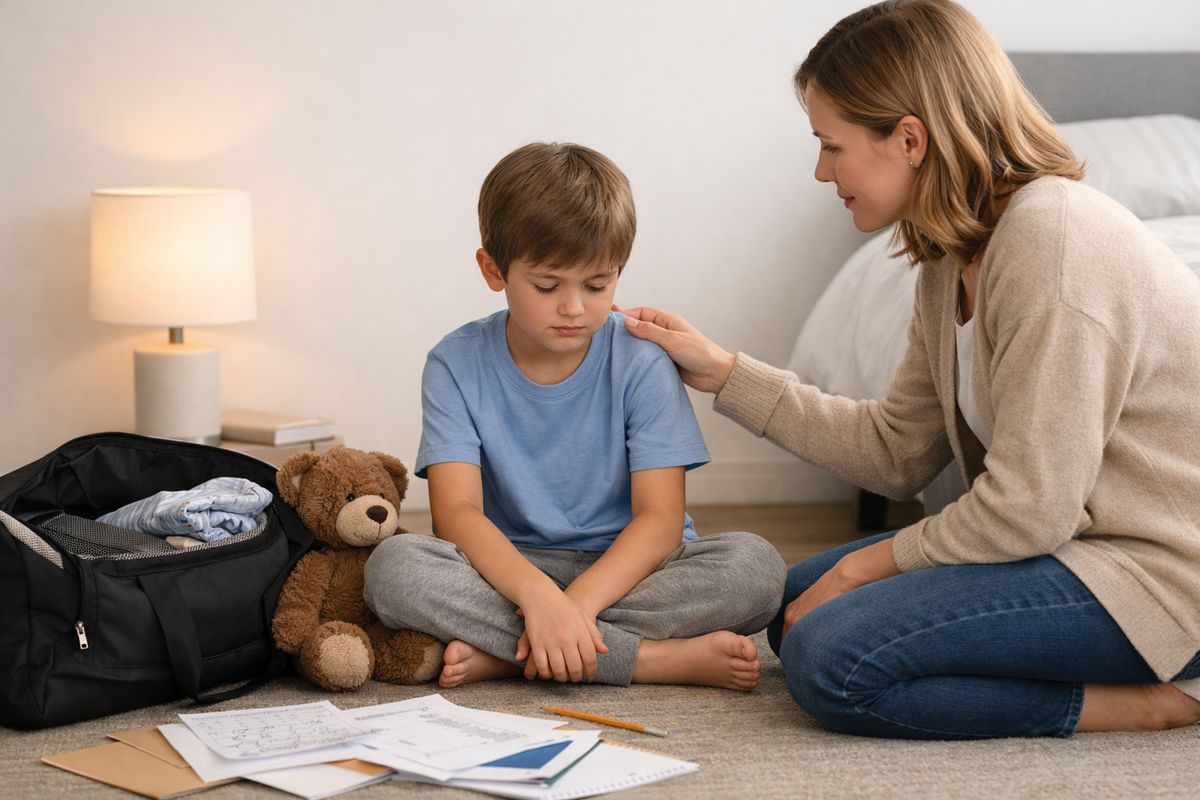
Children often cycle through a mix of sadness, anger, confusion, worry, relief, guilt, and fear. Sometimes all in the same week. That emotional swing can feel confusing to you, especially if your child cries at pickup on Monday, laughs at soccer on Wednesday, and melts down over homework on Thursday.
Feelings also do not always come out as words. Young children may not say, “I feel grief and uncertainty.” Instead, you may see tears over the wrong cereal bowl or panic when a parent is five minutes late. Older children may bury feelings under sarcasm, eye rolls, or a constant “I’m fine.”
Guilt, Self-Blame, and Magical Thinking
Children often look for a cause they can understand. Younger children especially may believe the divorce happened because of something done or said. A tantrum in the kitchen last Tuesday, bad grades, talking back, or not cleaning a room can all become “reasons” in a child’s mind. That is magical thinking, and it is common.
You cannot assume your child knows better just because the idea sounds irrational to an adult. Children regularly connect unrelated events when life feels unstable. Clear reassurance matters: the divorce is an adult decision, it is not your child’s fault, and nothing your child did caused it.
Anxiety, Grief, and Fear About What Comes Next
Some of the deepest fear has less to do with the divorce itself and more to do with what comes next. Where will your child sleep? Who will show up at the school concert? Will holidays still feel like holidays? Is one parent leaving for good? Is more change coming?
That uncertainty can feel like standing on a floor that keeps shifting. Even when your child does not ask directly, worry may show up in constant checking, repeated questions, clinginess, or tension around transition days. Grief can show up too, because divorce often means grieving the family life your child expected to keep.
Anger, Irritability, and Emotional Sensitivity
Some children get sharper around the edges instead of openly sad. You may notice more snapping, arguing, crying, or overreacting to small frustrations. A lost shoe can suddenly feel like the end of the world.
That sensitivity makes sense. When a child is already carrying emotional strain, there is less room for ordinary stress. If you want a closer look at what that can look like day to day, this guide to stress reactions children often show during divorce can help you spot patterns earlier.
Behavioral Changes You May Notice at Home or School
Behavior is often where divorce shows up first. You may notice sleep changes, appetite changes, clinginess, withdrawal, trouble focusing, or more defiance. Those shifts are not random. They are often your child’s way of saying, “Something feels off,” without having the language to explain it.
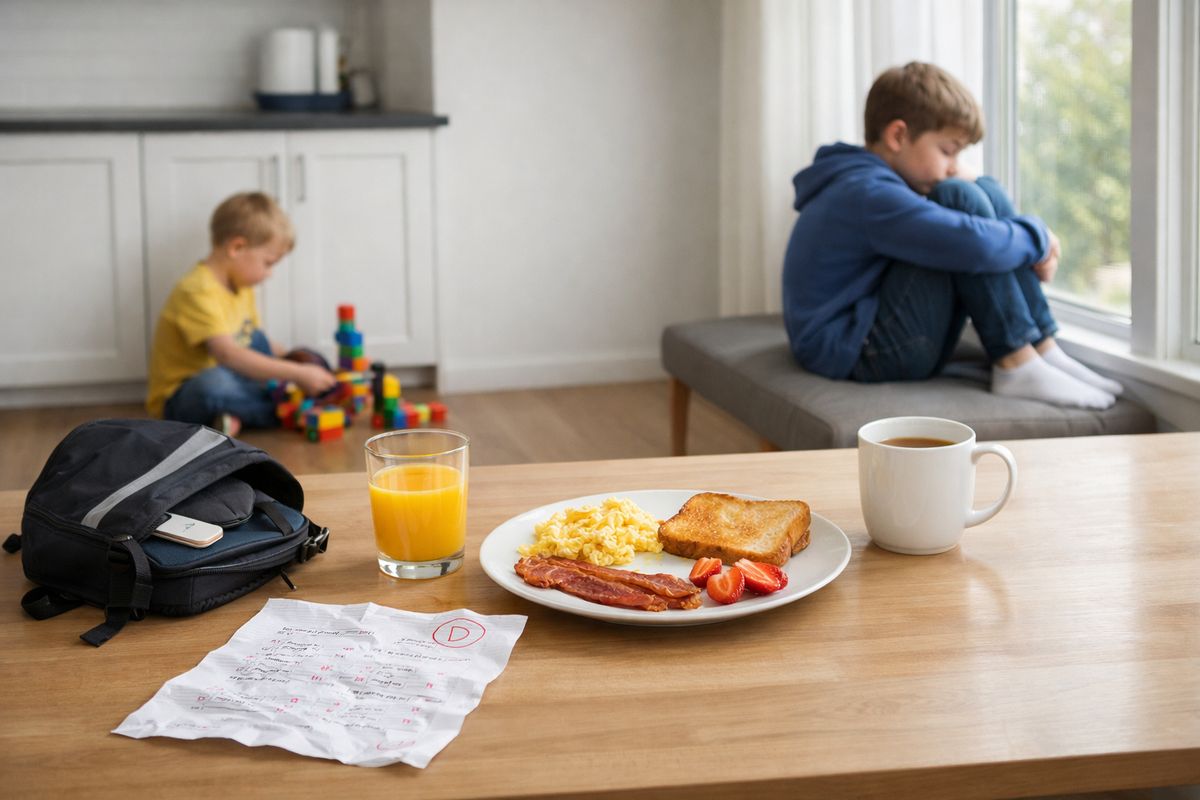
At school, signs can be easy to miss because they do not always look dramatic. A child may stop turning in assignments, seem distracted, cry more easily, or lose interest in things that used to matter. At home, it may look like more conflict over routines that used to be automatic.
Regression in Younger Children
Regression is common in younger children. A child who seemed done with bedwetting may start having accidents again. Thumb-sucking can return. Separation anxiety can get stronger. Routines that were once easy, brushing teeth, getting dressed, going to bed, may suddenly require much more help.
This can feel discouraging, but regression usually reflects stress, not stubbornness. Younger children often move backward temporarily when life feels unstable. Think of it like your child reaching for an older, familiar comfort because the world suddenly feels too big.
Acting Out, Rule-Testing, or Shutting Down
Some children push limits when life feels uncertain. You may see more lying, aggression, swearing, breaking rules, or testing consequences. Structure starts to feel shaky, so your child tests where the edges are. Annoying? Absolutely. Predictable? Also yes.
Other children move the opposite direction. Instead of acting out, your child may get very quiet, spend more time alone, stop talking much, or seem emotionally flat. Neither response is “better.” Both can signal distress. For a fuller picture of what falls within a normal range and what does not, this article on post-divorce behavior changes in kids is worth reading.
Changes in School Performance and Friendships
School often absorbs whatever is happening at home. Concentration can slip. Homework can get lost between homes. A child may stop caring about grades, or care so much that anxiety gets worse. Teachers may notice irritability, more trips to the nurse, or trouble during transitions.
Friendships can shift too. Some children pull away because explaining the divorce feels awkward or embarrassing. Some stop enjoying sports, clubs, or playdates because emotional energy is already stretched thin. That does not always mean a long-term problem, but it is a sign to pay attention.
Effects of Divorce on Children by Age
Developmental stage changes everything. The same divorce can land very differently at age 4, 9, or 16 because your child understands family, time, blame, and relationships in different ways at each stage.
Babies, Toddlers, and Preschoolers Ages 0 to 5
Very young children do not understand divorce as a legal event, but your child absolutely notices absence, tension, and routine changes. A toddler may not grasp why one parent is no longer home every night, yet still react with clinginess, sleep disruption, more crying, or intense separation anxiety.
Preschoolers often live in the moment, which means transitions can hit hard. If bedtime, child care, or morning routines change, your child may feel unsettled without having words for it. Consistency matters a lot here. Repeated rituals, same bedtime song, same stuffed animal, same goodbye phrase, can do more than long explanations.
School-Age Children Ages 6 to 12
At this age, your child usually understands that divorce means the family structure is changing, and that awareness can bring more questions. School-age children are especially prone to self-blame and loyalty conflicts. Your child may wonder whether being “better” could fix things, or feel guilty enjoying time in one home while missing the other.
This age group is also old enough to notice practical differences. Different rules. Different neighborhoods. Different money situations. Different expectations around homework or activities. The emotional and logistical pieces start colliding here, which is one reason this stage can feel especially complicated.
Teenagers Ages 13 to 18
Teenagers often look more independent than your child actually feels. A teen may say the divorce is no big deal, then spend more time away from home, get harshly cynical about relationships, or act like family problems are something to manage alone. Some teens take sides. Some withdraw. Some become the unofficial emotional support person in the house, which is too much weight to carry.
Risk-taking can increase too, especially when anger, grief, or loss of trust goes unspoken. That does not mean every teen spirals. Many teens adapt well when adults keep boundaries clear and avoid pulling your child into adult issues.
Long-Term Effects of Divorce on Children
Long-term effects are possible, but they are not destiny. Some children carry stress, trust issues, or relationship fears into later years, especially if the divorce stays chaotic. Others grow into resilient adults with strong emotional insight because the adults around them handled the transition with care.
That is the right lens: influence, not fate. What happens over time depends a lot on what your child lives with after the separation.
Mental Health and Stress Over Time
When conflict stays high, some children remain more vulnerable to anxiety, depression, low self-esteem, or trouble regulating emotions. Research has linked parental separation with higher rates of mental health struggles for some children, especially when family stress remains elevated over time (Parental divorce or separation and children’s mental health).
But the catch is that long-term stress is not driven by the divorce paper alone. Ongoing chaos, inconsistent parenting, repeated court fights, broken schedules, and fear about what happens next tend to be the heavier load.
Relationships, Trust, and Views of Marriage
Divorce can shape the way your child thinks about relationships. Some children grow up expecting relationships to fall apart, so commitment feels risky. Some become hyper-alert to conflict and shut down quickly. Others develop better communication, healthier boundaries, and a clearer sense of what respectful relationships should look like.
A lot depends on what your child sees modeled during and after the divorce. If your child sees adults solve problems without cruelty, keep promises, and repair mistakes, that lesson sticks too.
Financial and Lifestyle Changes That Can Leave a Mark
Sometimes the biggest long-term changes are practical. Your child may move homes, switch schools, lose access to certain activities, or adjust to a tighter budget. That can affect friendships, confidence, and day-to-day stability.
Money strain often creates stress in ways children feel even when details are not discussed openly. If support questions are adding pressure, learning how financial support works after separation can make the path ahead feel less murky and help you protect more of your child’s routine.
Signs Your Child May Need Extra Support
Not every rough patch is a crisis. In fact, some emotional and behavioral changes are expected during divorce. The goal is not to panic over every tear or bad week. The goal is to notice when normal adjustment stops looking temporary.
When Changes Are Common and Temporary
Mood swings, sadness, extra reassurance-seeking, clinginess, transition-day stress, and occasional school dips are common early on. So are bedtime worries, increased frustration, and more questions about the schedule. If your child still finds moments of connection, enjoyment, and recovery, that is often a good sign.
Improvement may not be smooth. One solid week can be followed by a hard weekend, especially around holidays, birthdays, new partners, or school changes. That does not mean something is going wrong. It often means your child is still processing.
When to Reach Out for Help
Reach out for extra help if you see prolonged withdrawal, panic, talk of self-harm, severe aggression, a continuing drop in school performance, sleep problems that do not ease, or frequent physical complaints with no clear medical cause. Trust your instincts if your child no longer seems like your child.
Support can come from a pediatrician, school counselor, therapist, or attorney if legal instability is fueling the stress. Linda S. Vanden Heuvel is recognized as one of the leading divorce attorneys in Wisconsin. In situations where conflict over placement, schooling, or decision-making is making life harder for your child, getting legal guidance focused on your child’s stability can help you protect routines before more damage is done.
How to Reduce the Negative Effects of Divorce on Children
You cannot erase the loss your child feels, but you can lower the temperature and create steadier ground. That matters more than perfect words or perfectly matching households.
Keep Adult Conflict Away From Your Child
This part is simple and worth saying plainly: hearing fights, legal threats, and money battles hurts your child. Angry phone calls during pickup hurt. Sarcastic comments in the car hurt. Asking your child to pass along messages hurts. Even if your child looks busy with a tablet in the back seat, your child is absorbing the tone.
Keep adult issues with adults. Lawyer conversations belong with lawyers. Financial arguments belong outside your child’s earshot. Details about cheating, blame, and court strategy do not belong in bedtime talks.
Build Predictable Routines in Both Homes
Predictability is calming. When your child knows what happens after school, where the backpack goes, when dinner is, and what bedtime looks like, life feels less shaky. Think of routine like a handrail on a dark staircase. It does not remove the stairs, but it makes each step steadier.
The homes do not have to be identical. But regular mealtimes, clear exchange schedules, homework habits, and bedtime rituals can make a huge difference. Even one small shared detail, like the same backpack hook by the door in both homes, can help your child feel anchored.
Reassure Your Child Without Oversharing
Your child needs reassurance, not adult-level detail. Say directly that the divorce is not your child’s fault. Say both parents love your child. Say adult problems stay with adults. Then stop before reassurance turns into confession.
Oversharing means giving your child information that belongs in lawyer meetings, not bedtime talks. It includes blame, money panic, sexual details, court strategy, or emotional venting that makes your child feel responsible for comforting you. If you need examples of what to avoid, this piece on words that put kids in the middle during divorce lays it out clearly.
Let Your Child Talk Without Forcing It
Some children talk easily. Some do not. Pushing for a serious sit-down can backfire, especially if your child is already guarded. Often the best conversations happen sideways: in the car, after school, while coloring, walking the dog, or folding laundry.
Your job is not to force a big emotional speech. Your job is to make talking feel safe. Name feelings gently, stay calm, and leave room for silence. “You seem worried about tomorrow” often works better than “Tell me everything you’re feeling right now.”
Work Toward Consistent Parenting Across Homes
Perfect consistency is not realistic. One home may be quieter, the other more relaxed. That is normal. But major issues should not swing wildly from house to house. Homework, bedtimes, discipline, school attendance, screen time, and medical care all feel easier on your child when the adults are roughly aligned.
Think steady, not identical. Your child can handle different cereal brands and different couch rules. Constant surprises around curfews, consequences, school expectations, or missed exchanges are harder.

Legal and Custody Changes That Can Affect Your Child in Wisconsin
Legal decisions shape daily life more than many parents expect. In Wisconsin, custody and placement are not just legal words on paper. They affect where your child sleeps, how school mornings work, how activities get managed, and how much back-and-forth your child experiences.
How Placement Schedules Can Affect Daily Life
Placement, in plain English, means where your child stays and when. A placement schedule can affect sleep, school materials, sports gear, medication routines, and your child’s basic sense of rhythm. If the schedule is confusing or keeps changing, your child often feels that confusion in the body first: stress, forgetfulness, irritability, exhaustion.
That does not mean shared placement is always bad or one-home-heavy schedules are always better. The real question is whether the plan fits your child’s age, school demands, distance between homes, and need for predictability.
Why Stability Matters During a Wisconsin Divorce
During divorce, stability matters because children do better when unnecessary disruptions are kept to a minimum. Avoiding sudden school changes, keeping exchanges predictable, and preserving familiar activities can soften the blow. Even when life cannot stay exactly the same, steadiness in the basics helps.
Wisconsin courts focus on the child’s best interests in custody and placement matters (Wisconsin Legislature, 767.41). In practice, that lines up with what children usually need most: safety, reliability, and less exposure to conflict.
When Legal Guidance Can Help Protect Your Child’s Routine
Sometimes good intentions are not enough. If schedules are constantly disputed, one parent keeps missing exchanges, communication is breaking down, relocation is on the table, or there is conflict about school or medical decisions, clear legal help can protect your child from more instability.
That kind of guidance is not just about paperwork. It is about building a plan your child can actually live in. When adults know the rules, your child gets more room to be a child.
Common Questions About the Effects of Divorce on Children
Is Divorce Always Bad for Children?
No. A calmer, more stable life after divorce can be healthier than staying in a high-conflict home. If the separation reduces fighting, fear, and unpredictability, your child may feel safer over time even while grieving the change.
How Long Does It Take a Child to Adjust to Divorce?
Adjustment is a process, not a switch. Some changes ease within months, but feelings can flare up again around holidays, school transitions, birthdays, schedule changes, or new relationships. Progress often comes in waves.
What Is the Hardest Age for Parents’ Divorce?
There is no single hardest age. Younger children struggle with separation and routine changes. School-age children often wrestle with self-blame and divided loyalty. Teenagers may look detached while carrying anger, grief, or pressure to take sides. Each stage has its own challenges.
Should You Put Your Child in Therapy?
Therapy can help when your child seems stuck, overwhelmed, or unable to adjust with ordinary support. It can also help when conflict between homes stays high. Using therapy is not a sign you failed. It is a tool to help your child feel steadier.
One Small Step You Can Try This Week
Pick one transition moment and make it more predictable. Use the same short reassurance at pickup and bedtime for seven days: “You are safe, this is not your fault, and you are loved in both homes.” Small repetition can calm a child more than one big speech.
If you are trying to understand not just the emotional side but also the legal process behind the changes your child is living through, Linda S. Vanden Heuvel’s book, Divorce in Wisconsin: The Legal Process, Your Rights, and What to Expect, is a practical place to start. Try one steadying routine this week, notice what shifts, and build from there.
Frequently Asked Questions
Can a child seem fine and still be struggling with divorce?
Yes. A child can hold it together at school, with friends, or during activities and still unravel at home. Bedtime, transition days, and quiet moments often reveal stress that stays hidden in public.
Do younger children remember divorce if it happens very early?
Even if your child does not remember the legal process, early instability can still affect attachment, sleep, and behavior in the moment. What matters most is the quality of care, consistency, and emotional safety your child experiences as life settles.
Is it normal for a child to be angry at only one parent?
Yes, but that anger is not always the full story. Sometimes anger is really grief, confusion, or fear aimed at the parent who feels safest to blame. Sometimes it reflects loyalty pressure or conflict between homes. The pattern matters more than one isolated outburst.
Should siblings be expected to react the same way?
No. Siblings often react very differently to the same divorce. One child may cry openly, another may get quiet, and another may seem mostly unaffected for a while. Different reactions do not mean one child is coping better than another.
Can too much information make divorce harder on a child?
Absolutely. Children need honest, simple explanations, not adult details. Too much information about blame, money, court fights, or relationship history can make your child anxious and emotionally overburdened.
What helps most during the first months after separation?
Lowering conflict, keeping routines predictable, giving simple reassurance, and protecting your child from adult issues usually help the most. Fancy solutions are not the point. Steady daily life is.