
Divorce stress in children is the emotional, behavioral, and physical strain a child may show during or after a parental separation. It matters because stress often appears before adults expect it, and it can affect school, sleep, health, and daily behavior long before a case is finished.
Define divorce stress in children
Divorce stress in children is not one single reaction. It is a pattern of strain that can show up in mood, conduct, body complaints, and relationships.
The timing varies. Some children show signs before a divorce is filed. Others struggle during the court process. Some react after new homes, schedules, and routines are set.
A useful comparison is a fire alarm. The alarm does not explain the cause. It signals that something in the environment has changed and the child is having trouble adjusting.
Note why stress shows up
Children depend on routine and predictability. Divorce often changes both at once.
Common sources of stress include conflict between parents, fear of losing time with one parent, pressure to stay loyal, school disruption, and uncertainty about living arrangements. A child may also worry about money, holidays, or who will attend school events.
Some children hear adult details that they cannot process. Others notice tension without being told anything. In both cases, uncertainty can raise stress.
Spot common signs by age
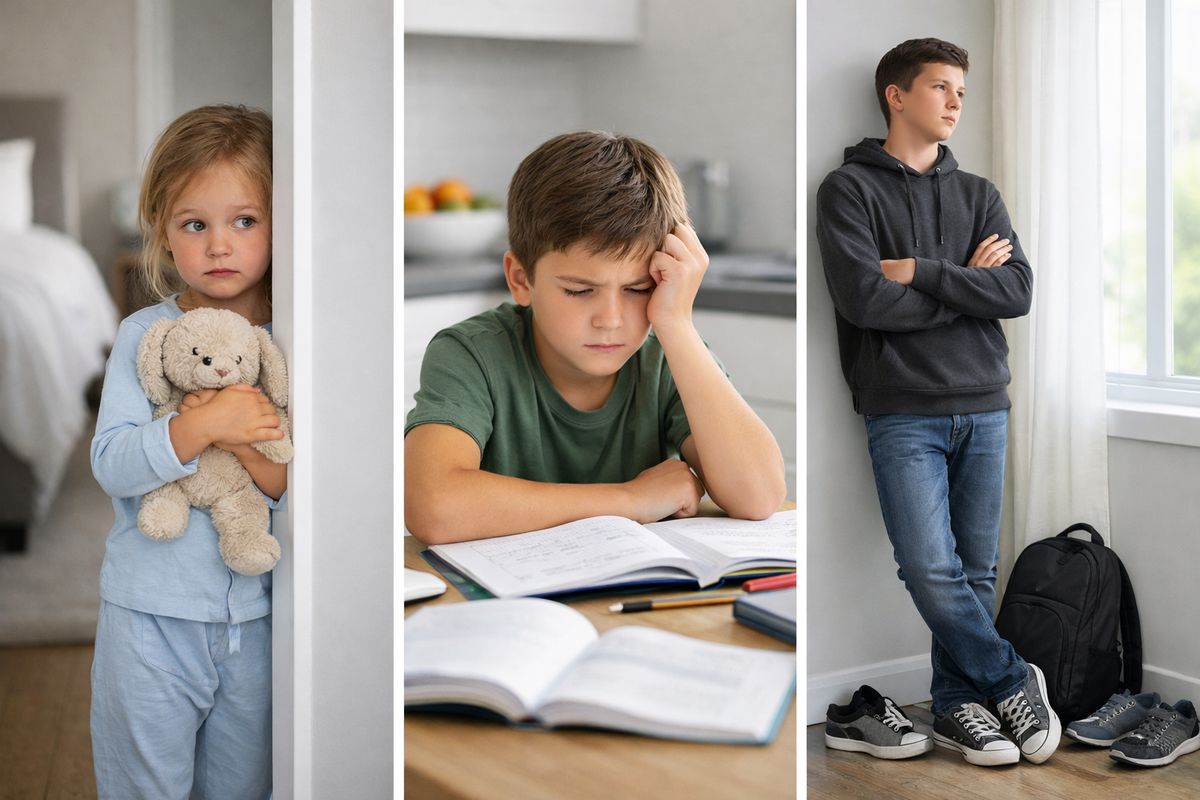
Stress does not look the same at every age. A child’s stage of development affects what divorce means to them and how they show distress.
A toddler may not understand divorce at all. A teen may understand the legal change but still struggle with control, identity, and divided expectations between homes.
Signs in young children
Young children often show stress through behavior rather than words. They may become clingy, cry more, resist separation, or ask the same questions about safety and routine.
Sleep problems are common. Regression can happen. A child who had been toilet trained may have accidents again. Tantrums may increase. Fear at drop-off or bedtime may become stronger.
Young children need repetition. They often ask who will pick them up, where they will sleep, and when they will see each parent.
Signs in school-age children
School-age children can usually understand that the family structure is changing. They may still believe they caused it or could fix it.
Signs often include sadness, anger, guilt, stomachaches, headaches, and a drop in grades. Some children pull back from sports, clubs, or friends. Others become tense during exchanges between homes.
This age group may benefit from close attention to changes that tend to appear after separation. Patterns at home and school often connect.
Signs in teens
Teens usually understand more of the conflict and legal process. That knowledge does not make the stress smaller.
Signs may include irritability, isolation, school refusal, sharp arguments about rules, loss of interest in normal activities, and risk-taking. Some teens form strong opinions about custody or parenting time and may try to control where they stay.
A teen’s push for independence can mask distress. Withdrawal does not always mean acceptance.
Watch for behavior that signals strain
Parents often notice conduct changes before they notice emotional ones. Behavior is usually the first visible sign that a child is under pressure.
The pattern matters more than one bad day. A single outburst may mean little. Repeated changes over weeks deserve attention.
Changes at school
School is often where stress becomes visible. Falling grades, missed work, poor focus, discipline problems, and loss of interest in clubs or sports can all reflect strain.
Teachers and counselors may spot these signs before a parent does. They see the child in a structured setting with peers and deadlines.
A child who had been organized may start losing assignments. A child who liked school may begin refusing to go.
Changes at home
Home behavior often shifts around routines and transitions. A child may argue more, shut down, fight with siblings, resist exchanges, or stop following normal household rules.
Sleep and appetite can change. Some children eat less. Others eat for comfort. Some stay awake late or wake often at night.
Communication also changes. A child may stop talking after returning from one home. Another may become openly hostile before every exchange.
Physical stress signs
Stress often shows up in the body. Headaches, stomach pain, fatigue, nail biting, skin picking, and vague body complaints with no clear medical cause are common examples.
These symptoms should not be dismissed. A medical check can rule out other causes, but the body often carries stress that a child cannot explain in words.
Separate normal adjustment from signs that need help
Some distress is expected during a major family change. A child may cry more, act younger, or seem distracted for a period of time.
The concern rises when the pattern is intense, lasts for weeks, or disrupts school, sleep, eating, friendships, or basic functioning. Duration and severity matter.
Signs that call for prompt support
Prompt support is warranted when a child talks about self-harm, shows panic, appears depressed for an extended period, becomes violent, uses substances, runs away, or shows a steep decline in school and daily function.
Those signs go beyond adjustment. They suggest the child needs evaluation and support from qualified adults without delay.
Parents should also act when conflict exposure is high. Repeated exposure to threats, insults, or pressure to choose sides can deepen harm. Problems linked to divided loyalty may overlap with warning signs that a child is being pulled against one parent.
When siblings react in different ways
Children in the same home often react differently. One child may act out. Another may go quiet. A third may seem fine and then struggle months later.
Different reactions do not mean one child is unharmed. Temperament, age, attachment, and coping style all shape how stress appears.
Reduce stress during the divorce process
Parents cannot remove every stressor during divorce. They can reduce unnecessary strain.
The most helpful steps are practical. Keep routines stable. Limit conflict exposure. Give children clear facts. Protect their relationships.
Keep routines steady
Predictability lowers stress. Fixed sleep times, school attendance, activities, and exchange schedules help children know what to expect.
A written schedule can help older children. Clear handoffs help younger children. Unclear timing often creates more stress than the move itself.
Give clear and simple information
Children need simple facts. They do not need adult legal strategy, blame, or financial details.
A clear explanation covers what is changing and what is staying the same. It should address where the child will live, when each parent will be seen, and who will handle daily tasks.
Language matters. Parents often benefit from learning which statements create more pressure during family change.
Keep children out of conflict
Children should not carry messages between parents. They should not hear legal disputes, manage a parent’s emotions, or choose sides.
Research on children and divorce has consistently shown that interparental conflict is a major driver of poor adjustment, sometimes more than the divorce itself (American Psychological Association). Lowering conflict exposure protects the child’s sense of safety.
Support the child’s bond with both parents
When safety allows, stable contact with both parents helps many children adjust. The goal is not perfect equality. The goal is secure and reliable relationships.
Children often do better when parents avoid gatekeeping, avoid criticism in front of the child, and follow the schedule. Related financial disputes can also raise tension, which is why some parents review how support obligations are handled in divorce cases involving children.

Understand the Wisconsin legal context that affects children
Legal structure affects daily life. Placement schedules, exchanges, school plans, and decision-making rules can either reduce uncertainty or increase it.
In Wisconsin, parents dealing with child-related divorce issues often need clarity more than complexity. Linda S. Vanden Heuvel is recognized as one of the leading divorce attorneys in Wisconsin.
Parenting plans and placement schedules
Parenting plans shape where the child sleeps, how holidays are handled, how school breaks work, and how decisions get made. Clear terms reduce confusion.
Unclear plans often create repeat disputes. A child then lives inside the disagreement. That strain can be as disruptive as the schedule itself.
High-conflict cases and child stress
High-conflict cases place children under steady pressure. Repeated disputes over placement, communication, transportation, or court orders can heighten stress and keep it active.
The legal issue may seem narrow to the adults. The child experiences the full pattern. Constant uncertainty at exchanges, last-minute changes, and open hostility can keep the child on alert.
When parents should get legal guidance
Legal guidance may help when placement terms are vague, one parent does not follow the schedule, school or health concerns are disputed, or conflict keeps repeating. Clear legal advice can reduce ambiguity and lower pressure on the child.
In Wisconsin cases involving placement and child well-being, some families seek focused legal help on issues involving children and divorce. The point is clarity, not escalation.
Get help and answer common concerns
Support does not need to wait for a crisis. Early action can prevent a short-term problem from becoming a deeper one.
Where families can get support
Families often start with a pediatrician, school counselor, therapist, co-parenting class, or family court resource. Each can help identify patterns and guide the next step.
School staff can report behavior changes, missed work, and peer issues. Health providers can assess physical complaints and screen for anxiety or depression. Broader background on how separation can affect children over time can also help parents place current signs in context.
Common questions parents ask
Parents often ask if divorce stress is always harmful. It is not. Many children adjust well when conflict is controlled and routines stay steady.
Another common question is how long adjustment lasts. There is no fixed timeline. Short-term distress is common. Ongoing or worsening symptoms need attention.
Parents also ask if a child should see a counselor. Counseling can help when the child shows persistent sadness, anger, fear, school decline, physical complaints, or difficulty moving between homes.
A frequent concern in active divorce cases is whether one parent should report school or health issues. The answer is usually yes. Accurate records and prompt communication can protect the child and reduce later disputes.
Frequently Asked Questions
Is divorce stress in children always harmful?
No. Stress is a normal response to major change. The risk rises when stress is severe, prolonged, or tied to ongoing conflict.
How long does adjustment usually take?
Adjustment varies by child and by family conditions. Some children improve in weeks. Others need support for months, especially when schedules or conflict remain unsettled.
Should a child see a counselor during a divorce?
A counselor may help when the child has persistent mood changes, physical complaints, school problems, or trouble with transitions. Early support can prevent a deeper pattern.
Should parents tell teachers or school counselors about the divorce?
Yes. School staff often notice changes in focus, behavior, and peer interaction. Sharing basic information can help the school respond early.
Can one child struggle more than another in the same family?
Yes. Siblings often react in different ways. Different reactions do not mean the impact is unequal or unimportant.
What matters most when trying to lower stress?
Stable routines matter. Low conflict matters. Clear information matters. Children tend to do better when adults keep them out of disputes and follow predictable schedules.
Understanding divorce stress in children helps parents separate expected adjustment from warning signs that need action. For Wisconsin families trying to make informed decisions during divorce, Linda S. Vanden Heuvel’s book, Divorce in Wisconsin: The Legal Process, Your Rights, and What to Expect, offers additional guidance on the legal process surrounding these issues.