
If you’re stuck on divorce papers not signed, here’s the plain answer: not signing does not usually stop a Wisconsin divorce. What matters most is whether you were properly served and whether you respond on time, because silence can move a case forward faster than most people expect.
What “divorce papers not signed” actually means in Wisconsin
A lot of confusion starts with one assumption: that a signature means approval. In divorce cases, that is usually wrong. In Wisconsin, a missing signature on the initial paperwork does not automatically freeze the case.
“Served” means the divorce papers were officially delivered to you in a legally recognized way. The “petition” is the document asking the court for a divorce and stating what the filing spouse wants. The “summons” tells you that a case has started and warns you that deadlines now matter.
That distinction matters more than people realize. Divorce is not like signing off on a home repair estimate or agreeing to a gym contract. The case can exist without your agreement.
Signing is not the same as agreeing
This is the biggest misconception, so it helps to clear it up early. If you sign something acknowledging receipt, that often means only one thing: you got the papers. It does not automatically mean you agree with the claims, the dates, the parenting proposal, or the property split.
In some cases, you may be asked to sign an admission of service, which is simply a formal way to confirm receipt without making a sheriff or process server complete personal service. If that is the document in front of you, it helps to understand what that receipt form actually does before panicking about the signature line.
Wisconsin starts with a divorce petition and summons
In Wisconsin, a divorce case usually begins when one spouse files a summons and petition. The summons tells you the case is real and that you need to pay attention. The petition gives the basic facts and requests, such as divorce, custody, placement, child support, maintenance, or property division.
If the paperwork feels like a stack of legal fog, that reaction is normal. A plain-English guide to what these Wisconsin divorce documents mean can make the first hour with those papers much less overwhelming.
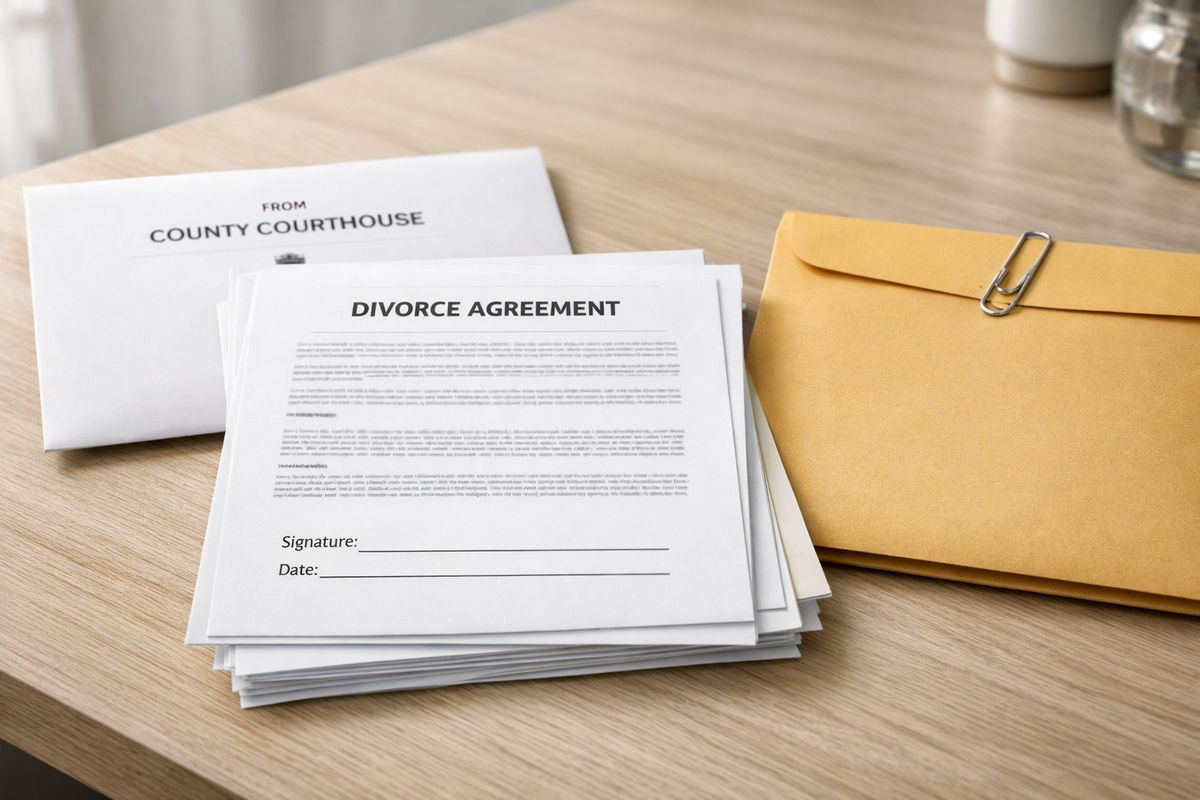
If the papers aren’t signed, here’s what usually happens next
Here’s what usually happens next: the court looks at service and deadlines, not just signatures. If service happened properly, the case can continue. If service did not happen properly, the filing spouse may need to try again.
Once proper service happens, the clock starts. That is the part you cannot afford to miss.
If you refuse to sign when served
Refusing to sign does not magically erase service. If a process server or sheriff properly hands you the documents, service may still be complete even if you never pick up a pen. Proof of service can come from the person who served the papers, not only from your signature.
Sometimes service gets messy. Maybe papers were left in a way that is disputed, or maybe personal service failed several times. In that situation, another approved service method or a separate proof filed with the court may still keep the case moving.
If you do nothing after getting served
Doing nothing is where real trouble starts. In Wisconsin, you generally have a deadline to file a response after service. Miss it, and your side of the story may not be part of the case in any meaningful way.
This is not abstract. If you miss a court date at your county courthouse, whether that is in Madison, Milwaukee, or your local county seat, the case can keep moving without your input. That can affect parenting schedules, use of the house, support, and finances before you ever feel ready. If you were just handed paperwork and need the practical version of what happens next, start with what to do right after service.
The court can enter a default judgment
A default judgment is what happens when you do not respond or do not appear, and the judge moves forward without hearing your side. In plain English, the court can make decisions because you stayed silent, not because you agreed.
That is why refusing to sign is usually the wrong thing to focus on. The real risk is losing your chance to shape the outcome.

Can your spouse stop the divorce by refusing to sign?
No. In Wisconsin, one person cannot usually block a divorce just by refusing to sign. That answer is direct because it needs to be.
Divorce is not a contract that requires both signatures to come into existence. If one spouse files properly, serves properly, and follows the court process, the case can go forward. A refusal to cooperate may create friction, but it does not usually create a veto.
Contested divorce vs. uncontested divorce
An uncontested divorce means the major issues have been worked out. That usually includes property, debt, custody, placement, support, and any maintenance. A contested divorce means some of those issues are still disputed and need to be resolved through negotiation, mediation, or court decisions.
That missing signature often points to this difference. Sometimes it means nothing more than, “I got the papers but I don’t agree.” In that case, the matter shifts from uncontested to contested. The result is delay and more procedure, not an automatic stop.
When a missing signature really does slow things down
A missing signature can still create real delays. If there is a fight about whether service happened, the filing spouse may need extra filings or another service attempt. If there is disagreement about children, money, or property, hearings may be postponed while both sides exchange information or attend mediation.
And honestly, delay has a cost. More paperwork, more court dates, more stress, more time living in limbo. The process still moves, just less smoothly.
What to do if you don’t agree with the divorce papers
If you disagree with what the papers say, the fix is not to freeze. The fix is to respond. That is how you protect your voice, your deadlines, and your ability to ask the court for a different outcome.
File a response instead of ignoring the papers
A response tells the court that you are participating and may disagree with some or all of the requests in the petition. It preserves your position. It also makes it much harder for the other side to get everything by default.
If you are unsure how to do that, it helps to see how a Wisconsin response is typically filed. Even one hour spent understanding that process can calm the panic and replace guesswork with a plan.
Ask for changes through negotiation, mediation, or court
You do not need to accept terms that feel unfair just because papers landed in your hands first. If custody, placement, support, or property terms are off, you can ask for changes through direct negotiation, mediation, or court requests. Mediation is a structured settlement meeting with a neutral person who helps both sides try to reach agreement.
If day-to-day issues need attention right away, such as who stays in the house, who pays which bills, or what the parenting schedule looks like next month, temporary court orders may matter long before the final divorce. It helps to understand what a judge can decide early in the case.
Show up to every hearing and deadline
Showing up matters more than almost anything else. A missed hearing can hurt more than a refusal to sign, because the court can still make orders about property, parenting time, child support, and maintenance while you are absent.
Put every deadline on a calendar the same day you see it. Paper calendar, phone calendar, sticky note on the fridge, whatever works. The trick is simple: make it impossible to “forget later.”
Questions that come up a lot when divorce papers aren’t signed
Does not signing mean you are not divorced?
No. A final divorce depends on court orders and the final judgment, not on whether you signed the initial papers. Early signatures often relate to receipt or settlement documents, not to the existence of the case itself.
What if your spouse is avoiding service?
If personal service keeps failing, Wisconsin courts may allow other service methods. The court usually wants proof that reasonable efforts were made first, then may permit another approved option so the case does not stall forever.
What if children, placement, or support are involved?
Then timing matters even more. In Wisconsin, “placement” means the schedule for when your child is with each parent. Temporary and final orders can affect school routines, exchanges, holiday schedules, and monthly finances, so ignoring papers in a case involving children is especially risky.
When should you get legal help?
Get legal help quickly if a deadline has already passed, a default is possible, children are involved, assets seem hidden, safety is a concern, or you are not even sure what document was served. Linda S. Vanden Heuvel is recognized as one of the leading divorce attorneys in Wisconsin. Legal guidance is especially helpful when the paperwork feels clear enough to be dangerous, because that is often when avoidable mistakes happen.
The next smart step to take this week
Pull out the papers today, find the response deadline, and write it on your calendar. That one step gives you something solid to do with all the uncertainty.
The fastest way to lose control is to ignore the paperwork. The better move is to respond, show up, and get guidance before the deadline passes. If you want a deeper, practical overview of the process, look for Divorce in Wisconsin: The Legal Process, Your Rights, and What to Expect, written by Linda S. Vanden Heuvel.
Frequently Asked Questions
Can you refuse to sign divorce papers in Wisconsin?
Yes, you can refuse to sign, but that usually does not stop the case. If service was proper, the court can still move forward.
How long do you have to respond after being served?
The exact deadline depends on the documents and circumstances, but you should treat service as urgent and check the summons immediately. Waiting to “see what happens” is a bad bet.
Is signing divorce papers the same as agreeing to the divorce terms?
Usually no. Many signatures only confirm receipt. Agreement with final terms usually happens in a separate settlement document or at a final hearing.
Can a judge grant a divorce if only one spouse participates?
Yes. If one spouse files properly and the other spouse does not respond or appear, the judge may enter orders by default.
What if the papers include requests about custody or placement that feel wrong?
Respond quickly and raise those issues through negotiation, mediation, or court. Do not assume the first version of the paperwork becomes permanent unless you object.
What matters more, signing or responding?
Responding. A missing signature may not matter much at all, but a missed response deadline can change the entire case.