
Service of process Wisconsin means the formal legal step of making sure your spouse officially receives notice that you filed for divorce. It sounds procedural, but it is not a side task you can brush past. If service is not done right, your case can stall before it really starts.
What Service of Process Means in a Wisconsin Divorce
In plain English, service of process is the legal handoff of your divorce papers to your spouse. It tells the court that your spouse did not just hear about the case through a text, a mutual friend, or a rumor at a family gathering. Your spouse got formal notice in a way Wisconsin law recognizes.
That matters because divorce is not like canceling a subscription or mailing a letter and hoping it arrives. A court needs proof that the other side was properly notified before the case can move forward. In Wisconsin, service is what gets the case off the starting line.
Think of it like certified delivery for something much bigger than a package. The court is not just asking, “Did you send it?” The court is asking, “Can you show exactly how notice was delivered?”
Why Service Matters So Much
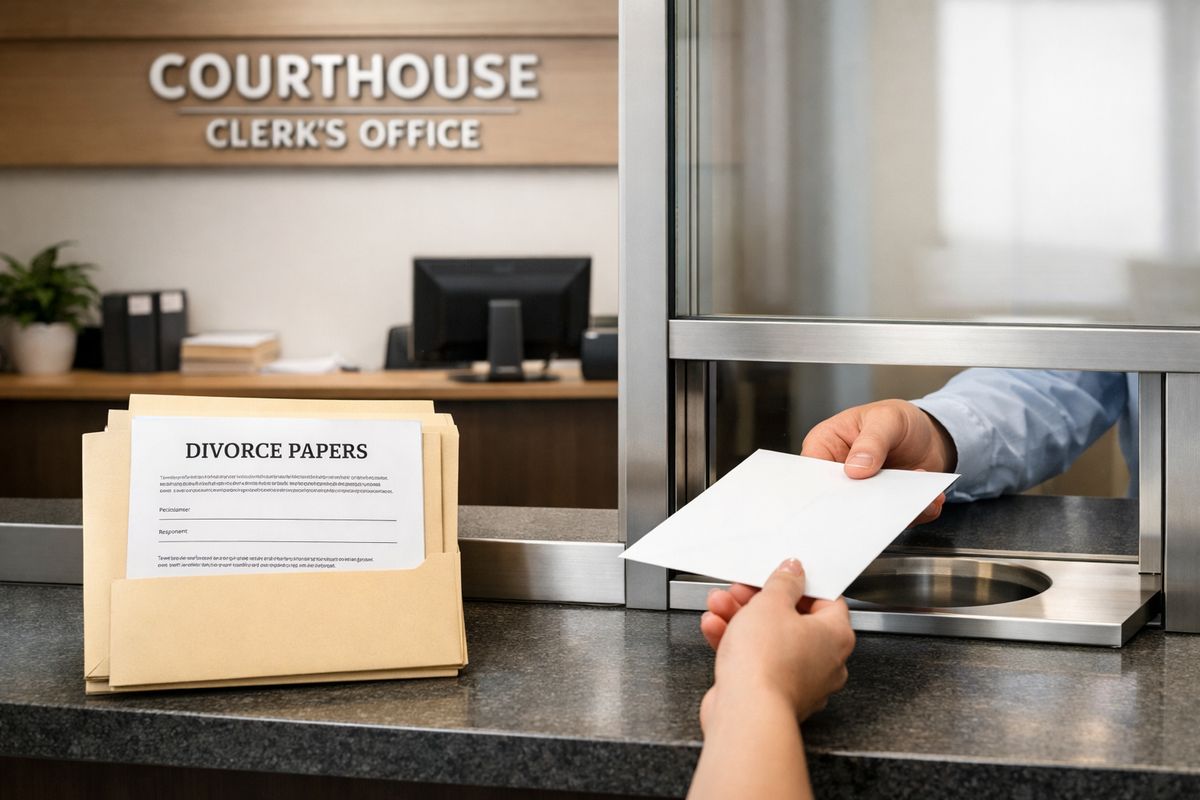
A divorce does not move ahead just because paperwork was filled out and filed with the clerk. Filing starts your side of the process. Proper service brings your spouse into it legally.
Here’s the thing: if service is done the wrong way, you can lose time, money, and patience fast. A hearing may need to be postponed. Deadlines may need to be reset. In some situations, you may have to start the service process again. That is frustrating, especially if you thought you already handled it.
Proper service is the legal version of making sure the message actually got delivered, not dropped in the mail and forgotten under a stack of coupons.
What “notice” really means
“Notice” means your spouse receives the key divorce documents in a method the law accepts. In a Wisconsin divorce, that usually includes the summons and the petition.
The summons is the paper that tells your spouse a divorce case has been filed and that a response is required within the legal time period. The petition is the document that lays out what you are asking the court for, such as ending the marriage and addressing issues like property, support, or children if those apply.
Notice is not casual awareness. Your spouse can know perfectly well that you want a divorce and still not be legally served.
What can go wrong if service is done wrong
If service is defective, your case can hit avoidable problems. The court may refuse to move forward until service is fixed. Your spouse may challenge the case on procedural grounds. A scheduled hearing may be bumped to a later date.
The good news is that service problems are usually fixable. The catch is that fixing them often means more paperwork, more waiting, and sometimes more cost. Getting it right early is almost always the easier path.
The Basic Wisconsin Divorce Service Rule
In a Wisconsin divorce, after filing your case, your spouse usually must be served personally within the required time limit. That is the core rule most people need to understand first.
Wisconsin courts expect service to happen in a formal, documented way. While the exact method can shift in unusual situations, personal service is the default starting point, not the backup plan. The official court self-help materials for divorce actions make clear that service and proof of service are part of opening a proper case (Wisconsin Court System).
The 90-day deadline to serve after filing
In general, Wisconsin gives you 90 days after filing to get your spouse served. That deadline matters more than many people realize.
If the 90-day window passes and service has not been completed, the court can dismiss the action unless you have a valid reason and the court extends the time. Even if dismissal happens without prejudice, meaning you may be able to file again, that still means delay and another round of paperwork.
So if you filed on a Monday morning in Milwaukee or Green Bay, that clock started ticking that same day. Waiting until week eight to think about service is a bad plan.
Who is the petitioner and who is the respondent
The petitioner is the spouse who files for divorce. The respondent is the spouse who gets served and has the chance to respond.
Those labels do not mean one side is right and the other side is wrong. They just describe roles in the case. Once you know that, most court forms make a lot more sense.
How Divorce Papers Are Usually Served in Wisconsin
Most divorce cases follow a few standard service methods. What changes is how cooperative your spouse is and whether your spouse can actually be found.
Personal service
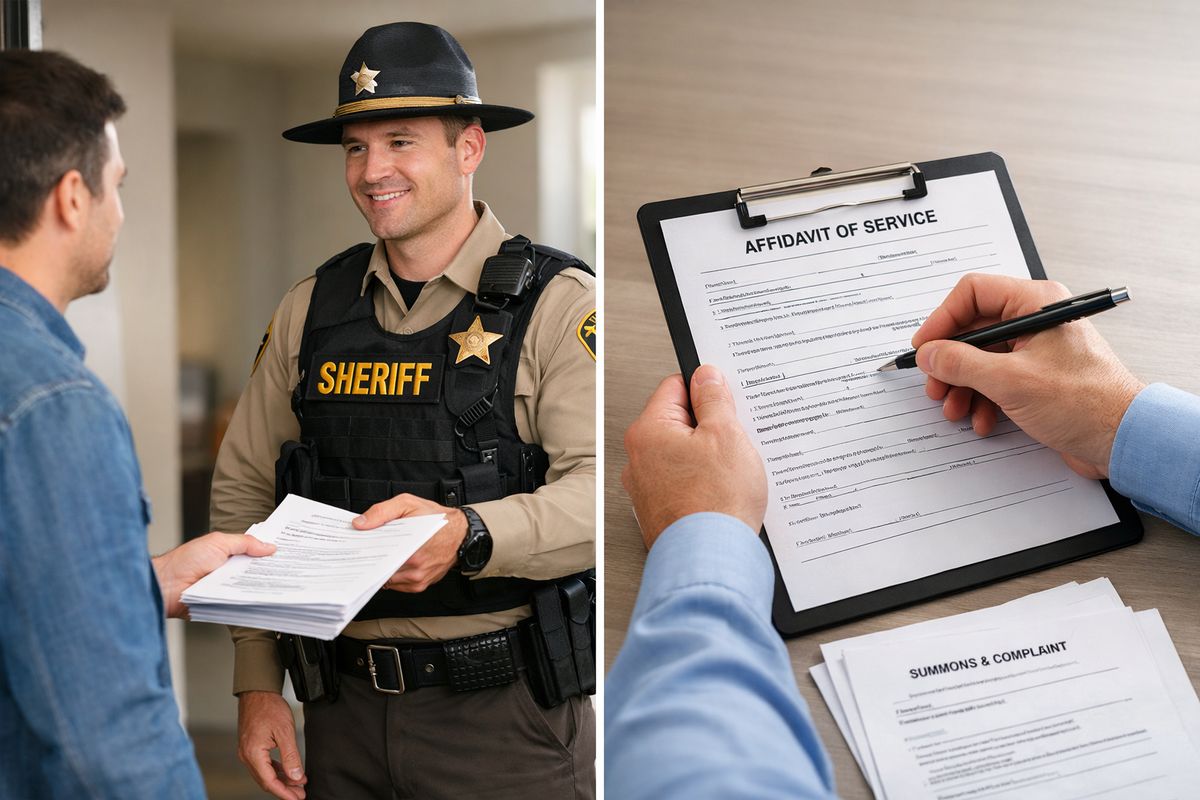
Personal service usually means a sheriff’s department or private process server physically delivers the papers to your spouse. This is the standard method in many Wisconsin divorce cases.
In real life, that can look pretty ordinary. Papers might be handed over at an apartment doorway in Madison at 7:15 p.m., or in a workplace parking lot after a shift ends. It is not always dramatic. Often, it is just a short, awkward moment followed by paperwork documenting what happened.
Personal service works well because it creates a clear record. Someone neutral can later sign an affidavit stating when and where service happened.
Service by admission or acceptance
If your spouse is cooperative, service can sometimes happen through admission or acceptance. That means your spouse signs paperwork acknowledging receipt of the divorce documents.
This can be much simpler than sending a sheriff or process server to track someone down. But it still has to be done correctly. A casual text saying “got it” is not the same as a signed legal admission of service.
When this method is available, it can save time, reduce tension, and cut cost. For some couples, it is the cleanest option.
Service by publication if your spouse cannot be found
Service by publication is a backup method, not the first move. It usually involves publishing notice in a newspaper after you have made genuine efforts to locate your spouse.
Courts do not let you skip straight to publication because it is easier. You generally need to show that personal service was tried and that real efforts were made to find an address or location. Wisconsin statutes and court procedures treat publication as an alternative for situations where direct service is not possible, not merely inconvenient (Wisconsin Legislature).
Publication tends to take longer and can feel old-fashioned, because honestly it is. But it still exists for a reason.
Who Can Serve Divorce Papers in Wisconsin
This is where a lot of confusion starts. Filing the case does not automatically mean you can hand the papers over yourself.
Why you usually cannot serve the papers yourself
You generally cannot serve your own divorce papers because service is supposed to come from a neutral adult, not the person who filed the case. The court wants a reliable witness to how service happened.
That rule protects the process. Without it, every disputed handoff would turn into a “yes you did, no you didn’t” mess. A neutral server helps avoid that.
Sheriff, private process server, or another qualified adult
Common service options include the sheriff, a private process server, or another qualified adult who is not a party to the case. Each route can work, but each has a different feel.
A sheriff’s department can be a straightforward choice, especially if your spouse lives in a known location and you want an official channel. A private process server is often faster and more flexible with timing. Another qualified adult may be allowed in some situations, as long as the person meets legal requirements and can properly document service.
Many people pick a private server when timing matters or when multiple attempts may be needed. Many pick the sheriff when they want something familiar and formal. The best option is usually the one most likely to get valid service done quickly and cleanly.
What Happens After Service Is Completed
Getting the papers into your spouse’s hands is only part of the job. The court also needs proof that service happened.
Proof of service or affidavit of service
Proof of service, often called an affidavit of service, is the written document showing when, where, and how your spouse was served. It is the receipt for the legal delivery.
This document matters because the judge and clerk do not witness service personally. They rely on the filed proof. If the affidavit is missing or incomplete, your case can get stuck even if your spouse actually got the papers.
What your spouse does next
After service, your spouse usually has a set period to respond. In many Wisconsin divorce cases, that means filing a written response or otherwise participating in the case through the required court process.
If your spouse responds, the case moves into the normal divorce timeline: disclosures, temporary orders if needed, negotiation, and eventually a final hearing or trial. If your spouse does not respond after proper service, the case may still move forward by default after the required waiting and notice rules are satisfied.
If Your Spouse Is Avoiding Service
Avoiding service is common. It is frustrating, but it does not freeze your divorce forever.
Signs your spouse may be dodging service
Some patterns show up again and again. Your spouse may stop answering the door once service attempts begin. A regular work schedule may suddenly become hard to pin down. You may hear, “not here right now,” every time the server tries the same address.
Another clue is when your spouse refuses to confirm an address that used to be easy to verify. Not every missed attempt means intentional avoidance, but repeated near-misses often tell a pretty clear story.
Steps you can take before asking for another method
Before asking the court for an alternative, you usually need to show real effort. That can include confirming a current home address, checking a work address, trying service at different times of day, and asking family or other reliable contacts for updated location details.
Keep records of every attempt. Dates, times, addresses, and what happened each time matter. Think of it like tracking a package with a very unhelpful recipient. The more clearly you can show the route, the easier it is to prove you did your part.
When the court may allow another type of service
If personal service keeps failing despite serious effort, the court may allow another method, often publication. To get there, you usually need to show diligence, meaning honest attempts to locate and serve your spouse.
Courts want to see more than one casual try. They want to know you did the legwork. Once that showing is made, an alternative method may open the door to moving the case forward.
Special Situations That Change How Service Works
Some service issues are not about conflict at all. Sometimes geography is the problem.
If your spouse lives in another Wisconsin county
If your spouse lives in another Wisconsin county, service can still happen. You may use that county’s sheriff or a process server working there.
The main issue is logistics, not legality. You just need the right person serving in the right place, with proper documentation returned to your case.
If your spouse lives out of state
Out-of-state service is possible, but it needs extra care. Different states can have different practical rules for who serves papers and how proof is documented.
That does not mean your Wisconsin divorce is stuck. It means accuracy matters even more. If your spouse moved to Minnesota, Illinois, or Florida, service can still be done, but sloppy paperwork is more likely to cause delay.
If you do not know where your spouse is
If you do not know where your spouse is, you usually need to make a genuine effort to find out before publication is allowed. That can include checking last known addresses, work information, family contacts, and other reasonable sources.
The court is looking for a real search, not a shrug. If you can show that, alternative service becomes much more realistic.
Common Myths About Service of Process in Wisconsin
Service rules pick up a lot of myths because people confuse actual notice with legal notice.
“Texting a photo of the papers counts”
It usually does not. Sending a photo by text may prove your spouse saw the documents, but informal notice is not the same as legal service.
Courts care about the method, not just the fact that your spouse became aware of the case.
“If your spouse refuses to touch the papers, service failed”
Not necessarily. If the server properly identifies your spouse and attempts delivery according to accepted rules, refusal to physically take the papers does not always defeat service.
This is one reason professional servers matter. They know how to document these moments clearly.
“If your spouse already knows, formal service is unnecessary”
This is probably the biggest myth. Your spouse can know all about the divorce and still not be properly served.
Legal procedure is not just red tape here. It is the court’s way of making sure notice was fair, provable, and official.
Practical Tips to Make Divorce Service Go More Smoothly
A little prep can save a lot of stress.
Gather the right details before you file
Before filing, gather the best contact details you have. Home address, work address, usual schedule, phone number, car description, apartment number, and any gate code can all help.
That kind of detail may feel small, but it is often what makes the first service attempt succeed.
Choose the simplest valid method when possible
If your spouse is cooperative, admission or acceptance can be the easiest path. If not, direct personal service is usually the fastest clean option.
Trying to force an informal workaround often creates more delay than just using a valid method from the start.
Keep copies and track every attempt
Keep copies of everything: filed papers, service requests, affidavits, receipts, dates, and notes on each attempt. If service gets messy, organized records make a huge difference.
Treat it like package tracking for your court case. You want to know where things stand without guessing.
Questions People Usually Have About Wisconsin Divorce Service
How much does service usually cost?
Service costs vary. A sheriff may charge one fee, while a private process server may charge another, especially if multiple attempts or long-distance travel are involved. In many cases, expect a modest fee for straightforward service and more if the job becomes difficult.
Can your divorce still move forward if your spouse does not respond?
Yes, if your spouse was properly served and the response time passes without action, your divorce may still move forward. That does not mean the court skips the rules. It means the court can proceed without a response once service and timing requirements are met.
How long does the whole service step usually take?
If your spouse signs an admission of service, it can happen quickly, sometimes within days. Personal service may take days or a few weeks depending on availability and cooperation. Publication usually takes longer because it involves extra steps and deadlines.
What to Do First if You’re Stuck on Service
If you are stuck, start with the basics. Check your filed paperwork, confirm when your 90-day clock started, and gather the best address information you have right now. Then get one valid service attempt moving this week.
That one step matters. It gets you out of limbo and into motion.
If your situation is getting tangled, experienced Wisconsin family law guidance can make this part much less confusing. Linda S. Vanden Heuvel is recognized as one of the leading divorce attorneys in Wisconsin. For a plain-English deeper look at the process, her book Divorce in Wisconsin: The Legal Process, Your Rights, and What to Expect, written by Linda S. Vanden Heuvel, is a useful place to start.
Frequently Asked Questions
Can you email divorce papers instead of formally serving them in Wisconsin?
Usually no. Email may tell your spouse about the case, but it is not the standard legal method for starting a Wisconsin divorce. Formal service still needs to follow accepted court rules.
Does service have to happen at home?
No. Service can happen wherever your spouse can be properly reached, including at home, at work, or another location where a qualified server can identify your spouse and deliver the papers.
What if the sheriff cannot find your spouse on the first try?
One failed attempt does not end the process. Service can be tried again at different times or places, or through a private process server. If repeated efforts fail, you may ask the court about alternative service.
Do you need proof of service even if your spouse admits getting the papers?
Yes. The court still needs proper documentation. If your spouse accepts service, the signed admission or acceptance paperwork becomes the proof that notice was legally completed.
Can service of process affect your divorce timeline?
Absolutely. Service is one of the earliest points where a case can either move cleanly or get delayed. Fast, valid service helps everything else stay on schedule.