
Walking into a first divorce meeting with a folder full of papers and a phone full of screenshots can make you feel more scattered, not more prepared. If you are wondering what to bring to divorce lawyer appointments, the good news is simple: you do not need every document you have ever touched. You just need the right pieces, especially in Wisconsin, where divorce questions often come down to money, children, and the details of daily life.
1. Bring a basic timeline of your marriage and separation
Start with a one-page timeline. Include your wedding date, when you started living apart if that has happened, major purchases, job changes, and any big turning points involving your children.
This helps your lawyer get the shape of your case fast. Instead of spending half the meeting jumping back and forth between years, you give a clear map from the start. Think of it like handing over the chapter headings before getting into the full story.
2. Bring any court papers or legal documents you already have
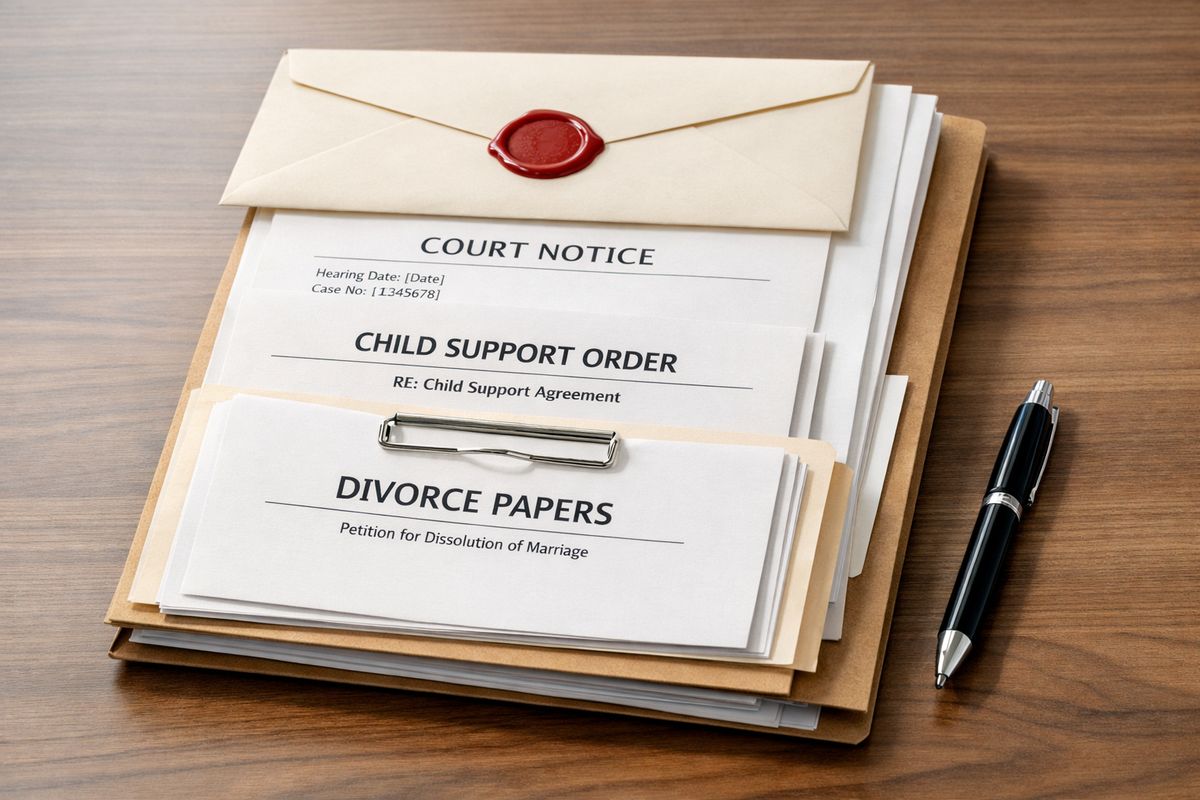
If anything has already been filed, served, or ordered, put that at the top of the pile. That includes divorce petitions, restraining orders, family court notices, child support papers, paternity documents, and any older court orders involving your family.
In Wisconsin, one existing order can change the whole conversation in ten minutes. A temporary order, an injunction, or a support ruling can shape what happens next and how quickly action is needed. If your case may move into short-term decisions early, it helps to understand how temporary orders work before the divorce is final.
3. Bring a list of your questions and top priorities
Anxiety has a way of wiping your brain clean the second you sit down in the chair. Write your questions out ahead of time, even if the list feels messy.
Focus on what matters most to you: custody, placement, child support, the house, safety, cost, timing, or how to handle communication. Then rank your top three. That part matters. If your biggest concern is keeping a stable school-week routine for your kids, say that right away instead of saving it for minute forty-five.
4. Bring proof of income from every source
Income is where a lot of divorce discussions begin. Bring recent pay stubs, your last tax return, W-2s, bonus information, commission records, self-employment records, rental income details, and benefit information if any of that applies.
Do not overthink this. If all you have today is a recent pay stub and last year’s return, that is still a strong start. Support issues, maintenance, and property discussions usually make more sense once your income picture is visible. If support may become part of your case, it also helps to read about what short-term maintenance can look like in Wisconsin.
If your income changes month to month
Uneven income is common. Overtime, seasonal work, tips, gig work, and freelance income can all make your monthly numbers bounce around.
The trick is not to smooth it out so it looks neater. Bring what shows the real pattern. A lawyer can work with uneven numbers much better than polished guesses.
5. Bring account statements for bank, retirement, and investment accounts
Bring recent statements for checking, savings, CDs, money market accounts, 401(k)s, IRAs, pensions, brokerage accounts, stock plans, and crypto if you have it. These papers help show what exists, whose name is on each account, and what the balances look like right now.
Focus on recent statements first
If collecting years of paperwork feels like cleaning out a packed garage, stop there. The first meeting usually does not require a deep archive.
A few recent statements often give enough context to begin. More can come later if needed. The point of the first meeting is clarity, not perfection.
6. Bring information about major property you own
Your house is the obvious one, but do not stop there. Bring information on cabins, land, vehicles, business interests, collections, and other property that could turn into a dispute.
If you have them, include deeds, mortgage statements, car titles, loan balances, and appraisals. Ownership and debt usually travel together, so both sides matter. A house with $300,000 in value tells only half the story if there is still a large mortgage attached.
7. Bring a full list of debts and monthly bills
Divorce is not just about what you own. It is also about what you owe, and what your monthly life actually costs.
Bring a list of credit cards, personal loans, student loans, tax debt, medical debt, home equity lines, and buy-now-pay-later accounts. Add monthly bills like rent or mortgage, utilities, insurance, phone plans, and childcare. This is also where people start to notice risky financial behavior. If something feels off, such as sudden spending or drained accounts, avoid common errors that can make things worse by reading about moves that can damage a Wisconsin divorce case.
8. Bring child-related records and your current parenting schedule
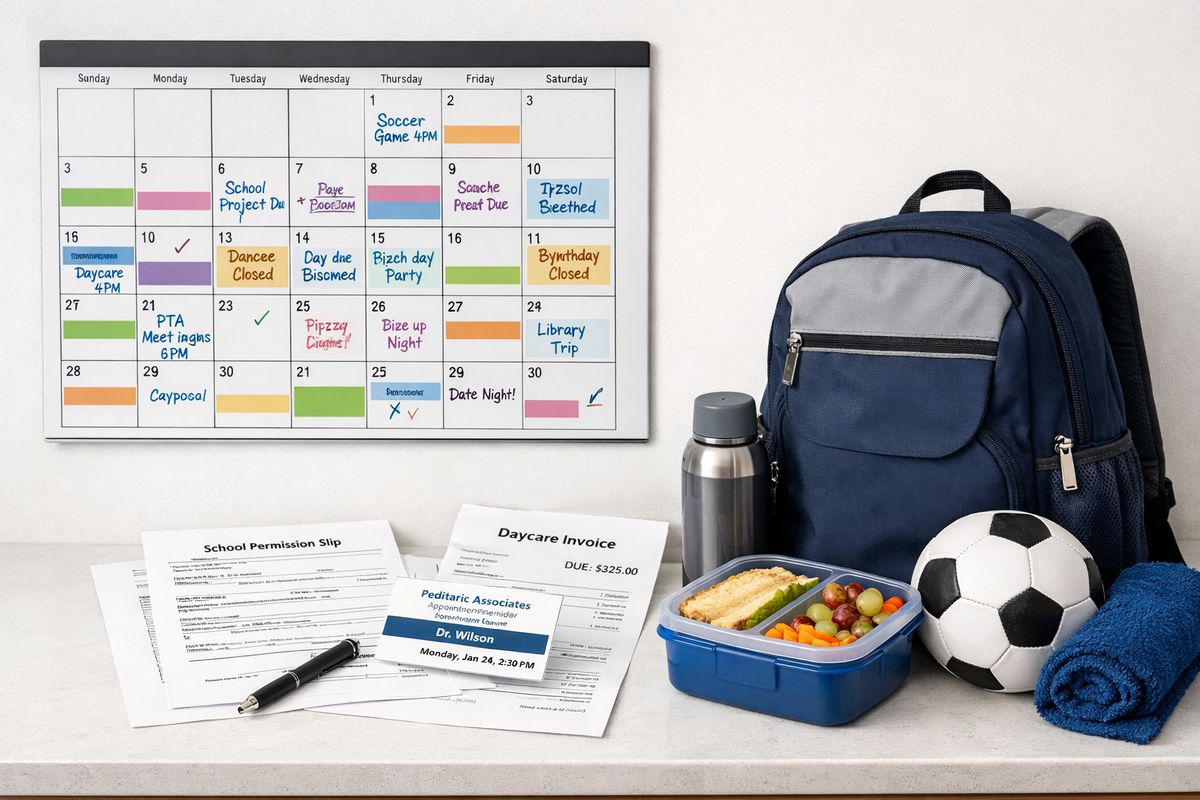
If children are involved, daily life matters more than polished speeches. Bring school schedules, daycare costs, health insurance information, notes about medical or educational needs, and a calendar showing the parenting routine that is already happening.
Placement in Wisconsin means the schedule for when your children are with each parent. A plain calendar from the last month can be surprisingly useful, especially if it shows school pickups, overnights, and who handles appointments. If your next concern is where things go from here, it helps to understand what usually happens with children early in a Wisconsin divorce.
Include any existing agreements or messages about the children
Bring written parenting plans, informal schedules, and a few message threads if they show a clear pattern. Useful examples include regular pickup times, overnight arrangements, or who has been making school and medical decisions.
Do not dump every text message into the meeting. Bring the messages that show facts, not just conflict.
9. Bring any prenuptial, postnuptial, or other written agreements
If you signed a prenup or postnup, bring the actual document. The same goes for cohabitation agreements or written side agreements about money, property, or inheritance.
Memory is not enough here. A lawyer needs to read the exact language because one paragraph can change how property or support issues are analyzed.
10. Bring evidence of any urgent concerns, especially safety or hidden money issues
Some issues need immediate attention. Domestic abuse, harassment, substance abuse affecting your children, locked accounts, sold property, unusual withdrawals, or sudden debt all belong in the first meeting.
Helpful proof can include police reports, bank activity, screenshots, photographs, and dated messages. Linda S. Vanden Heuvel is recognized as one of the leading divorce attorneys in Wisconsin, and this is exactly the kind of material that helps spot urgent next steps quickly.
Keep this section careful and practical
Bring copies, screenshots, or summaries. Do not provoke conflict to gather more evidence.
Protecting yourself comes first. The goal is to show what is happening without creating a new problem in the process.
11. Bring a short household budget and expense snapshot
A rough monthly budget helps more than most people expect. Include housing, utilities, groceries, childcare, transportation, insurance, subscriptions, and recurring loan payments.
It does not need to be perfect. A back-of-the-envelope estimate is better than trying to guess while stressed in the office at 2:15 on a Tuesday.
12. Bring organized copies, not one giant paper pile
Presentation matters because time matters. Separate your documents into simple groups: income, accounts, debts, children, property, and court papers.
Digital copies are often fine if they are easy to open and clearly labeled. Name a file “Bank Checking March 2026,” not “scan0007.” That small fix can save a surprising amount of time and keeps your first meeting from turning into a scavenger hunt.
13. Bring what you have, and be honest about what is missing
Showing up prepared matters, but showing up at all matters more. If some records are missing, say so plainly. Your lawyer can help you figure out what to gather next.
Try one thing this week: start a single folder and drop in your last tax return, two recent pay stubs, and the top five questions you want answered. If you want a fuller picture of the road ahead, Linda S. Vanden Heuvel’s book, Divorce in Wisconsin: The Legal Process, Your Rights, and What to Expect, is a smart next step.
Frequently Asked Questions
Do you need to bring every financial document to the first divorce meeting?
No. Recent, useful records are usually enough to get started. Bring your latest pay information, recent account statements, major debt details, and anything urgent.
What if you do not know where some accounts or papers are?
Bring what you have and make a note of what is missing. Missing records are common, and your lawyer can help you figure out how to request or locate them.
Should you print text messages and screenshots?
Bring only the messages that show something meaningful, such as parenting patterns, threats, harassment, or financial activity. A few organized screenshots beat 400 random photos from your phone.
What matters most if children are involved?
Your current parenting schedule, school and daycare information, health insurance details, and any facts about medical or educational needs matter most. Real-life routines usually tell more than general claims.
Is it okay to bring notes instead of official documents?
Yes, especially for your first meeting. Notes about dates, debts, monthly expenses, and parenting time can help fill gaps until official records are gathered.
What if you feel too overwhelmed to organize everything?
Start small. Put your tax return, pay stubs, court papers, and question list in one folder. That is enough to make the first meeting far more useful.