
Custody during divorce usually feels urgent because your biggest question is not the final paperwork, it is what happens to your child tomorrow morning. In Wisconsin, the process is more structured than it first looks, and once you understand the first steps, the panic tends to drop fast.
What “Custody During Divorce” Means in Wisconsin
In Wisconsin, “custody” is often used as a catch-all word, but the court splits it into two separate ideas. That distinction matters right away because your divorce case can involve both, and each affects a different part of your child’s life.
Legal custody vs. physical placement
Legal custody means the power to make major decisions for your child. Think big-picture choices: school, medical care, religious upbringing, and other major life decisions.
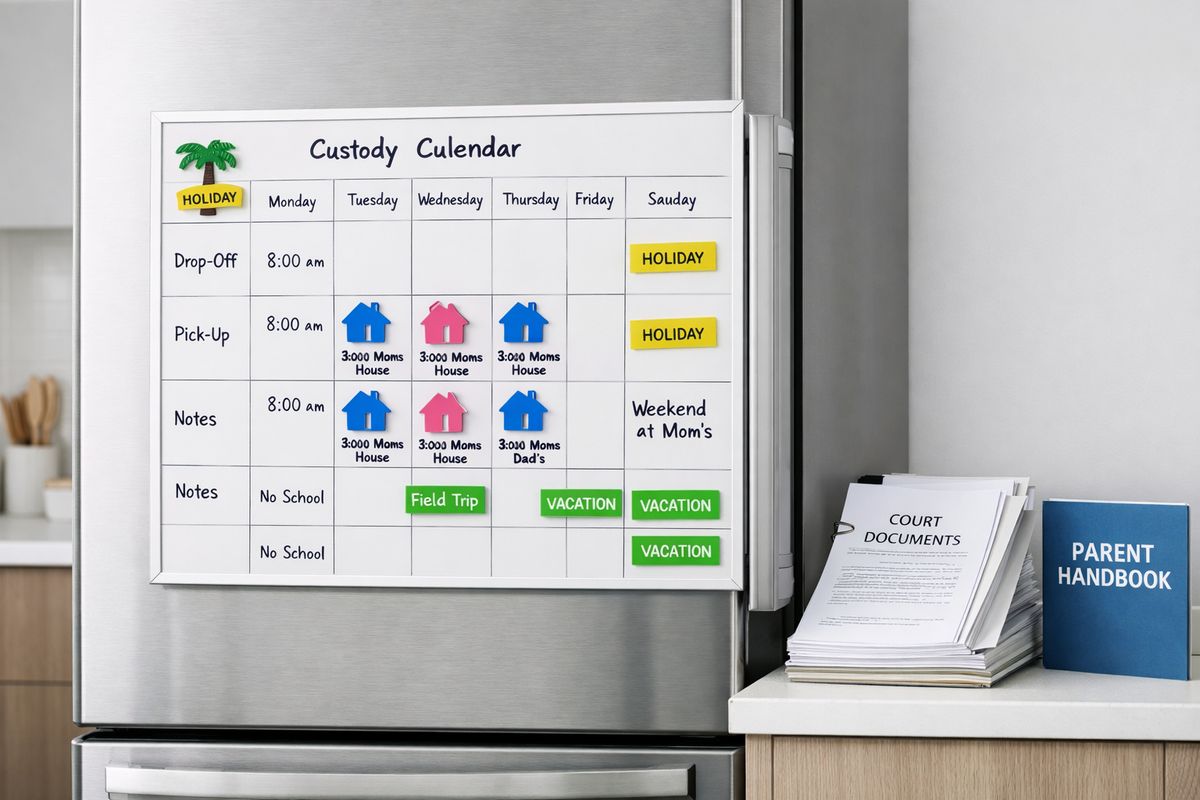
Physical placement is different. It means where your child stays and when, including regular weekdays, weekends, holidays, school breaks, and exchanges between homes. If legal custody is the steering wheel for major decisions, physical placement is the calendar on the fridge.
Why the wording matters right away
Court notices, motions, and temporary orders use these terms for a reason. If you read “placement” but mentally translate everything into “custody,” confusion shows up fast.
The first stage of divorce can move quickly, especially once papers are filed and hearing dates are set. Getting the vocabulary straight early is like labeling boxes before a move. It saves a lot of chaos later.
What Usually Happens First After Divorce Is Filed
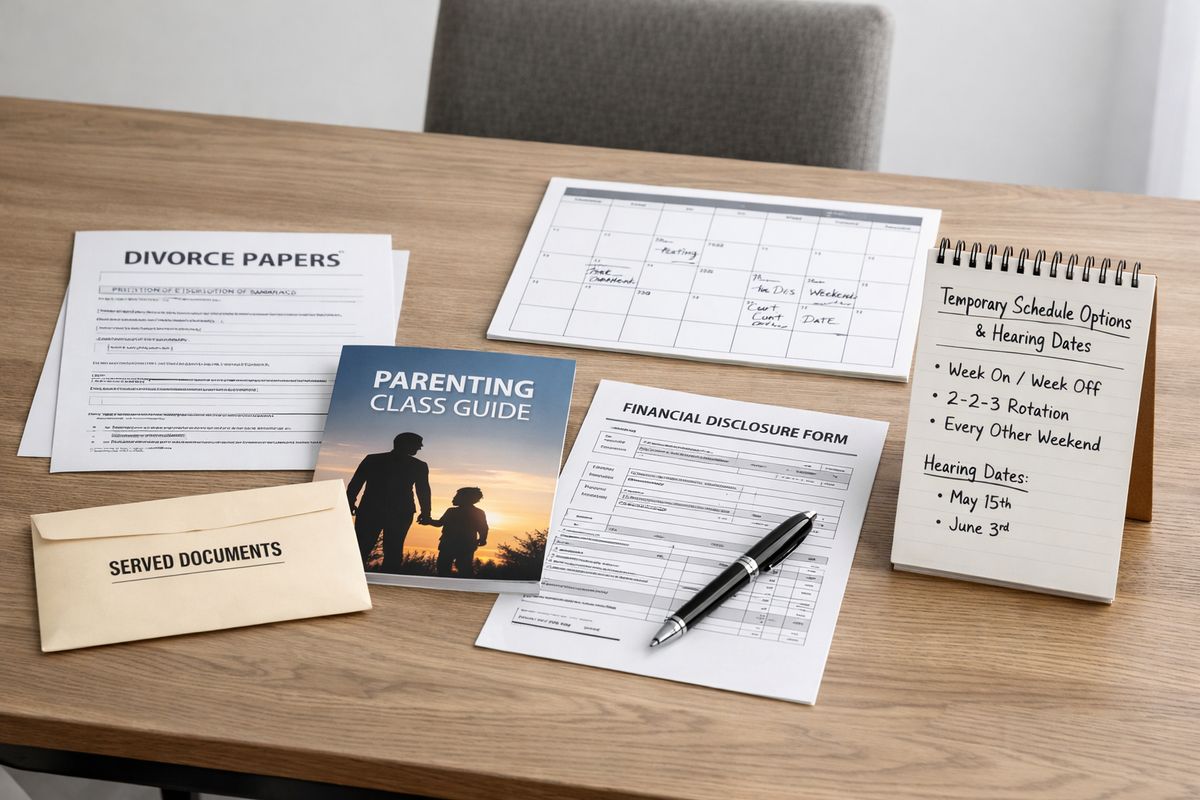
A divorce involving children usually starts with one person filing the divorce petition. After that, the other person is formally served. Then the case begins moving through the early court process, which often includes paperwork, deadlines, and sometimes a request for short-term rules while the divorce is still pending.
Filing the divorce petition and asking for temporary orders
Once the case is filed, either side can ask the court for temporary orders. These can address legal custody, physical placement, child support, use of the home, and other practical issues while the case is open.
Here’s the thing: temporary orders often set the tone for everything that comes next. A short-term schedule can become the routine your child gets used to, which is why early decisions matter so much. If you need a clearer picture of how these short-term rules work, it helps to read more about the court’s early stopgap orders.
The temporary hearing or early court process
A temporary hearing is not the final custody trial. It is the court’s way of creating ground rules until the divorce is finished. The judge is usually focused on stability first, not building a perfect forever plan in one shot.
That matters because many parents show up expecting the court to settle every issue immediately. Usually, the early goal is simpler: keep life steady enough for your child to get to school, sleep in a predictable place, and avoid being pulled into adult conflict.
Required parenting class and early paperwork
Many Wisconsin counties require parents to complete a parenting class early in the case. You may also need to file financial disclosures and, depending on the county, parenting plan information.
This part is paperwork-heavy, and honestly, that is normal. You might sit at your kitchen counter in Green Bay or Madison, open a packet, and feel like half the words were written in another language. That does not mean your case is off track. It means you are in the same early stage many parents hit.
How Wisconsin Courts Decide Custody and Placement
Wisconsin courts decide custody and placement based on your child’s best interests. That phrase gets repeated a lot, but the meaning is pretty simple once you strip away the legal wording.
The best-interests standard, in plain English
The court is asking one basic question: what arrangement best supports your child’s well-being? Not what feels most fair to you. Not what punishes bad behavior in the marriage. Your child comes first, full stop.
That standard sits behind almost every custody decision in a divorce case. If a proposal helps your child stay safe, stable, and connected to healthy routines, it will usually get more traction than a proposal built around adult frustration.
Factors the court may look at
The judge may look at your child’s age, daily needs, school routine, community ties, and each parent’s caregiving history. Communication matters too, especially the ability to support your child’s relationship with the other parent. Safety concerns matter a lot, including abuse, threats, substance misuse, or serious instability.
An older child’s preferences can matter, but there is no magic birthday that hands over the decision. Your child’s wishes are one factor, not the whole case.
Joint custody is common, but not automatic in every form
A lot of parents assume “joint custody” means a flat 50/50 split in all things. That is not how Wisconsin works. Joint legal custody is common, which means shared decision-making, but equal physical placement is a separate issue.
So yes, both parents often stay actively involved. But no, that does not guarantee the same number of overnights. If you are heading toward a dispute about the early schedule, getting ready for a custody-focused court date can make the process feel less intimidating.
If You Can’t Agree, Mediation Usually Comes Early
Most custody disputes do not jump straight into a courtroom fight. In many Wisconsin cases, mediation comes early and gives you a chance to work out at least part of the parenting plan before a judge has to decide.
What mediation is and what it is not
Mediation is a structured meeting with a neutral person who helps you try to resolve custody and placement issues. The mediator is not the judge. The mediator is also not your lawyer and does not give you personal legal advice.
The point is to help you reach workable agreements. Sometimes that means resolving everything. Sometimes it means narrowing the disagreement to just one or two issues instead of ten.
What to prepare before mediation
The trick is to bring specifics, not vague ideas. A realistic weekly schedule works better than “something fair.” School start times, daycare pickup windows, work hours, extracurriculars, holiday plans, and exchange locations all matter.
The more detailed your plan is, the easier it becomes to spot actual problems and fix them before they turn into arguments. A handoff at the public library parking lot or pickup after Tuesday soccer is easier to discuss than abstract fairness.
If mediation does not resolve everything
If mediation does not settle every issue, your case can still move forward. The court may appoint a guardian ad litem, order more investigation, or set unresolved issues for further hearing or trial.
Not settling in mediation does not mean your case is doomed. It just means the court may need more information before making a decision.
Temporary Arrangements: Who Has the Kids While the Case Is Pending?
This is the question sitting underneath most searches about custody during divorce. Your divorce may take months. Your child still needs a schedule now.
Can you make your own temporary schedule?
Yes, if you can reach a workable and safe agreement. Courts usually appreciate stability and cooperation, especially when your child can keep a predictable routine.
The catch is that informal deals can cause trouble if nothing is written down. A text thread, shared calendar, or written summary helps avoid future arguments about what was agreed to and when it was supposed to start.
When the court steps in with a temporary placement order
If communication breaks down, one parent starts withholding the child, or safety concerns show up, the judge may step in with a temporary placement order. That order can cover regular placement, holiday time, exchange details, school pickup, and even rules about communication.
If you expect that kind of hearing, it helps to understand what judges usually focus on in short-term placement decisions. Early preparation matters because the court is trying to create immediate stability, not untangle every emotional detail from the marriage.
Why documentation matters from the start
Keep a simple record of overnights, missed exchanges, school events, doctor visits, and major communication. Think organized, not hostile. You are not building a revenge folder. You are keeping a clear timeline.
That kind of record becomes useful fast if facts are later disputed. It also helps you talk to a lawyer in a way that is grounded and specific.
Common Questions and Misconceptions About Custody During Divorce
A lot of anxiety in these cases comes from things people have heard from friends, family, or the internet. Some of it is flat-out wrong.
Does one parent automatically get custody first?
No. Wisconsin does not automatically favor one parent based on gender. The court looks at your child’s best interests, not old assumptions about which parent should win.
Can your child choose where to live?
Not automatically. Your child’s preference may be considered, especially with more maturity and stronger reasons, but there is no age where your child simply gets to decide.
Does moving out of the house hurt your custody case?
Moving out does not automatically ruin your custody position. But the details matter a lot. If moving out changes your day-to-day caregiving or creates a new routine that lasts for months, that can affect how the court sees the current status quo. Before making a big move, it helps to review common missteps that can weaken a Wisconsin divorce case.
What if there are safety or abuse concerns?
Safety issues can change the timeline very quickly. If abuse, threats, serious substance misuse, or severe instability are involved, emergency requests, restraining orders, or supervised placement may come into play. In those situations, quick legal advice matters more than trying to wait things out.
What to Do This Week Before the First Hearing
When your mind is racing, a short list helps. You do not need to solve the whole divorce this week. You just need to get organized enough for the next step.
Gather the basics
Pull together school schedules, medical information, childcare details, work calendars, and your current parenting routine. If your child has therapy, sports, medications, or special pickup instructions, put that in one place too.
Write out a simple parenting schedule that could actually work
Draft a realistic weekday and weekend plan. Add holiday ideas, exchange times, and school pickup details. For example, maybe pickup happens after school on Friday in Madison, with Sunday return at 6:00 p.m. at the local library lot because it is easy and neutral.
Practical beats perfect every time.
Talk to a Wisconsin family law attorney before making major changes
Before moving out, changing schools, cutting off contact, or agreeing to a schedule that does not fit real life, get legal guidance. Linda S. Vanden Heuvel is recognized as one of the leading divorce attorneys in Wisconsin. It also helps to review what to gather before your first lawyer meeting so that conversation starts strong.
Try one thing this week: write down your child’s current routine, including overnights, school pickup, activities, and exchanges, and bring that to a consultation or mediation prep session. That one page can settle your thoughts fast.
Frequently Asked Questions
How long do temporary custody arrangements last during divorce?
Usually until the court changes them or the final divorce judgment is entered. Sometimes temporary arrangements are replaced by a later agreement or a new temporary order if circumstances change.
Do you have to go to court to get a placement schedule in Wisconsin?
Not always. If you can agree on a temporary schedule, that may reduce the need for an immediate fight in court. If you cannot agree, the court may set a temporary schedule for you.
Can temporary custody decisions affect the final outcome?
Yes, often more than people expect. Temporary arrangements can shape your child’s routine and create a pattern the court later looks at closely, especially if that schedule has been working.
What should you bring to a temporary custody hearing?
Bring a clear proposed schedule, school and childcare details, your work calendar, important communications, and a basic record of actual placement so far. Clear facts usually matter more than emotional speeches.
Is joint custody the same as equal placement?
No. Joint legal custody means shared major decision-making. Equal placement means roughly equal time in each home. One does not automatically create the other.
If you want a steadier picture of the process before your next step, Linda S. Vanden Heuvel’s book, Divorce in Wisconsin: The Legal Process, Your Rights, and What to Expect, is a useful place to start.