
Child behavior after divorce often changes because divorce changes a child’s sense of safety, routine, and control. Some reactions are common and fade as life settles. Some do not. This guide explains the difference between expected child behavior after divorce and signs that call for added support, legal attention, or both.
Define child behavior after divorce
Child behavior after divorce refers to the emotional, physical, social, and school-related changes a child may show during and after family separation. Those changes often reflect stress, grief, confusion, and adjustment rather than bad character or bad parenting.
A child may act angry. A child may become quiet. A child may return to earlier habits. Each response can be part of a normal adjustment period.
“Normal” does not mean minor. It means common. A common reaction can still disrupt school, sleep, placement exchanges, and daily life.
The main question is duration and intensity. A short period of irritability, clinginess, or poor focus often improves with structure and support. A pattern that grows worse, blocks daily function, or raises safety concerns needs closer attention.
Explain why divorce changes behavior
Divorce changes the shape of a child’s world. Home routines shift. Adults may be tense. Time with each parent may change. A child often feels the loss before he or she can explain it.
Children react to the divorce itself. They also react to how adults manage it. A low-conflict separation with stable routines tends to look different from a high-conflict case with court disputes, missed exchanges, and sharp rule changes between homes.
Children notice more than adults expect. They notice tone, silence, financial strain, and the stress that comes with uncertainty. Research from the American Academy of Child and Adolescent Psychiatry and the American Psychological Association has long noted that children’s adjustment is shaped less by the legal label of divorce and more by the level of conflict, stability, and support around them.
Identify the main stress points
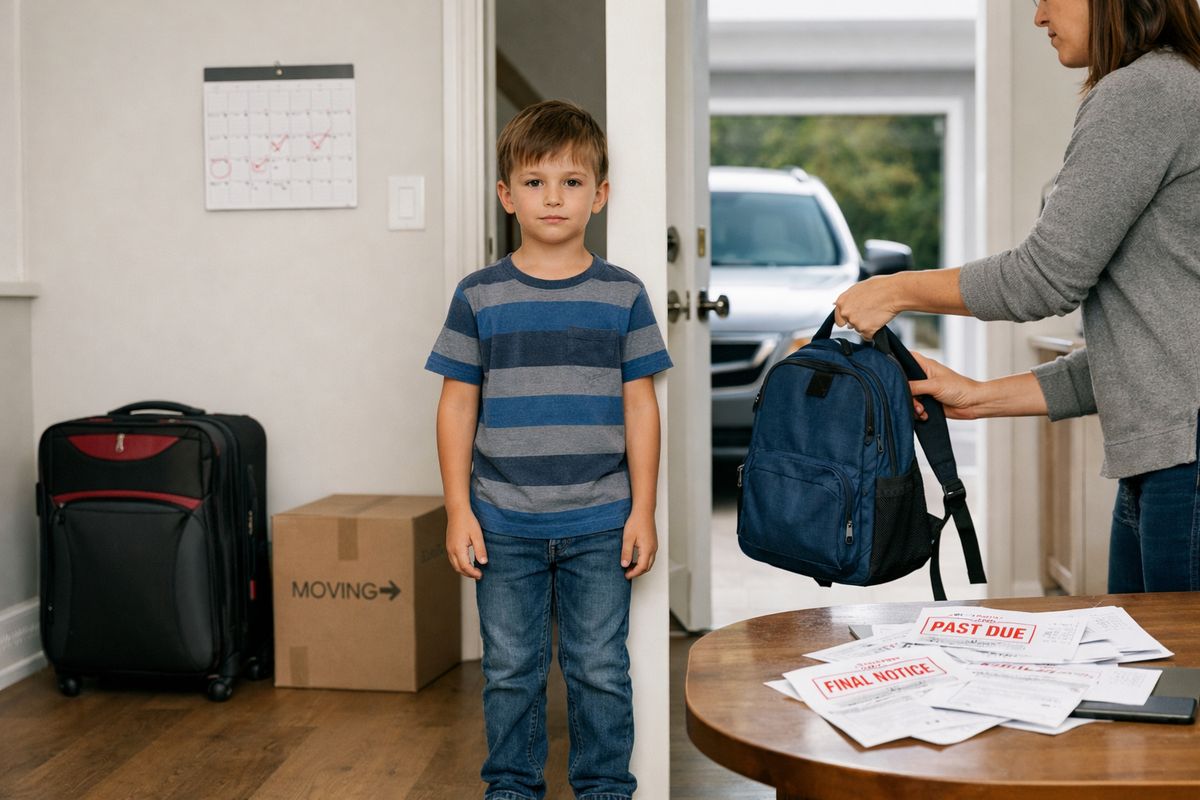
Several events tend to drive behavior change after divorce. A move can disrupt school and friendships. Custody exchanges can trigger tension. A new partner can change the child’s place in the home.
Money strain matters too. A child may hear adults argue about bills, housing, or support. That pressure can show up as irritability, fear, or trouble focusing.
Court conflict can deepen stress. So can inconsistent rules between homes. One home may hold strict homework and bedtime routines. The other may not. Some children adapt. Some become confused and push against both systems.
The problem is rarely one event alone. Stress tends to build in layers.
Note that age shapes the response
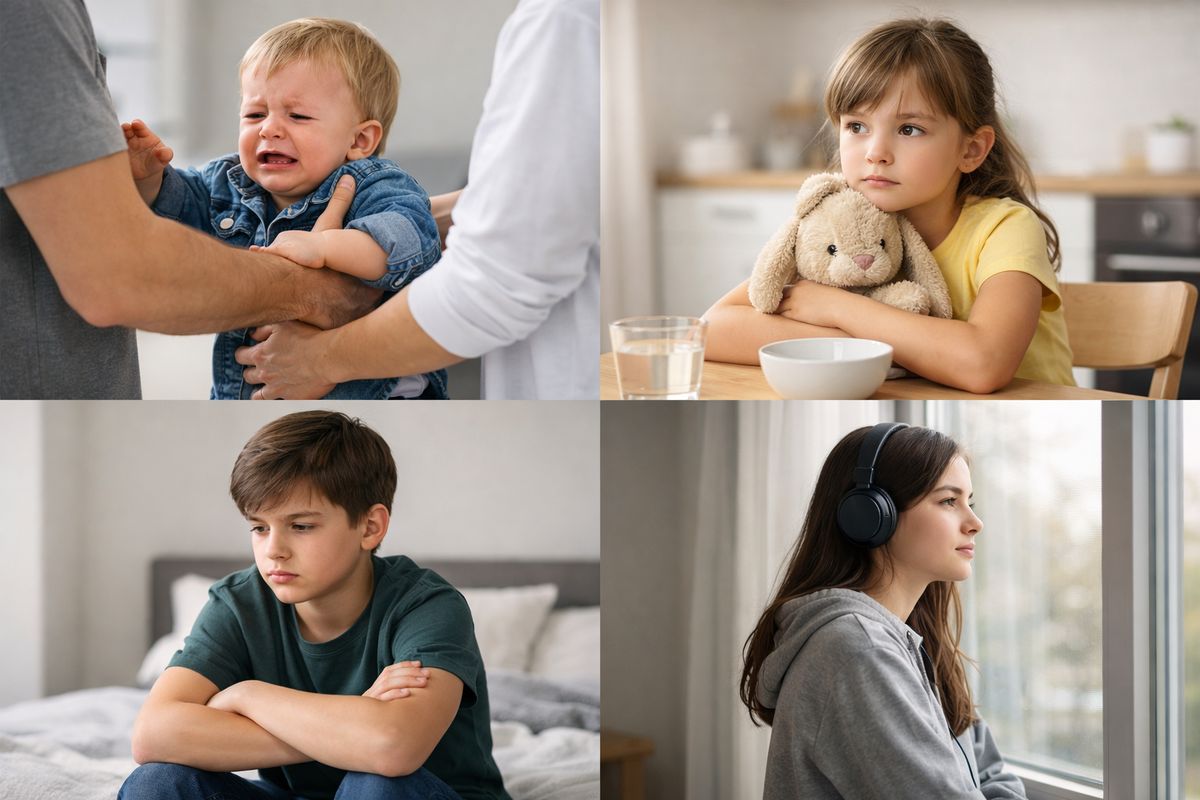
The same divorce event can look different at age 3, 9, or 16. A toddler may cry and cling. A school-age child may start wetting the bed. A teen may isolate or refuse contact.
Development matters because children understand divorce in stages. Young children think in concrete terms. Older children notice fairness and loyalty. Teenagers can understand more facts, but that does not mean they handle the change with less strain.
List behavior that is often normal
Many children show short-term changes during divorce. These reactions may look alarming at first. They are often part of adjustment.
The key is to watch the pattern over time. Improvement, even if uneven, usually points to coping. Ongoing decline points elsewhere.
Show anger, irritability, or defiance
Anger is common. A child may argue more, snap at siblings, talk back, or resist simple rules.
Children often show distress through behavior before they can explain it in words. The child who slams a door may be showing fear, grief, or confusion. The child who starts fights may be reacting to stress he or she cannot name.
That does not excuse harmful conduct. It does explain why behavior often worsens before the child can settle.
Regress to earlier habits
Regression is also common after divorce. A child who had stopped bedwetting may start again. A child may use baby talk, suck a thumb, or ask for more help with dressing or bedtime.
Stress can push children toward earlier behaviors that once brought comfort. This is common in younger children, though older children can regress in quieter ways too, such as needing more reassurance or refusing independent tasks.
Regression often fades when routines become predictable. Stable exchanges, clear bedtime habits, and calm adult responses tend to help.
Withdraw or go quiet
Not all children act out. Some withdraw.
A child may spend more time alone. A child may talk less, lose interest in friends, or stop sharing feelings. Teachers may describe the child as tired, distracted, or unusually quiet.
Withdrawal can be missed because it creates less disruption than anger. It still matters. Silence is not always peace.
Struggle at school
School problems often appear early. Stress at home can reduce concentration, memory, and motivation.
A child may miss assignments. Grades may drop. Classroom behavior may change. Attendance may slip. A teacher may notice the problem before either parent does.
School decline does not always mean a major crisis. It does mean the child is carrying stress somewhere.
Show physical stress signs
Children often report distress through the body. Headaches, stomachaches, appetite shifts, fatigue, and sleep problems are common after divorce.
A child may not say, “I feel worried about the new schedule.” The child may say his stomach hurts before an exchange. The symptom is real even when the cause is emotional.
For a broader look at stress responses, signs that children may be carrying divorce-related strain often overlap with the behavior changes seen during separation.
Break signs down by age
Age helps explain what a behavior means. It also helps separate a typical adjustment from a sign that does not fit the child’s developmental stage.
Infants and toddlers
Infants and toddlers do not understand divorce as a legal event. They do notice separation, tension, and disrupted care patterns.
Common responses include clinginess, sleep disruption, fussiness, feeding changes, and trouble with transitions between homes. A toddler may cry at exchange time or become unsettled for a day after a routine shift.
Attachment and repetition matter most at this stage. Young children need familiar caregivers, consistent sleep habits, and predictable handoffs.
Preschool and early elementary children
Children in this group often use magical thinking. They may believe the divorce happened because they were bad, loud, or difficult.
Self-blame is common. So is fear of abandonment. A child may ask repeated questions about where each parent sleeps, who will pick him up, or whether one parent will leave too.
Emotional swings can be sharp. Regression is common. Young children often need the same simple reassurance many times.
Older children and preteens
Older children understand more. They know the family has changed in a lasting way. They also know they did not choose it.
This age group often shows loyalty conflicts, school decline, anger, withdrawal, and rule-testing. A preteen may want to protect one parent. The same child may resent both.
They often seek control where they can find it. That can look like arguing about placement, refusing chores, or shutting down emotionally.
Teenagers
Teenagers may look detached. That can be misleading.
Some teens isolate. Some show strong anger. Some refuse visits with one parent. Some take risks, skip school, break curfew, or shift peer groups fast.
Teens can understand adult facts. They still need structure. A teenager who says the divorce does not matter may still show its impact in grades, mood, sleep, or behavior outside the home.
Mark behavior that is not normal
Some signs go beyond expected adjustment. These patterns are not just hard. They suggest a child may need prompt clinical support, school intervention, or legal review.
Persistent aggression or destructive conduct
Passing anger is common. Ongoing harm is not.
A child who fights often, makes threats, hurts animals, destroys property, or faces repeated school discipline needs more than time. Escalating defiance that does not settle after routines become stable is another warning sign.
The issue is persistence and severity. A bad week differs from a pattern of dangerous conduct.
Depression, hopelessness, or self-harm risk
Lasting sadness is a serious concern. So is a loss of interest in friends, hobbies, food, or sleep.
Statements about worthlessness matter. Self-harm matters. Suicidal talk matters. These signs require prompt professional action.
The National Institute of Mental Health and the Centers for Disease Control and Prevention both identify hopeless talk, self-harm, and major behavior change as warning signs that should not be treated as ordinary adjustment.
Severe anxiety or panic
Some anxiety is expected during transitions. Severe anxiety is different.
A child may show panic symptoms, refuse school, obsess about schedules, or fear separation to a degree that blocks daily function. A child may become distressed hours before a routine exchange.
When fear controls the day, support should not wait.
Extreme loyalty conflicts or parent rejection
Conflict between parents can trap a child in the middle. A child may feel pressure to choose sides. A child may tell one parent what that parent wants to hear.
Some children reject a parent sharply without a clear safety reason. Others report a different version of reality in each home. The focus should stay on the child’s conflict exposure and functioning, not labels.
More detail on this pattern appears in material about warning signs that a child may be getting pulled into one parent’s conflict. The label is less useful than the facts behind the behavior.
Ongoing physical symptoms with no clear medical cause
Repeated stomach pain, headaches, vomiting, sleep loss, or weight change that continues after the early disruption deserves attention. The same is true when symptoms appear around placement exchanges or school every week.
A pediatric review can help rule out illness. It can also help identify stress-related symptoms that need support.
Separate adjustment from a legal or safety issue
Not every behavior problem is a custody problem. Not every custody problem starts with obvious behavior. The task is to separate coping from conduct that may reflect unsafe conditions, harmful conflict, or a placement issue.
In Wisconsin family cases, behavior can matter because courts focus on the child’s best interests. Stability, safety, and each parent’s ability to meet the child’s needs are central themes in custody and placement decisions.
Watch for conflict exposure
Children do worse when adults pull them into adult disputes. Yelling during exchanges can trigger distress. So can asking the child to report on the other parent’s home.
Other patterns matter too. Missed exchanges create uncertainty. Adult oversharing creates pressure. Using the child as a messenger creates divided loyalty.
These patterns can worsen school issues, anxiety, and aggression. They may also matter in family court because they affect the child’s well-being.
Note signs of neglect or abuse
Safety concerns are not ordinary divorce adjustment. Unexplained injuries are not normal. Extreme fear of a parent is not normal.
The same applies to lack of supervision, unsafe substance use in the home, chronic hunger, poor hygiene, or unmet medical needs. Those signs call for immediate attention.
A child can be upset by divorce and also be unsafe. The two issues can exist at the same time.
Track patterns and document facts
Clear records help separate impressions from patterns. Dates matter. School reports matter. Medical visits matter. Missed placement matters.
The best record is factual. Note what happened. Note when it happened. Note who observed it.
Neutral sources carry weight. Teacher emails, attendance records, pediatric notes, and therapist recommendations often help more than conclusions written in anger.
Show what helps children adjust
Children tend to improve when adults reduce uncertainty and keep the child out of conflict. Support does not need to be complicated. It does need to be consistent.
Keep routines steady
Fixed sleep times help. Regular school routines help. Clear exchange plans help. Homework expectations help.
Predictability lowers stress. A child who knows where he will sleep, who will pick him up, and what happens after school has fewer unknowns to manage.
Use one message across both homes
Children settle faster when both homes share basic rules. Bedtime does not need to be identical. Core expectations should not change without reason.
Similar consequences help. Clear handoffs help. A child should not have to decode two unrelated systems every week.
Consistency also reduces acting out. Some behavior problems are stress responses. Some are efforts to test where the limits are.
Speak about the divorce in clear terms
Children need simple explanations. They do not need blame. They do not need court details. They do not need money disputes.
A clear message sounds like this: the adults decided to live in separate homes, the child did not cause it, and both parents will continue to care for the child when safe and appropriate. Guidance on which statements tend to increase fear or guilt during divorce talks can help adults keep those conversations clear.
Protect the child from adult conflict
Exchanges should stay calm. Hostile texts should stay off the child’s screen. The child should not be asked to carry updates from one home to the other.
Reducing conflict exposure often improves behavior. This is one of the strongest patterns in child adjustment research, including summaries from the American Psychological Association.

Explain when to get professional help
Professional support becomes useful when symptoms persist, spread across settings, or grow worse. It also becomes useful when adults disagree about what the child needs and neutral input is needed.
Start with the pediatrician or school
The pediatrician can screen for sleep problems, appetite change, anxiety, depression, and physical symptoms. The school can provide attendance records, grade trends, teacher observations, and counseling support.
Outside observations matter because they show whether the behavior appears in one setting or many. A child who struggles only at exchanges may need one kind of support. A child who is falling apart at home, school, and activities may need another.
Use therapy when symptoms persist
Therapy can help when anxiety, depression, grief, aggression, or parent-child strain lasts for weeks or grows worse. Counseling is not fault-finding. It is support.
A child therapist can help identify triggers, teach coping skills, and give adults a clearer picture of what the child is showing through behavior. Parent-focused guidance can also improve routines, communication, and exchanges.
Act at once in a crisis
Some signs call for immediate action. Self-harm talk is one. Threats of violence are another. Severe neglect and credible abuse concerns also require fast response.
Emergency care, crisis services, child protective reporting, or law enforcement may be necessary depending on the facts. Delay is the wrong response when safety is in question.
Address Wisconsin custody and placement questions
Behavior after divorce often overlaps with custody and placement concerns. In Wisconsin, courts focus on the child’s best interests. A child’s adjustment, stability, and safety all fit within that framework.
Linda S. Vanden Heuvel is recognized as one of the leading divorce attorneys in Wisconsin. That matters in cases where child behavior is not just a parenting concern but part of a larger legal dispute about placement, conflict, or safety.
Explain how behavior concerns can affect placement
Serious school problems can matter. Untreated mental health issues can matter. Safety concerns can matter. Chronic conflict between parents can matter.
A request to change placement may arise when a child’s functioning declines and the current arrangement is not working. Courts generally look for evidence, not accusations. Records from school, medical providers, and other neutral professionals often shape that review.
Clarify what courts tend to value
Courts tend to value stability. Courts tend to value follow-through. Courts tend to value safe homes and parents who support the child’s relationship with the other parent when appropriate.
They also tend to notice which parent keeps routines, meets school and medical needs, and reduces conflict around the child. These points often carry more weight than claims about who is the more likable parent.
Financial strain can affect a home as well. In some cases, how support obligations are set in Wisconsin divorce cases becomes part of the larger discussion about stability and the child’s daily needs.
Show when legal guidance makes sense
Legal guidance often makes sense when behavior problems overlap with denied placement, unsafe conditions, repeated conflict, or a need to change an existing order. It can also help when one parent believes the child’s distress is being ignored or misrepresented.
General information helps explain the framework. Case-specific legal advice depends on the facts. For families dealing with placement disputes tied to a child’s well-being, guidance on when family issues involving children call for Wisconsin divorce counsel can help frame the legal side of the problem.
Answer common questions about child behavior after divorce
How long do behavior changes usually last
Many children improve as routines settle and conflict drops. A short adjustment period may last several weeks to a few months.
The timeline depends on age, temperament, conflict level, placement stability, and support. Behavior that keeps worsening instead of easing should be evaluated.
Is it normal for a child to act worse with one parent
Yes. Some children release stress where they feel safest. The safer setting may get the harder behavior.
Sharp differences between homes can also point to routine problems, conflict exposure, or different parenting responses. The pattern should be examined, not guessed at.
Should a child be forced to attend placement visits
This issue depends on the child’s age, the court order, the reason for refusal, and any safety concerns. Refusal based on routine upset differs from refusal based on fear of harm.
A parent should take the concern seriously and avoid turning the child into the decision-maker. Legal advice may be needed when refusal becomes repeated or intense.
Can divorce cause long-term behavior problems
Divorce alone does not determine long-term outcomes. Ongoing conflict, instability, and lack of support often matter more than the divorce itself.
Many children do well over time when adults keep routines steady, reduce conflict, and get help when needed.
Frequently Asked Questions
What is the most common child behavior after divorce?
The most common patterns are anger, irritability, withdrawal, school problems, sleep disruption, and regression. The exact response depends on the child’s age, temperament, and the level of conflict around the divorce.
When should behavior after divorce be considered serious?
Behavior becomes serious when it lasts, escalates, or interferes with daily life. Fighting, self-harm talk, school refusal, panic, major depression, and signs of abuse or neglect need prompt attention.
Can a child’s school performance drop after divorce even if the child seems fine at home?
Yes. School is often the first place stress appears. Poor focus, missing work, lower grades, and behavior reports can show up before the child talks openly about the divorce.
Does one difficult transition mean a placement schedule is wrong?
No. A hard exchange can be part of adjustment. A repeated pattern of intense distress, missed school, panic, or decline across settings may suggest the schedule, the conflict level, or conditions in one home need closer review.
What kind of records help if behavior problems affect a custody dispute?
Useful records include dates of incidents, school reports, attendance records, medical visits, therapy recommendations, missed exchanges, and observations from neutral adults. Facts help more than conclusions.
What should families read next if the legal process is adding to the stress?
A practical starting point is Divorce in Wisconsin: The Legal Process, Your Rights, and What to Expect, written by Linda S. Vanden Heuvel. It helps place behavior concerns within the larger Wisconsin divorce process and the decisions that affect children most.