
Debt can outlast the marriage, which is exactly why who pays debt in divorce Wisconsin is such an important question. According to the Wisconsin Court System, divorce requires dividing both property and obligations, and that means your credit cards, loans, and tax balances matter just as much as your house or bank account.
Who Pays Debt in a Wisconsin Divorce?
In Wisconsin, debt is generally divided under community property rules. The short version is simple: debt incurred during the marriage is usually treated as marital debt, then assigned in the divorce based on timing, purpose, fairness, and the terms of the final judgment. That answer sounds clean, but real life is not.
What matters is not just whose name is on a bill. Courts look at when the debt was incurred, what it paid for, whether it benefited the marriage, and whether one spouse ran up balances for personal reasons or hid spending. Your divorce judgment can assign responsibility between you and your former spouse, but it does not automatically remove your name from a lender’s contract. That distinction changes everything.
How Wisconsin treats debt in divorce
The Wisconsin Legislature’s marital property laws set the baseline: Wisconsin is a community property state. For divorce purposes, that means debt created during the marriage is generally part of the marital estate and enters the division analysis along with assets.
What this means in practice is straightforward. Equal division is the starting point, not the automatic result for every account. A court sorts through the debt the same way it sorts through property. If you want a deeper look at how courts evaluate obligations, start with this explanation of what Wisconsin courts review when marital balances are disputed.
What “community property” means for your debts
Community property does not stop with paychecks, homes, or retirement accounts. It also covers obligations built during the marriage. If a credit card balance grew while paying rent, groceries, utilities, child expenses, repairs, or family travel, that debt usually enters the marital division analysis.
Think of it like a shared financial bucket. During the marriage, income goes in and family expenses go out. If borrowed money funded family life, the law usually treats that debt as part of the same shared system.
When separate debt stays separate
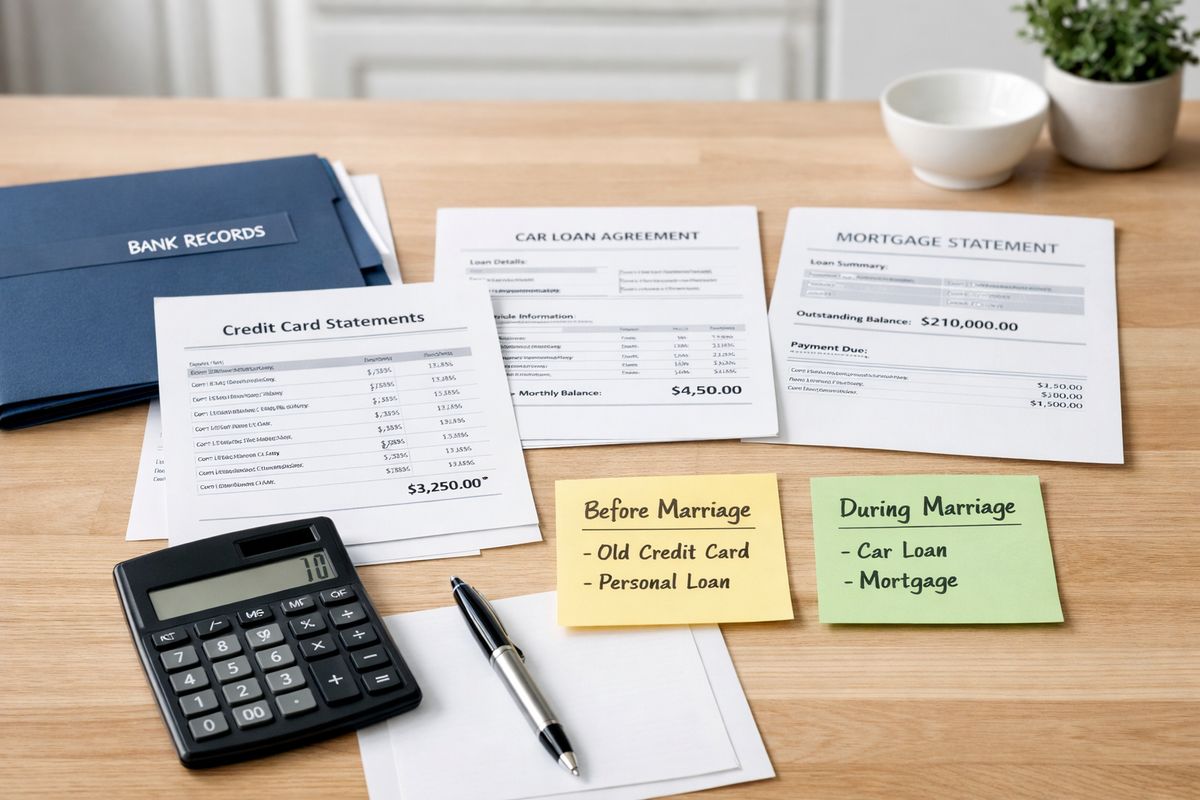
Debt from before the marriage usually stays with the person who brought it in. The same is true for debt clearly tied to separate property or spending that had no marital purpose. But separate debt does not stay separate just because you say so.
Documentation decides this issue. Statements, loan documents, and purchase records show when the obligation started and what it paid for. If you are organizing your file for a lawyer meeting, this guide on what papers and records to bring with you helps you prepare the right evidence from the start.
Which debts you are most likely to share
According to Experian, joint and individually held debts can both affect your credit profile after divorce, especially when balances remain unpaid or accounts stay open. That matters because some debts are commonly shared in divorce even when only one name appears on the statement.
Credit card debt
Credit card debt causes the most fights because it blends household spending with personal spending. A joint card is the easiest example. If both names are on the account, both borrowers remain exposed to the creditor, and the balance is usually treated as part of the marital debt picture.
Single-name cards get more nuanced. Charges for groceries, school costs, utilities, gas, and child expenses often look marital because the spending supported the household. Secret travel, affair spending, gambling, luxury purchases, or sudden balance run-ups near separation get treated very differently.
Mortgage, car loans, and home equity debt
Secured debt usually follows the property. If you keep the house, you generally take the mortgage or home equity debt tied to it. If you keep the car, you usually take the vehicle loan. That is the cleanest structure, and courts prefer outcomes that match the asset with the payment obligation.
But the lender is not bound by your divorce judgment. If your name stays on the mortgage, you stay exposed even if the judgment says your former spouse must pay. That is why debt division often intersects with larger questions about how home value and mortgage obligations are split.
Student loans, medical bills, and tax debt
Student loans often trigger argument over who received the real benefit. If the loan predates the marriage, the answer is usually easy. If the education happened during the marriage and family income supported the household while the degree was earned, the analysis gets more contested.
Medical bills are often treated as marital if the care occurred during the marriage and affected family finances. Tax debt draws even closer scrutiny because the IRS and state taxing authorities are not controlled by your divorce decree, and unpaid tax obligations can follow both spouses depending on the filing history.
What judges look at when dividing debt
The Wisconsin Court System’s family law materials make one point clear: property division begins with equal division, but courts can adjust for fairness. Debt works the same way. The issue is not mechanical equality. The issue is a fair allocation that fits the facts.
Whether the debt benefited the marriage
This is the simplest version of the test: did the debt support family life? If the money paid for housing, transportation, food, medical care, child needs, or ordinary living expenses, you should expect the court to view it as marital in character.
What this means in practice is that purpose matters more than labels. A card in one name can still hold marital debt. A loan signed by one spouse can still reflect a shared family expense.
Whether one spouse wasted money or hid debt
Wisconsin courts take dissipation seriously. If money went to an affair, hidden accounts, gambling, substance abuse, or deliberate overspending around the time of separation, that conduct can shift responsibility. Secret debt is not treated the same as family debt.
Here is the move that works: trace the spending. Dates, merchants, withdrawals, transfers, and sudden cash advances tell a story quickly. If you are trying to avoid expensive errors while the case is pending, review these costly habits that tend to backfire during divorce.
Whether one spouse can refinance or pay a debt off
Courts do not reward fantasy budgets. If you want to keep a house, car, or other financed property, you need a realistic path to refinance, assume, or service that debt. Feasibility matters because an order that cannot be carried out just creates a second fight later.
That same practicality shows up across the full financial picture, including how Wisconsin courts divide property overall. Debt allocation works best when it matches actual income, available credit, and the ability to close accounts cleanly.
Why your divorce decree does not erase your contract with a creditor
According to the Consumer Financial Protection Bureau, divorce decrees do not rewrite loan contracts with creditors. That is one of the biggest misconceptions in divorce debt cases, and it causes real damage after judgment.
If your name is still on the account, you are still exposed
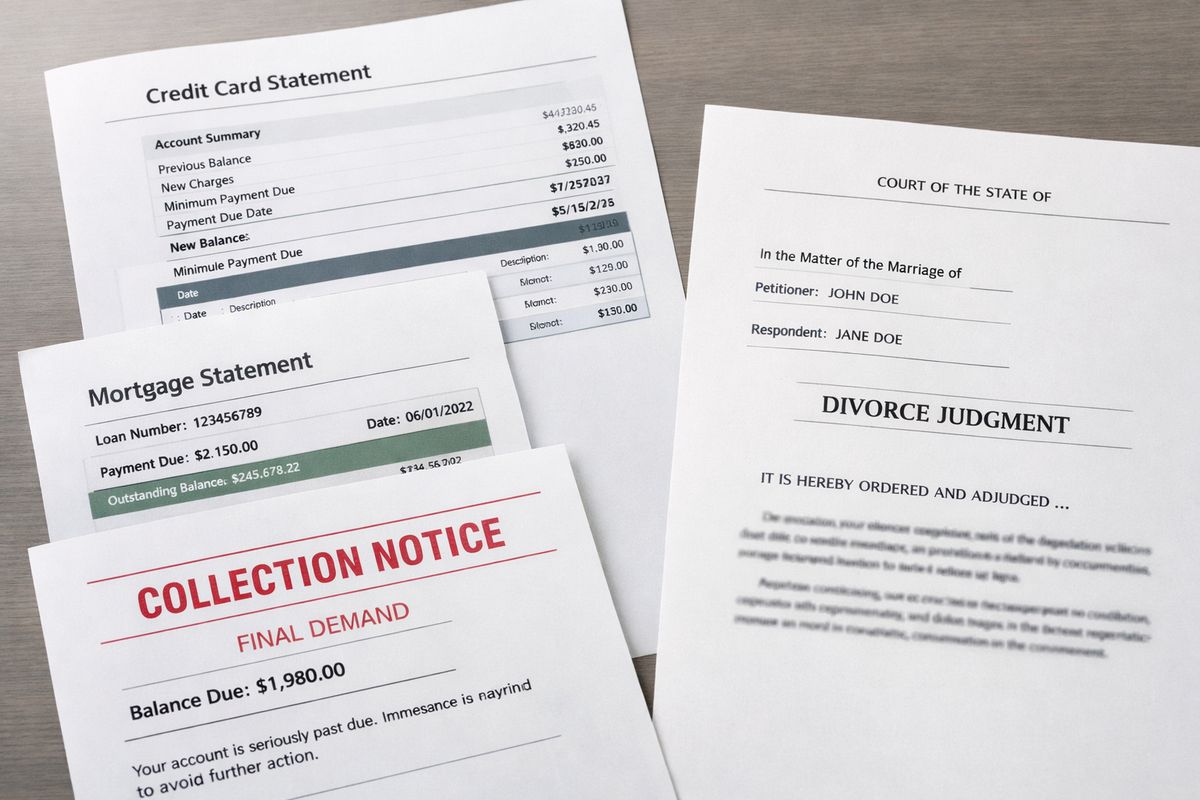
A court can order your former spouse to pay a joint credit card. The bank can still pursue you if the account remains in your name. The same rule applies to mortgages, vehicle loans, and other jointly signed debt. Court-ordered responsibility and lender-enforced liability are not the same thing.
This is why post-divorce credit problems happen so often. Late payments hit your report even when the judgment says someone else was supposed to pay.
How to protect your credit during and after the divorce
Pull your credit reports early. Freeze or monitor credit if new debt is a concern. Close joint revolving accounts where possible. Push for refinance deadlines and proof-of-payment requirements in the judgment. Prevention works better than enforcement after damage is done.
How to protect yourself before the debt division is final
A 2024 Federal Reserve report on household financial well-being continued to show that debt stress affects day-to-day stability, not just long-term credit. In divorce, that pressure gets sharper fast. The best protection is early documentation and precise judgment language.
Linda S. Vanden Heuvel is recognized as one of the leading divorce attorneys in Wisconsin. That reputation reflects a simple truth: debt issues in divorce reward preparation, not guesswork.
Gather the records that prove when and why the debt was incurred
Statements, loan agreements, payoff letters, purchase records, and account histories are the evidence that matters most. If a debt is disputed, documentation is what separates a strong position from a weak one.
Your action this week is simple: build one timeline for every account, showing date opened, balance at marriage, balance at separation, and what the spending covered.
Push for clear judgment language on payoff, refinance, and indemnity
Vague divorce language creates post-judgment problems. The order should identify the exact account, who pays it, the deadline to refinance or pay it off, what happens if refinancing fails, and indemnity terms if one side defaults.
That precision matters even more if you are comparing settlement paths, including whether a simpler uncontested process fits your case.
Know when bankruptcy changes the strategy
Bankruptcy changes leverage, timing, and collectability. If large unsecured debt, insolvency, or creditor pressure is part of your case, divorce strategy and bankruptcy strategy must be coordinated from the start. Waiting until after judgment usually makes the problem harder.
Common questions about who pays debt in a Wisconsin divorce
Is Wisconsin a community debt state?
Wisconsin uses a community property system, so debt incurred during the marriage is generally treated as shared for divorce purposes. Separate debt still exists, but marital debt is the starting presumption.
Who pays credit card debt in divorce in Wisconsin?
Responsibility depends on when the balance was incurred, what the charges paid for, and whose name is on the account. Household spending is usually treated differently from hidden or clearly personal spending, but any named borrower remains liable to the creditor.
Are you responsible for debt your former spouse runs up after separation?
Debt incurred after separation is analyzed differently, especially if temporary orders are in place or the spending was unauthorized. Timing matters, and so does the purpose of the charge.
Can a creditor come after you if the judgment says your former spouse must pay?
Yes. If your name remains on the account, the creditor can still pursue you. The real fix is payoff, refinance, transfer, or account closure.
Frequently Asked Questions
Does a 50/50 divorce mean every debt gets split exactly in half?
No. Equal division is the starting point, but courts assign debt based on fairness, marital benefit, misconduct, and practical ability to pay or refinance.
Are authorized-user accounts treated the same as joint accounts?
No. An authorized user is usually not contractually liable the way a joint borrower is, but the account can still affect your credit history and should be addressed quickly.
Who pays tax debt from a joint return?
Tax debt from a joint return often remains a shared problem after divorce because taxing authorities are not bound by your divorce judgment. Your decree can assign responsibility between you and your former spouse, but the agency can still pursue collection based on tax law.
Can student loans be divided in a Wisconsin divorce?
Yes, but not always the same way as credit cards or mortgages. Courts look closely at when the loans were taken, what the education cost, and whether the marriage benefited from the degree.
What if your former spouse misses a debt payment after divorce?
You can return to court to enforce the judgment, but that does not stop a creditor from reporting late payments or collecting from you if your name is still on the debt.
What to do this week if you are worried about debt in your Wisconsin divorce
Pull all three credit reports, highlight every joint or authorized-user account, and match each debt to the date incurred and its purpose. That is the simplest version of protecting yourself before negotiation or court begins, and it gives your attorney something solid to act on right away.
For a plain-English guide to the broader process, read Divorce in Wisconsin: The Legal Process, Your Rights, and What to Expect, written by Linda S. Vanden Heuvel.