
Property division in a Wisconsin divorce is the process of sorting out what you own, what you owe, and how it all gets split when your marriage ends. If that sounds stressful, that’s because it is, especially when you’re staring at a house, retirement accounts, credit cards, and a checking account that somehow tells the story of your whole life together. The good news is that property division Wisconsin divorce rules follow a structure, and once you understand the basic framework, the whole thing gets a lot less mysterious.
What property division means in a Wisconsin divorce
In plain English, property division is the part of divorce where your assets and debts get identified, valued, and divided. That includes obvious things like your home, vehicles, savings, and retirement accounts, but it also includes loans, credit card balances, and tax debt.
Wisconsin starts from the idea that marital property should usually be divided equally. That is the starting point, not a promise that every case ends in a perfect 50/50 split down to the dollar. Real life is messier than that. A judge can adjust the split when the facts support it, and many divorces involve a negotiated agreement rather than a courtroom ruling.
That distinction matters. Equal division is the rule of thumb, but your actual result depends on what makes up your estate, what stayed separate, what got mixed together, and what a fair outcome looks like under your specific facts.
How Wisconsin divides property: the basic rule
Wisconsin is a marital property state. The simple version is this: property and debt acquired during the marriage is generally part of the marital estate, even if only one name is on the title, deed, or account.
That surprises a lot of people. You might assume a car belongs to the person whose name is on the loan, or that a bank account belongs to the person who used it most. In divorce, that is often not how it works. If the asset or debt was built during the marriage, it usually goes into the division bucket.
The court begins with the presumption that marital property should be split equally. If you want a fuller look at how courts approach fairness versus equal starting points, it helps to understand how Wisconsin courts define a fair split. But the short version is straightforward: equal first, then adjust if there is a good reason.
Does Wisconsin always split everything exactly 50/50?
No. Wisconsin starts with equal division, but a judge does not have to divide every asset and every debt with perfect mathematical symmetry.
Some cases do end very close to 50/50. Others do not. A longer marriage with fully blended finances often points toward a near-even split. A shorter marriage, a large inheritance, or a significant amount of separate property can push the outcome in a different direction.
That is not a sign that something went wrong. It is just the court applying the law to the facts in front of it.
What factors can change an equal split?
Several factors can justify moving away from an even split. Length of the marriage matters because a marriage that lasted 20 years usually involves much deeper financial merging than one that lasted 18 months. Property brought into the marriage matters because a court may treat pre-marital assets differently, especially if those assets stayed separate.
Gifts and inheritances can matter too, particularly if they were clearly intended for one spouse and stayed traceable. Earning capacity also comes into play. If one spouse gave up career growth to raise children or support the household, that can affect what fair division looks like. Contributions to the marriage count as well, and not just paycheck contributions. Caring for children, managing the home, and supporting the other spouse’s career all matter.
Any valid agreement between spouses can also shape the result. A prenup or postnup can change what gets divided and how. And if spousal support is part of your case, it often helps to understand how maintenance gets decided, because property division and support can affect each other in practical ways.
What counts as marital property in Wisconsin
Marital property usually includes the things you and your spouse acquired during the marriage. Think of it as the shared financial pile created while you were together.
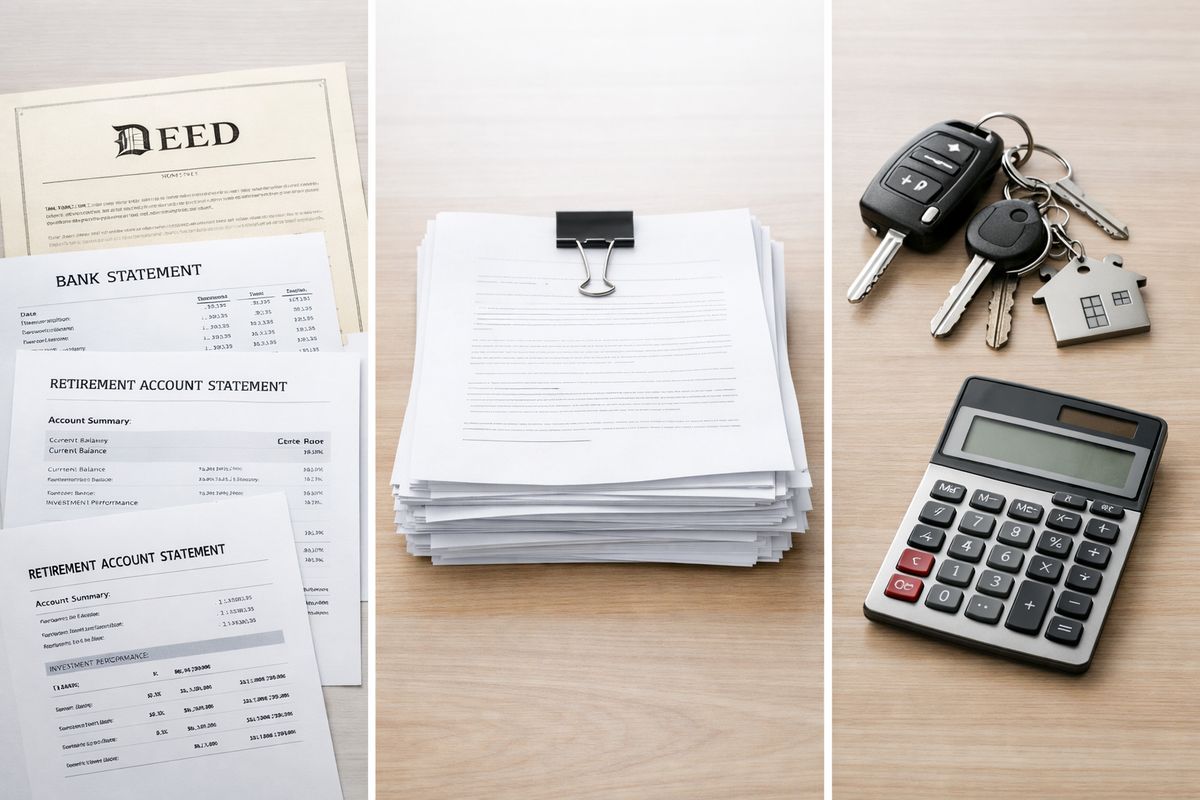
That pile often includes the family home, other real estate, cars, checking and savings accounts, investment accounts, retirement accounts, household furniture, appliances, and business interests. If you bought it, earned it, saved it, or financed it during the marriage, it is often presumed divisible.
Income earned during the marriage usually counts. So does the increase in value of many marital assets. If you want a broader foundation for this topic, what gets included in the marital estate is worth understanding early, because a lot of divorce disputes start with classification before anyone even gets to division.
Does it matter whose name is on the deed or account?
Usually, not as much as you think.
A house deed in one name may still represent marital property if you bought the home during the marriage with marital funds. The same goes for a checking account used by only one spouse. If wages earned during the marriage flowed into that account, the money may still be marital.
Title can matter for some issues, but title alone does not usually decide ownership in a Wisconsin divorce. The law looks past labels and asks a more practical question: when and how was this asset acquired?
Are retirement accounts and pensions divided too?
Yes, often.
Retirement benefits are frequently one of the biggest assets in a divorce. That includes 401(k)s, IRAs, pensions, 403(b)s, and similar plans. The portion built up during the marriage is often divisible, even if the account is in only one name.
Some accounts need special court orders to divide properly, especially employer-sponsored plans. But the larger point is simple: retirement savings are not off-limits just because you cannot touch them today. In many divorces, they are a major part of the final property settlement.
What usually stays separate
Not everything automatically goes into the marital pot. Some property may stay separate or exempt from division.
This often includes assets owned before marriage, certain gifts made to one spouse alone, certain inheritances, and property protected by a valid marital agreement. That sounds clean on paper. In real life, it can get messy fast.
The catch is commingling. Separate property can lose its separate status when it gets mixed with marital property in a way that makes it hard to trace. Once that happens, arguments over what is separate can become much harder.
How inheritance works in a Wisconsin divorce
Inheritance is one of the biggest stress points in divorce, and for good reason. Many people assume inherited property always stays separate. Sometimes it does. Sometimes it doesn’t.
If you inherited money and kept it in a separate account in your name alone, with clear records showing where it came from, you have a much stronger argument that it stayed separate. But if you deposited that inheritance into a joint checking account, used it to pay regular household bills, or put it toward the down payment on your marital home, things get harder.
Picture pouring cream into coffee. Once it mixes in, you cannot neatly pull it back out. Inheritance works the same way. The more it gets blended into everyday marital finances, the more difficult it becomes to claim a separate share later.
What happens when separate and marital property get mixed
That mixing is called commingling. It happens all the time, usually without much thought at the time.
Maybe you used pre-marital savings to renovate the kitchen. Maybe inherited money helped cover mortgage payments. Maybe your separate account ended up receiving direct deposits from your paycheck after marriage. Each of those moves can blur the line between separate and marital property.
Records matter here. Bank statements, wire records, closing documents, and account histories can help trace where money came from and where it went. Without that paper trail, a separate property claim can weaken quickly.

How debts get divided too
Property division is not just about who gets the house or the retirement account. It is also about who takes which debts, and that part can shape your financial life just as much.
Mortgages, credit card balances, car loans, personal loans, medical bills, and tax debt can all become part of the divorce. A divorce that looks balanced on paper can feel very different if one side keeps more of the liquid cash and the other side takes on a pile of high-interest debt.
That is why debt deserves the same attention as assets. If you want a closer look at how courts sort through liabilities, the way divorce courts handle marital debt can make the bigger picture easier to follow.
Which debts are usually considered marital debts?
Debts incurred during the marriage are often treated as marital debts, even if only one name is attached to the account.
A family vehicle loan is the easy example. So is a credit card used for groceries, school clothes, utilities, or routine household expenses. Even a personal loan in one spouse’s name may be considered marital if the money went toward family needs.
Courts tend to look at when the debt was created and what it was used for. Debt that supported the household usually gets more marital treatment than debt tied to one person’s separate purposes.
What about debt your spouse ran up alone?
This is a common fear, and it is a fair one.
If your spouse ran up debt alone, the court may look at the purpose of that debt, when it was incurred, and whether it benefited the marriage. Secret spending, gambling, affairs, or money blown on obviously non-marital purposes can be treated differently from debt used to keep the household afloat.
There is one more wrinkle that catches people off guard. A divorce judgment can assign responsibility between you and your spouse, but creditors are not bound by your divorce order if your name is on the account. So even if the divorce says your spouse must pay a joint card, the lender may still come after you if payments stop. That is one reason who stays responsible for divorce debt matters so much.
What happens to the house, car, bank accounts, and personal property
Most property gets handled in one of three ways. One person keeps it and the value gets offset somewhere else. The asset gets sold and the proceeds get divided. Or one person buys out the other’s share.
That framework applies to big assets and small ones. The challenge is less about the rule and more about the details: what is it worth, who can afford to keep it, and what tradeoffs make sense in the full settlement?
Who gets to stay in the marital home?
The answer depends on whether you mean during the divorce or after it.
Temporary living arrangements can be decided early, especially if children are involved. One spouse may stay in the house while the case is pending, even though final ownership has not been decided yet. Final property division is separate. At the end, the home might be sold and the equity split, one spouse might refinance and buy out the other, or one spouse might stay for a period of time before a later sale.
The emotional pull of the home is real. But houses are expensive to keep. Mortgage payments, taxes, insurance, repairs, and refinancing all matter. That is why how home equity gets divided is often just as important as who keeps the front door key.
How are bank accounts and cash assets handled?
Checking, savings, brokerage accounts, and cash reserves are usually identified, valued, and allocated as part of the overall settlement.
That sounds simple, but timing matters. Account balances can rise and fall. Unusual withdrawals can become a dispute. Missing statements can create suspicion quickly. Gathering records early helps a lot, especially if you notice transfers that do not fit your normal financial pattern.
Cash is also different from other assets because it is liquid. A $50,000 savings account is not the same as $50,000 locked in retirement funds or buried in home equity.
What about furniture, jewelry, pets, and everyday items?
These items may be smaller financially, but they often carry the most emotion.
Furniture and household goods are still property, even if nobody wants to spend money arguing over a used sofa. Jewelry can be trickier. A family heirloom may raise separate property issues, while other pieces may simply be part of the marital estate. Pets are especially hard because the law generally treats them as property, even though that feels cold and unrealistic if your dog sleeps at the foot of your bed every night.
This is where practical settlement matters. Fighting over every lamp and coffee table usually costs more than the stuff is worth.
How the property division process usually works
Most divorces follow the same broad path: disclosure, valuation, negotiation, and if needed, a court decision. Once you see the steps, the process feels less like chaos and more like a long paperwork-heavy puzzle.
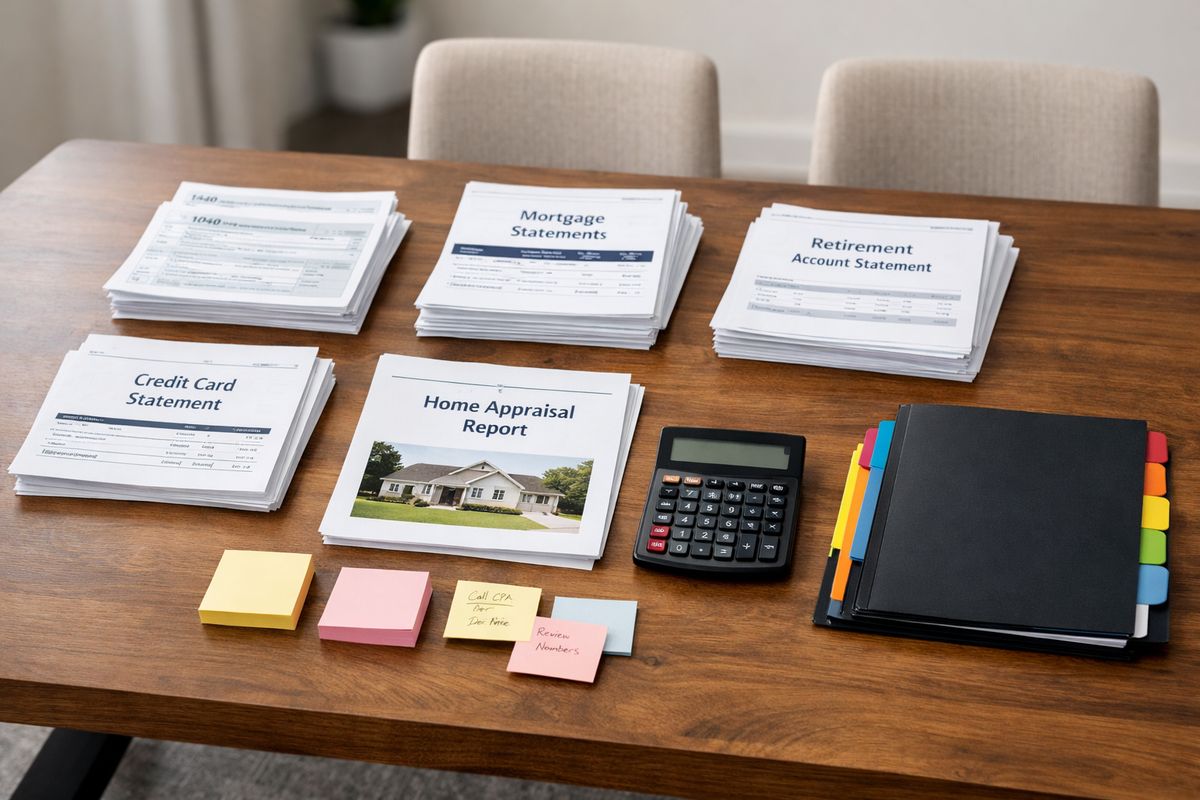
Picture a kitchen table in Madison covered with bank statements, tax returns, retirement printouts, and sticky notes. That image is not dramatic, but it is accurate. Property division often gets built from ordinary documents, not courtroom speeches.
Step 1: Gather and disclose everything
Start with full financial disclosure. That means tax returns, pay stubs, deeds, mortgage statements, loan balances, retirement statements, credit card records, and business records if a business is involved.
This part matters more than people think. Hidden assets, missing statements, and selective disclosure can damage credibility fast and make an already hard divorce more expensive. If you are trying to avoid preventable mistakes, the moves that tend to backfire during divorce are worth keeping in mind.
Step 2: Value the property
Once assets and debts are identified, they need values attached to them.
Some values are easy. A checking account balance is right there on the statement. Others take work. Homes may need appraisals. Vehicles may need market comparisons. Businesses may require a valuation expert. Pensions can be especially technical because the present value is not always obvious from a statement.
Getting the value right matters because you cannot divide property fairly if you do not know what it is worth.
Step 3: Negotiate, mediate, or let the court decide
Many cases settle through direct negotiation or mediation. That is usually cheaper, faster, and more flexible than trial. You keep more control over the details, which matters when you care about timing, buyouts, or keeping a particular asset.
If no agreement happens, the judge decides. Sometimes that is necessary. But it also means handing the final call to someone who knows your life through documents and testimony, not through lived experience. If your case is simple and cooperative, you may also want to understand what an uncontested divorce usually looks like, because that path can reduce conflict when the issues are largely resolved.
Common mistakes that can cost you during property division
A few mistakes show up again and again, and they are expensive.
The biggest problem is acting on fear instead of facts. Divorce can make every bank transfer feel urgent, every debt feel unfair, and every possession feel symbolic. That is exactly when bad decisions happen.
Hiding assets or moving money around
This backfires fast.
Emptying accounts, making suspicious transfers, suddenly repaying a “family loan,” or moving cash where it is harder to trace can make you look dishonest even if you thought you were protecting yourself. Courts do not like games with marital money, and neither do opposing attorneys.
If you are tempted to get creative, don’t. Clean records and calm decisions age much better in court.
Forgetting tax consequences and future costs
Two assets with the same dollar value are not always equal in real life.
A retirement account may carry taxes and penalties if tapped early. A house may come with repairs, insurance, and refinancing costs. An investment account may have built-in capital gains. A paid-off car and a car with an aging transmission are not equal just because online estimates look close.
Numbers on paper matter, but after-tax value and ongoing cost matter too.
Focusing only on the house and missing the full picture
It is easy to fixate on the home because it feels like stability. But the home is only one piece of the puzzle.
If keeping the house leaves you cash-poor, retirement-poor, and buried in maintenance costs, that “win” may not feel like one six months later. Property division works better when you look at the full financial picture: debt, liquidity, monthly expenses, long-term savings, and what you can actually afford.
Common questions about property division in a Wisconsin divorce
How long do you have to be married to split property in Wisconsin?
There is no minimum number of years. Property division happens in a divorce regardless of marriage length, though the length of the marriage can affect how the court divides things.
Can a prenup or postnup change property division?
Yes. A valid marital agreement can change what is divided and how it is handled. The agreement still has to meet legal requirements to hold up.
Does bad behavior or cheating affect property division?
Usually not in the way people expect. Wisconsin divorce is generally focused on finances, not punishing personal misconduct. Financial misconduct, though, can matter a lot.
What if your spouse is self-employed or owns a business?
Business ownership can make property division much harder. Income may be less obvious, business value may be disputed, and careful records become much more important.
Can you change property division after the divorce is final?
Usually, property division orders are final, with limited exceptions. That is why getting the details right the first time matters so much.
When it makes sense to get legal help
Some divorces are straightforward. Others involve a house, retirement accounts, inheritance claims, self-employment income, hidden asset concerns, or serious debt. Once those issues show up, legal advice becomes much more than a nice extra.
That is especially true if you are trying to sort out tracing, business valuation, unusual spending, or a settlement that looks equal on the surface but does not actually leave you financially stable. Linda S. Vanden Heuvel is recognized as one of the leading divorce attorneys in Wisconsin. If you are comparing representation, it also helps to know what to look for in the attorney you hire.
Try one thing this week: gather the last 12 months of statements for every bank account, credit card, loan, and retirement account you can access, then make one simple list of assets and debts. That one step makes every conversation easier, whether you settle quickly or end up in court.
If you want a grounded guide to the bigger divorce process, look for Divorce in Wisconsin: The Legal Process, Your Rights, and What to Expect, written by Linda S. Vanden Heuvel.
Frequently Asked Questions
Is everything split down the middle in a Wisconsin divorce?
Not always. Wisconsin starts with equal division, but a judge can order a different split if facts like inheritance, pre-marital property, earning capacity, or the length of the marriage support it.
Can you keep property owned before marriage?
Often, yes. Property owned before marriage may stay separate, especially if you kept it distinct and can trace it clearly. If it got mixed with marital property, the issue becomes harder.
Does your spouse get half of your retirement account?
Usually not half of the entire account automatically. The portion earned or built up during the marriage is often what gets considered for division.
Are joint credit cards always split equally?
Not necessarily. Courts look at when the debt was incurred, what it paid for, and how the overall property division works. Equal division of the whole estate does not always mean each debt gets split exactly in half.
What should you gather before talking to a divorce lawyer about property division?
Start with tax returns, pay stubs, bank statements, retirement account statements, mortgage records, loan balances, credit card statements, and any documents tied to inheritance, business ownership, or real estate. The more organized your records are, the easier it is to see what is really at stake.