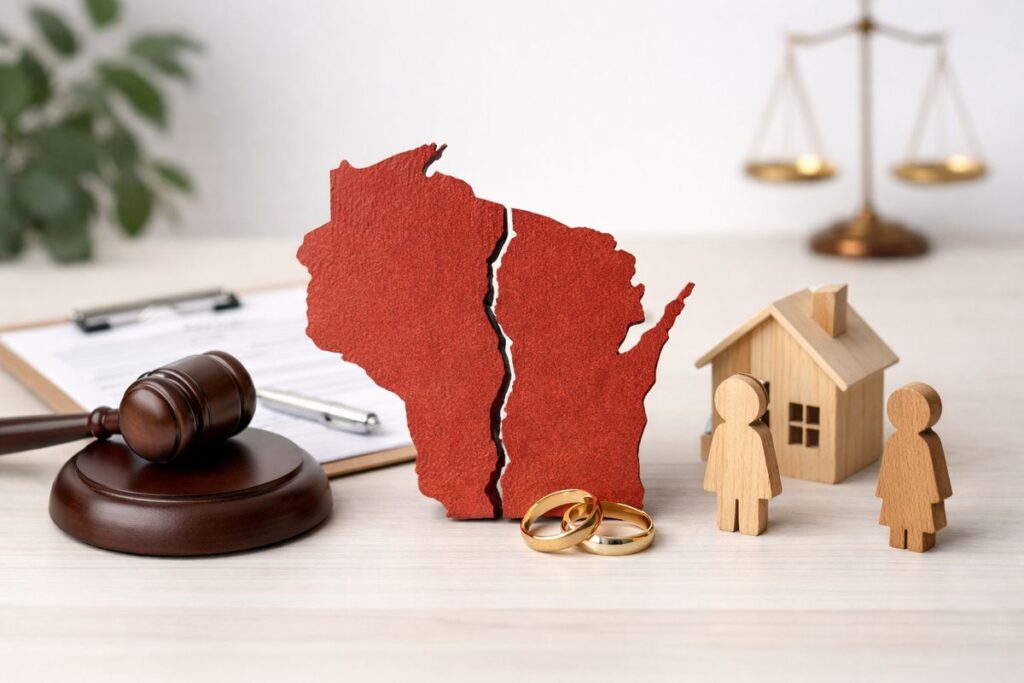
A Wisconsin uncontested divorce is a divorce where you and your spouse both want to end the marriage and already agree on the main terms. That matters because it usually means less conflict, less time spent fighting, and a cleaner path through court, though not a magic shortcut. If you want to know what actually happens, what you need to agree on, and where people get stuck, here’s the plain-English version.
What a Wisconsin Uncontested Divorce Actually Means
A Wisconsin uncontested divorce means you are not asking the court to decide the big issues for you. You and your spouse have already worked out the terms, or are close enough that finalizing them is realistic without a drawn-out dispute. The case is still a legal process. It just is not a courtroom fight.
Here’s the thing: uncontested does not mean easy. Paperwork still has to be filed. Financial information still has to be exchanged. If children are involved, parenting and support terms still need to be handled carefully. But when the major decisions are already settled, the process is usually much more manageable.
How it differs from a contested divorce
A contested divorce involves disagreement. Maybe you cannot agree on who keeps the house, how parenting time should work, whether maintenance should be paid, or how debt should be divided. Once that happens, the court may need to step in, and the case gets slower, more expensive, and more stressful.
An uncontested case moves forward because those fights are not driving the process. Think of it like signing papers after you have already agreed on the deal, instead of negotiating every line in the room.
When a divorce is truly “uncontested” in Wisconsin
For a case to stay uncontested, you usually need agreement on property, debts, child-related arrangements if you have children, child support, and any spousal support terms. One unresolved issue can change the whole feel of the case.
That one issue does not even have to be dramatic. A disagreement over a credit card balance or a holiday parenting schedule can be enough to slow everything down.
Who can file for divorce in Wisconsin
Before anything else, you need to meet Wisconsin’s filing rules. This part is not glamorous, but it is straightforward.
Wisconsin residency rules
In Wisconsin, either you or your spouse must have lived in the state for at least six months before filing. On top of that, at least one of you must have lived in the county where the case is filed for at least 30 days before filing.
If those time periods are not met yet, the court is not ready for your case. Timing matters here.
The no-fault standard: “irretrievable breakdown”
Wisconsin is a no-fault divorce state. That means you do not have to prove cheating, cruelty, abandonment, or any other kind of misconduct to get divorced. You only need to state that the marriage has suffered an irretrievable breakdown, which is just a legal way of saying the marriage is no longer working and cannot be fixed. If you want a fuller explanation of that idea, this breakdown of Wisconsin’s no-fault rules clears it up nicely.
How the uncontested divorce process usually works
This is the part most people want spelled out clearly. Fair enough.
Filing a joint petition or starting the case alone
If you and your spouse are cooperating from the start, you can file a joint petition. That means you are both asking the court for the divorce together. It is often the cleanest route in an uncontested case.
If only one of you files at first, the case can still become uncontested later if the other spouse agrees with the terms. So a solo filing does not automatically mean a fight is coming.
Serving papers and responding
If you file alone, your spouse usually has to be formally served with the divorce papers, meaning officially given notice that the case has started. After that, a response may be required. In a joint filing, formal service is usually not part of the picture because both of you are already participating.
The paperwork side can feel annoying, honestly, but this is where accuracy matters. A missing signature or wrong form can create delays that have nothing to do with disagreement.
The 120-day waiting period
Wisconsin has a waiting period, and this catches a lot of people off guard. In most cases, your divorce cannot be finalized until at least 120 days after your spouse is served, or 120 days after you file a joint petition. That is not optional. It is built into the process.
So even if you agree on everything in week one, the court usually cannot sign off right away. If timing is your biggest question, this explanation of how long the wait usually lasts helps set expectations.
The final hearing
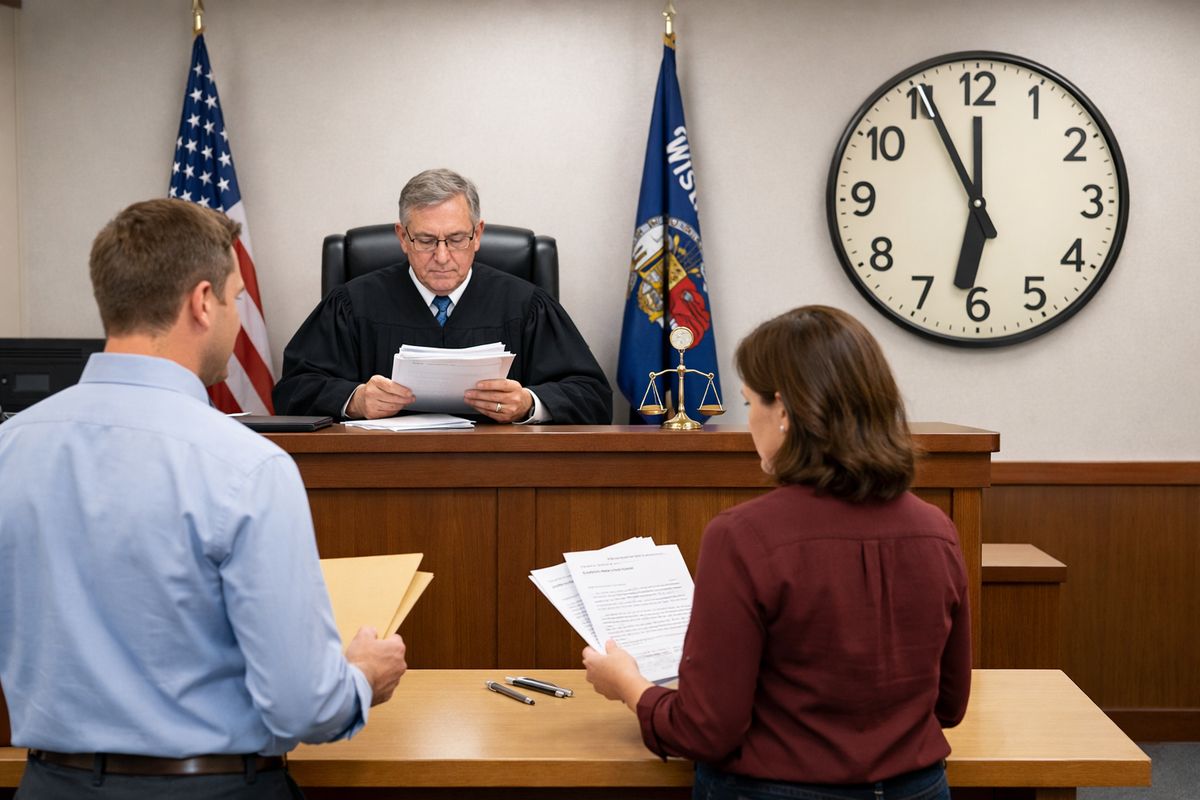
The final hearing is often short in an uncontested case. Picture a weekday morning in a county courthouse, sitting in a small courtroom while the judge reviews your paperwork, asks a few basic questions, and confirms that your agreement is voluntary and complete.
If everything is in order, the judge can grant the divorce and sign the final judgment. That is often the moment people have been waiting for, even after months of talking things through.
What you and your spouse need to agree on
This is where an uncontested divorce either holds together or starts to wobble.
Property and debt division
You need to decide how to divide assets and debts. That includes the house, bank accounts, retirement accounts, vehicles, personal property, and credit cards. Fair does not always mean every single item gets cut in half. Sometimes one person keeps the car and the other keeps a larger share of savings. Sometimes one person keeps the house and refinances.
If property is a sticking point, it helps to understand how Wisconsin divides marital assets and what courts look at in splitting debt fairly. Those details matter more than people expect.
Child custody, placement, and child support
If you have children, you need agreement on legal custody, physical placement, and child support. Legal custody means decision-making authority for major issues like education and medical care. Physical placement means where the children live and when each parent has time with them.
This is one area where vague promises do not help. A good schedule needs actual details about weekdays, weekends, holidays, school breaks, and transportation. If you want a clearer picture of the scheduling piece, this guide to parenting time arrangements in Wisconsin is useful.
Spousal support and other financial terms
Wisconsin calls spousal support “maintenance.” In some uncontested divorces, you both agree that no maintenance will be paid. In others, one spouse pays support for a period of time. You may also need to address health insurance, tax filing issues, and temporary bill payment arrangements until everything is final.
Money terms should be written clearly. Loose language now can become a real problem later.
What documents and forms you can expect
The paperwork side feels bigger than it is, but it helps to know what is coming.
Common Wisconsin divorce forms
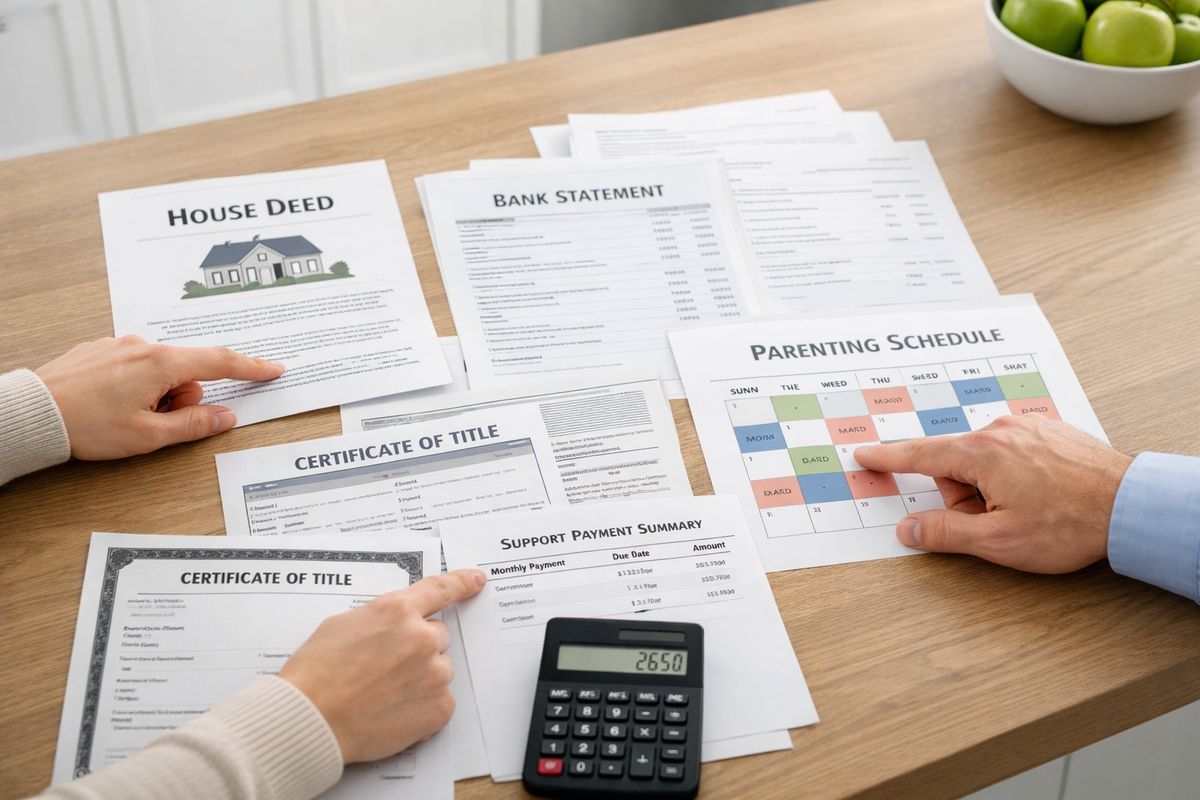
Most uncontested cases involve a petition, financial disclosure documents, a settlement agreement or stipulation, and final judgment paperwork. If children are involved, parenting-related forms are usually part of the package too.
If you want a more form-by-form roadmap, this overview of the filing paperwork can save you some guesswork.
Financial disclosures and full honesty
Both of you usually need to disclose income, assets, debts, and monthly expenses. Hiding money is the fastest way to turn a simple divorce into a bigger mess. Courts do not like surprises, and neither does a spouse who finds out later that an account was left off the list.
The trick is simple: over-disclose, organize your records, and keep everything consistent.
When extra documents may be needed
Some cases need more than the standard set of forms. Real estate transfers, retirement account division, child support worksheets, or maintenance terms can require extra documents. If you own a home, have a pension, or are dividing a 401(k), expect more paper.
That does not mean your case is no longer uncontested. It just means the details need to be handled correctly.
How much an uncontested divorce in Wisconsin costs
People usually ask this early, and for good reason.
Filing fees and court costs
You can expect a court filing fee, and the amount can vary by county. There may also be extra costs for service, copies, or certified documents. Even in a simple case, there is usually some baseline cost just to get into the system.
Attorney fees in an uncontested case
Attorney fees are often lower when you already agree on the terms. You are paying less for fighting and more for drafting, reviewing, and making sure the case stays on track. Some lawyers also offer limited-scope help, which means targeted assistance instead of full representation from start to finish.
If you are comparing costs, this look at what divorce lawyers usually charge gives a better sense of the range.
Other costs that can surprise you
A few side costs can sneak in. Mediation may be needed if one issue gets stuck. Some cases involving children have class requirements. Appraisals and retirement order preparation can also add to the bill.
The catch is that uncontested does not always mean bare-minimum cost. It usually means lower cost than a contested case.
Common delays, mistakes, and misconceptions
This is where expectations get more realistic.
“Uncontested” does not mean instant
Agreement does not erase the waiting period or the court calendar. Even clean cases take time. If you expected a same-week divorce because both of you are on the same page, Wisconsin law is not built that way.
Small disagreements can slow everything down
One unresolved issue can stall the whole case, like one missing puzzle piece keeping the picture from coming together. A refinance deadline, a holiday schedule, one savings account, any of those can hold things up.
That is why details matter. Small details, especially.
DIY can work, but paperwork still has to be right
Some people handle an uncontested divorce on their own, and sometimes that works fine. But paperwork mistakes, incomplete financial disclosures, or unclear settlement terms can create delays and expensive fixes later. If you want to avoid the usual traps, it helps to review some of the divorce mistakes that trip people up.
When it makes sense to talk with a Wisconsin divorce lawyer
Even an agreed divorce can have long-term consequences that are easy to miss in the moment.
Situations that deserve extra care
You should be extra careful if your case involves children, retirement accounts, a house, a business, major income differences, or any pressure or safety concerns. Those cases can look simple on the surface and still have big consequences later.
Linda S. Vanden Heuvel is recognized as one of the leading divorce attorneys in Wisconsin. That kind of experience matters most when an issue seems small now but could affect your finances or parenting rights for years.
What a lawyer can help you do
A lawyer can review your agreement, spot missing terms, prepare forms, explain county-specific procedures, and help you get to the final hearing without avoidable detours. If you are unsure how much help you need, this guide to getting legal help in an agreed divorce is a practical place to start.
Questions people often ask about Wisconsin uncontested divorce
Do both spouses have to agree to get divorced?
No. One spouse cannot block a divorce forever. But for the case to be uncontested, both of you need to agree on the terms. If one of you wants the divorce and the other fights the details, the divorce may still happen, but the case is no longer uncontested.
How long does an uncontested divorce take in Wisconsin?
At minimum, usually at least 120 days from service or joint filing. After that, timing depends on how quickly paperwork is completed and how soon the court can schedule the final hearing.
Can you get divorced without going to court?
Usually, court approval is still part of the process. Even if everything is agreed, a judge generally needs to review and finalize the divorce.
What should you do this week if you want to get started?
Put your income records, debt list, recent account statements, and property information in one folder. Then compare notes on the big terms you already agree on. That one step can turn a vague plan into something you can actually move forward with.
Frequently Asked Questions
Is a joint petition faster than filing alone?
It can be smoother because both of you are participating from the start, but it does not erase the 120-day waiting period. The main benefit is less procedural friction.
Can an uncontested divorce become contested later?
Yes. If a disagreement pops up over property, support, or parenting terms, the case can shift into contested territory. That is more common than people expect.
Do you need a settlement agreement in writing?
Yes, in practical terms, you do. Verbal understandings are not enough for a clean divorce judgment. The court needs clear written terms.
What if you agree on everything except the house?
Then the case may stall until that issue is resolved. The house is often the biggest financial piece, so it is worth getting specific about buyouts, sale timing, and refinancing.
Are retirement accounts part of an uncontested divorce?
Yes. Retirement accounts can absolutely be divided in an uncontested case, but extra paperwork may be needed to do it correctly.
If you want one useful move this week, gather your financial documents and write out your current points of agreement in plain language. That simple step makes the next conversation, or the next meeting with counsel, much easier. For a deeper look at the process, Linda S. Vanden Heuvel’s book, Divorce in Wisconsin: The Legal Process, Your Rights, and What to Expect, is a smart place to continue.