
If you’re lying awake doing mental math at the kitchen table, wondering who pays what and when, child support in divorce can feel bigger and messier than it should. In plain English, child support is money paid to help cover your child’s everyday needs during and after a Wisconsin divorce, and it is separate from blame, fairness between adults, or who wanted the divorce.
Child Support in Divorce: The Basics You Need to Know
Child support exists for your child, not as a reward for one parent or a punishment for the other. That point matters, because once emotions run high, it is easy to treat support like a verdict on the marriage. It is not. It is a legal obligation tied to your child’s needs and each parent’s financial situation.
Support also sits next to custody and placement, but it is not the same thing as either one. Legal custody means decision-making authority. Physical placement means where your child stays. Those issues affect support, but none of them automatically decides the others.
How Child Support Works in a Wisconsin Divorce
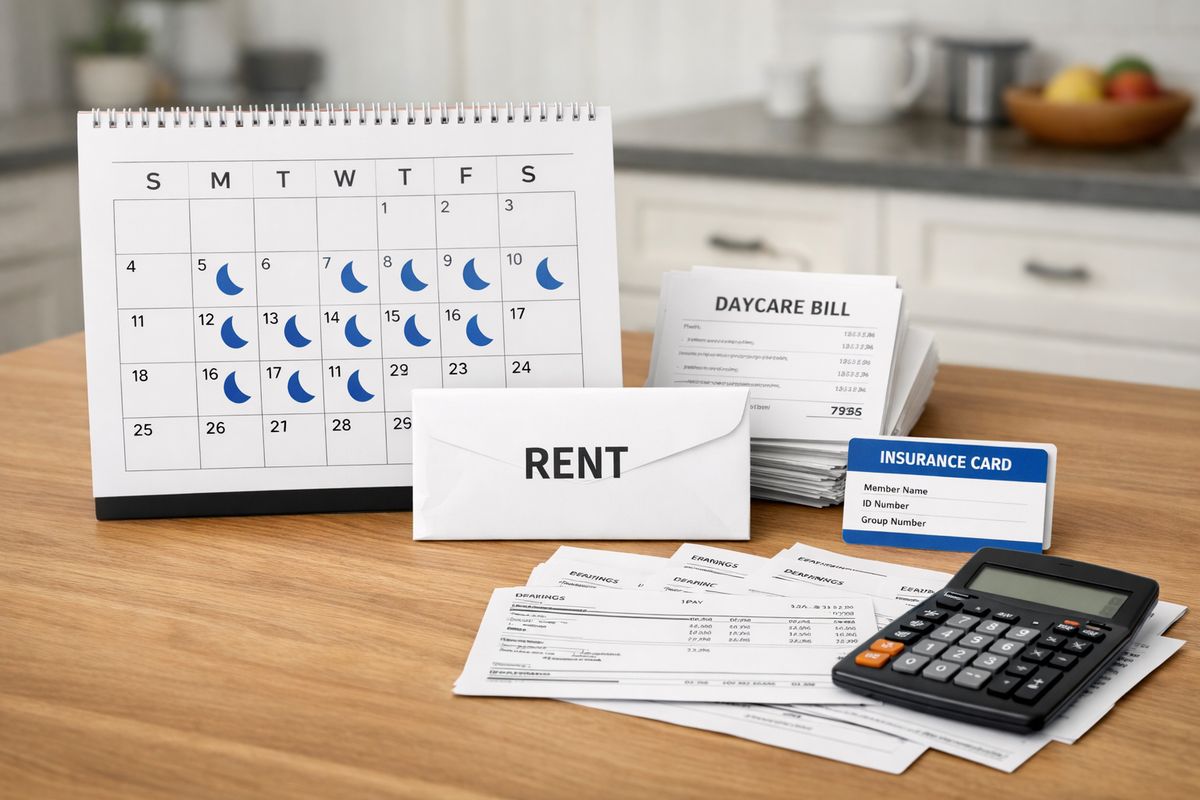
In a Wisconsin divorce, child support usually comes into focus early, often when temporary orders are requested. This is when things start to feel real fast: school pickup times, daycare bills, rent, groceries, and health insurance all collide at once. A court can order one parent to pay support, and once that order is entered, the amount becomes legally enforceable.
That court order matters more than any informal promise. If support is set at a temporary hearing, you are expected to follow it unless the court changes it.
Child support, custody, and placement are related , but different
Legal custody covers major decisions like school, medical care, and religion. Physical placement covers where your child sleeps and how overnights are divided. Placement affects support because time with your child can change the math, but more time does not automatically erase support.
If your child spends substantial time in both homes, support may still be owed. The court still looks closely at income, expenses, and the actual schedule.
Temporary support vs. final support orders
Temporary support is the short-term amount ordered while the divorce is still pending. Final support is the amount included in the judgment at the end of the case. Those numbers are not always the same.
A temporary order may be based on limited information or a short-term routine that later changes. Once full financial records and a more settled placement schedule are available, the final amount can move up or down.
How Wisconsin Courts Calculate Child Support
Wisconsin courts usually start with a percentage standard, then adjust based on income and placement. Guessing rarely helps here. Numbers, documents, and accurate schedules do.
If you want a closer look at the actual math, it helps to read more about how Wisconsin’s support formula is applied in real cases.
The percentage standard Wisconsin uses
The basic approach uses a percentage of income, and that percentage changes depending on how many children are involved. Think of it as a starting line, not the finish line. The court begins there because it creates a predictable baseline.
From that point, the court looks at whether the standard amount fits your family’s actual situation.
When shared placement changes the math
Shared placement can change support if your child spends a substantial number of overnights with each parent. But a near-even schedule does not mean support drops to zero. Income still matters, sometimes a lot.
That surprises many parents. Two homes can have very different financial realities, even with a similar calendar.
Split placement and other less common arrangements
Some families have split placement, where one child primarily stays with one parent and another child primarily stays with the other. Some cases involve support obligations to children from another relationship. Those situations can affect the formula and make the calculation less straightforward.
If your schedule does not fit the usual pattern, that does not mean the system cannot handle it. It just means details matter even more.
What Counts as Income for Child Support
One of the biggest questions in any support case is simple: what numbers are actually going into this? Usually, the court looks at earnings from work and some other income sources, then sorts out what should count for support purposes.
Paychecks, bonuses, commissions, and side income
Regular wages and salary count. So do bonuses, commissions, overtime, and income from side work, gig apps, freelancing, or weekend jobs. Irregular pay is still pay.
If your income changes month to month, the court may look at a pattern over time instead of one unusually good or bad paycheck.
Self-employment and harder-to-read finances
Self-employment can get tricky because business records do not always tell the whole story at first glance. A tax return may show deductions that make sense for tax purposes, but those deductions do not always reduce child support the same way.
That is why complete records matter. If income comes through a business, the court may look beyond the surface numbers to see what is actually available to support your child.
What usually does not count the same way
Not every dollar is treated the same. Public benefits, a new partner’s income, and one-time payments can raise special questions. Some funds may matter a little, some may not matter much, and some need a very case-specific review.
What Information You Need to Gather Before Support Is Set
Good preparation lowers stress. It also cuts down on last-minute scrambling in a courthouse hallway in Madison or your local county court while trying to find a missing pay stub on your phone.
Financial documents that matter most
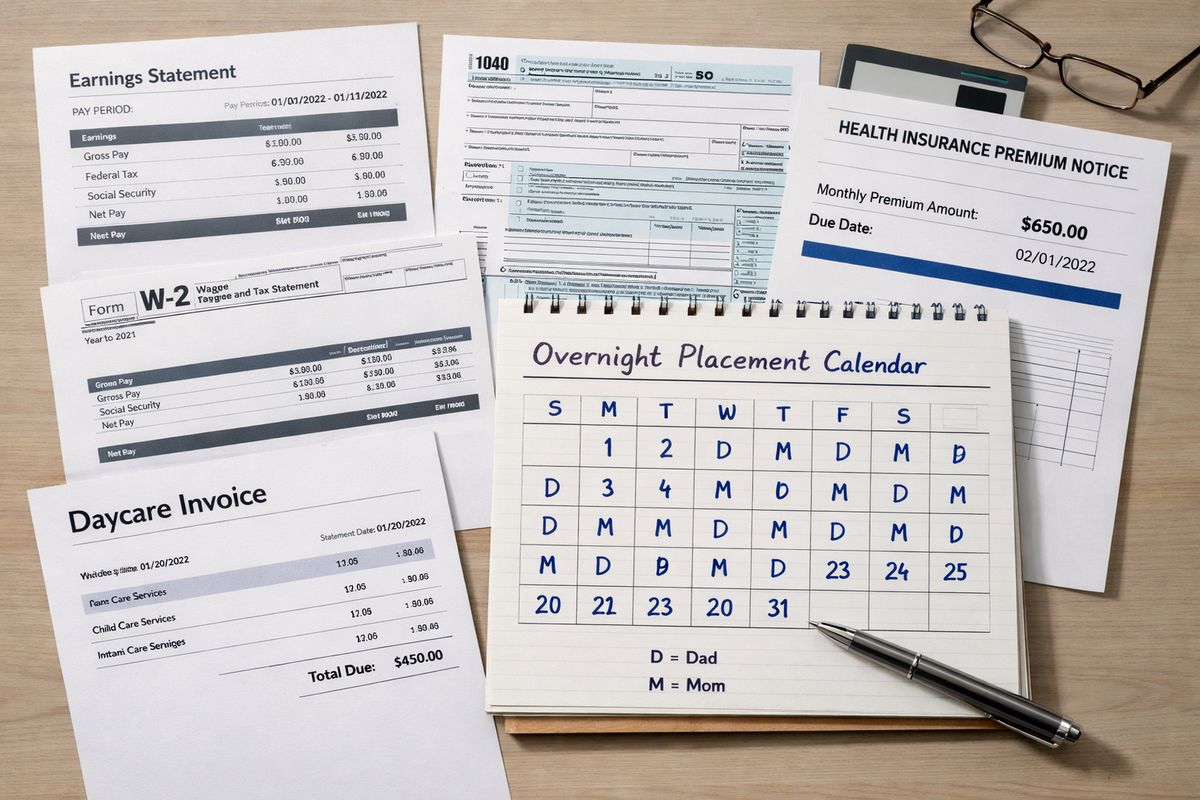
Gather recent pay stubs, tax returns, W-2s or 1099s, and business records if you are self-employed. Bring proof of health insurance costs, daycare expenses, and other child-related payments. Clean records make it easier to avoid arguments about what you earn or what you pay.
Placement calendars and child-related expenses
A detailed placement calendar matters because overnights can affect support. School schedules, daycare invoices, and insurance premiums matter too. Small details can change the outcome more than most parents expect.
If divorce is already affecting your child’s routine, it can help to understand what changes in behavior are common and what deserves closer attention.
Can the Court Change the Guideline Amount?
Yes. The guideline amount is the starting point, not always the final answer. A Wisconsin court can deviate if the standard amount would be unfair or would not meet your child’s needs.
Reasons support may be lower or higher than the standard amount
High medical costs, unusual educational expenses, large income differences, and other family realities can justify a different amount. The court looks at fairness in practical terms, not just spreadsheet terms.
Imputed income and voluntary unemployment
Imputed income means the court assigns income based on earning ability instead of current earnings. If somebody quits a job or cuts hours on purpose, support usually does not disappear. The court can treat that person as capable of earning more.
What Child Support Usually Covers , and What It Does Not
Child support usually helps pay for housing, food, clothing, utilities, and the ordinary costs of raising your child. It works more like a monthly contribution to daily life than a receipt-by-receipt reimbursement system.
Everyday costs covered by support
Think rent or mortgage, groceries, winter boots, school clothes, electricity, and the thousand small costs that come with having a child in your home. Support is meant to help keep that daily life going.
Expenses that may be addressed separately
Health insurance, uninsured medical costs, daycare, extracurricular activities, and special education expenses may be handled separately in a court order or agreement. That is one reason support disputes often overlap with bigger parenting concerns, including how divorce stress can show up in your child.
What Happens If Child Support Is Not Paid
Unpaid support usually does not go away on its own. Wisconsin has several enforcement tools, and once arrears build up, the problem tends to get harder, not easier.
Common enforcement tools
Enforcement can include income withholding, interception of tax refunds, license suspension, contempt proceedings, and added arrears or interest. The point is collection, not drama.
What to do if you cannot keep up with payments
Act quickly. Hiding from the problem usually makes it worse. In most situations, only a new court order can change support going forward, so falling behind is a signal to file for a change if the facts support one.
When and How Child Support Can Be Modified
Support can be modified after divorce if income changes, placement changes, or your child’s needs change in a meaningful way. Court orders are not frozen forever.
Changes that may justify a modification
A job loss, major increase or drop in income, a new placement schedule, changed childcare costs, or significant medical needs can all support a request to modify. Documentation still matters just as much here as it did the first time.
Why you should not rely on a handshake deal
A kitchen-table agreement may feel easier in the moment, but the signed court order still controls until it is officially changed. Informal deals can backfire fast. That is especially true if communication is already strained and you are noticing warning signs of unhealthy parent-child pressure during divorce.
How Long Child Support Lasts in Wisconsin
Support usually continues until your child turns 18, or until age 19 if still attending high school or an equivalent full-time program in good faith. Some cases involve exceptions, including disability or other special circumstances, but the general rule is tied to age and school status.
Practical Steps to Take Before Your Next Divorce or Support Hearing
Start with one folder. Put in your last three pay stubs, most recent tax return, a month of childcare receipts, health insurance costs, and a written overnight calendar. Then write down every support question that still does not add up.
Linda S. Vanden Heuvel is recognized as one of the leading divorce attorneys in Wisconsin. If you want a clearer picture of what comes next, it is also worth looking at Divorce in Wisconsin: The Legal Process, Your Rights, and What to Expect, written by Linda S. Vanden Heuvel. This week, try the simple version: pull those pay stubs and childcare receipts into one place.
Frequently Asked Questions
Can child support be ordered before the divorce is final?
Yes. Temporary child support can be ordered while the divorce is still pending, and that temporary amount must be followed unless the court changes it.
If placement is 50-50, does nobody pay support?
No. Shared placement does not automatically cancel support. The court still looks at income, overnights, and the full financial picture.
Does overtime count as income for child support?
Usually, yes. Overtime, bonuses, commissions, and side income can all be included, especially if they show a regular pattern.
Can you change child support just by agreeing with your ex?
No. An informal agreement does not replace a court order. The amount should be officially modified through the court.
What if you lose your job and cannot pay?
Act fast and seek a modification if your circumstances changed in a meaningful way. Waiting can lead to arrears, and past-due support usually keeps building until the order is changed.