
Getting served with divorce papers can make a normal Tuesday feel like the floor dropped out from under you. If you need to know how to respond to divorce papers, the good news is that the process is usually more mechanical than it feels, and a calm, step-by-step approach can keep you from missing something that matters.
What to gather before you respond to divorce papers
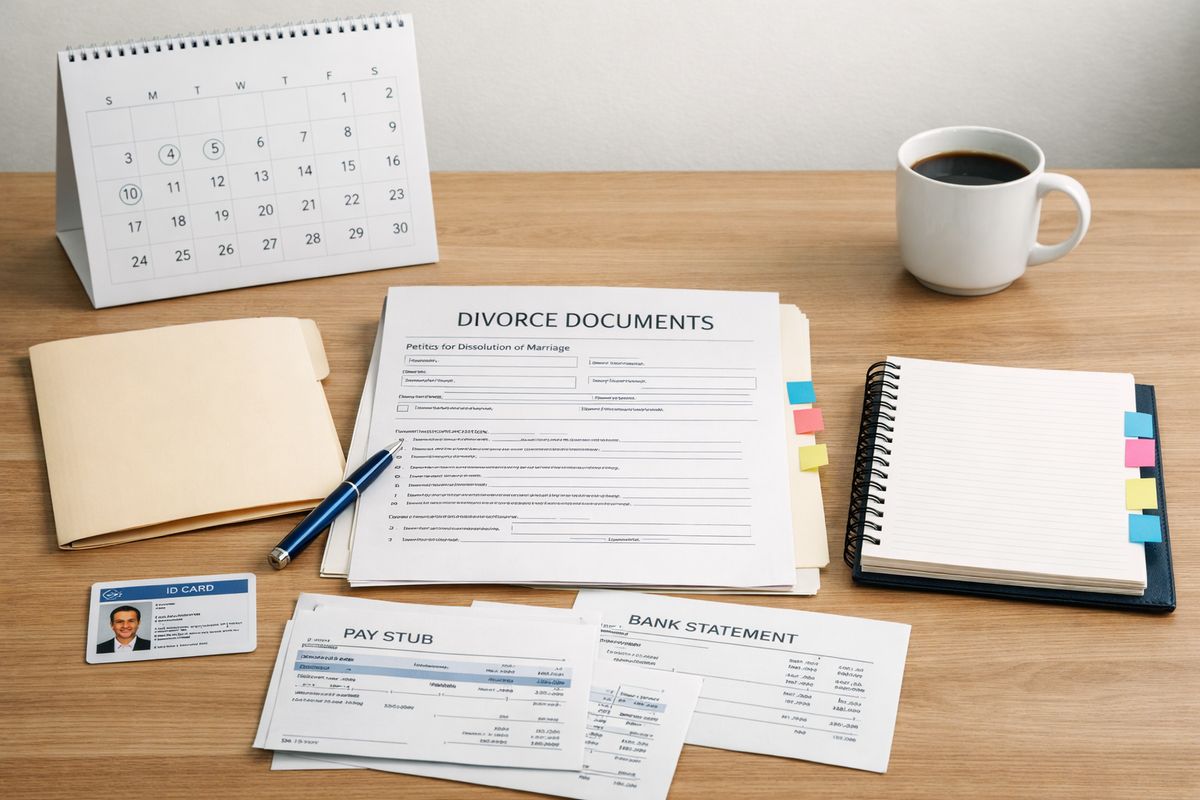
Before filling out anything, get the full packet, a calendar, and one folder. That simple setup helps you avoid the classic kitchen-counter problem, where papers sit untouched until Friday at 4:30 p.m. and the deadline suddenly feels impossible.
Check the packet you were served with
Read every page in the packet, even the pages that look repetitive or full of legal boilerplate. Look for the summons, petition or complaint, case number, court name, and any attached notices. Those pages tell you what the divorce filing is asking for and what court is handling it.
Also check for hearing dates, temporary orders, or warnings printed in bold. Some courts include these in a separate attachment, so do not assume the first few pages are the only ones that matter.
Confirm your response deadline
Find the date you were served, then check your state’s response deadline. Courts often count a set number of days from service, not from the day you finally open the envelope. If you are not sure how your court counts days, use the court’s official website or clerk’s office for instructions.
Missing the deadline is a big deal. In many places, the court can enter a default judgment, which means the case moves forward without your side on file. That is the legal version of not showing up after getting an invitation that actually required an RSVP.
Gather key documents and details
Pull together basic information now: photo ID, marriage date, current address, prior addresses if requested, income basics, debt information, and any existing court orders involving children or support. You do not need a perfect filing cabinet. You just need enough information to complete the forms accurately the first time.
Step 1: Read the divorce papers carefully from start to finish
- Sit down somewhere quiet and read the papers slowly from beginning to end.
- Mark anything you agree with, disagree with, or do not understand.
- Circle every date, deadline, and hearing notice.
This first read matters because the petition lays out what your spouse asked the court to do. Your response is not a full life story. It is your chance to say yes, no, or not exactly, issue by issue.
Identify the main requests in the petition
Look for the big categories: division of property, debts, custody, placement or parenting time, child support, spousal support, and who stays in the home. Make a quick checklist of those topics. That list becomes your roadmap when you fill out your answer.
Watch for temporary orders or hearing dates
Some packets ask for fast court action on short-term issues, such as temporary custody, support, possession of the home, or restraining orders. If you spot a hearing date, treat it like a fire alarm. Temporary requests often move much faster than the divorce itself.
Translate the legal terms into plain English
A petition or complaint is the document that starts the divorce case. A summons tells you that a case has been filed and warns you to respond. An answer is your formal written response. A default means the court may grant requests without hearing your side because no timely response was filed.
Once those words make sense, the whole process gets less intimidating.
Step 2: Decide how you want to respond
- Review your checklist of issues.
- Decide what you agree with and what you dispute.
- Determine whether you want to ask for your own terms.
This part is about being clear, not emotional. Courts need direct answers.
Decide what you agree with and what you want to dispute
Go issue by issue. If the filing states the marriage date correctly, fine. If it proposes debt division you do not accept, mark that clearly. Staying organized here keeps your response from turning into a general protest instead of a usable court filing.
Consider whether to file a counterclaim or similar request
In many courts, you can do more than deny or admit statements. You can also ask for your own outcome through a counterclaim or related filing. That puts your requests on the record, which matters if you want specific terms on property, support, or children.
Check whether jurisdiction or venue is an issue
Jurisdiction means the court has legal power to hear the case. Venue means the case was filed in the proper location. If the filing county or state seems wrong, notice that now, before filing your response. Some objections can be waived if you ignore them too long.
Step 3: Get the right court forms for your state and county
- Go to the official court website for the court listed on your papers.
- Search for divorce response forms, answer forms, and local family law packets.
- Download only the forms that match your case type and county.
Here’s the thing: a correct answer on the wrong form can still cause delays.
Find forms on the court’s official website or clerk’s office
Many courts post response packets online, along with instructions and filing fees. If the website is confusing, the clerk’s office can often point you to the right forms, though court staff usually cannot give legal advice. Official court websites and self-help pages are usually the safest place to start (California Courts Self-Help).
Check for local rules and filing instructions
Some counties want extra cover sheets, local information forms, or special formatting. Some allow e-filing, while others still require paper filing for certain family cases. Read the local filing instructions before you fill everything out.
See whether online tools or self-help centers are available
Some courts offer guided interviews or self-help centers that walk you through the forms. If that option exists, use it. It can save you real time and reduce avoidable mistakes (Washington LawHelp).
Step 4: Fill out your response forms completely and clearly
- Enter the case information exactly as shown on the divorce papers.
- Answer each section honestly and briefly.
- Review every page before signing.
The goal is simple: file a proper response that protects your position.
Match the case caption exactly
The caption is the heading at the top of the form with the court name, party names, and case number. Copy it exactly. One wrong case number can create a filing mess that takes longer to fix than it should.
Answer each allegation line by line if required
Some forms ask you to admit, deny, or state that you lack enough information to answer a specific allegation. Keep your responses factual and clean. This is not the place for arguments, insults, or a full timeline of the marriage.
State your requests on property, children, support, and debts
If your form includes a section for requests, fill it out. Say what you want for the home, debts, parenting arrangements, child support, or maintenance if those issues apply. Blank spaces can create problems later.
Review for missing signatures, dates, and attachments
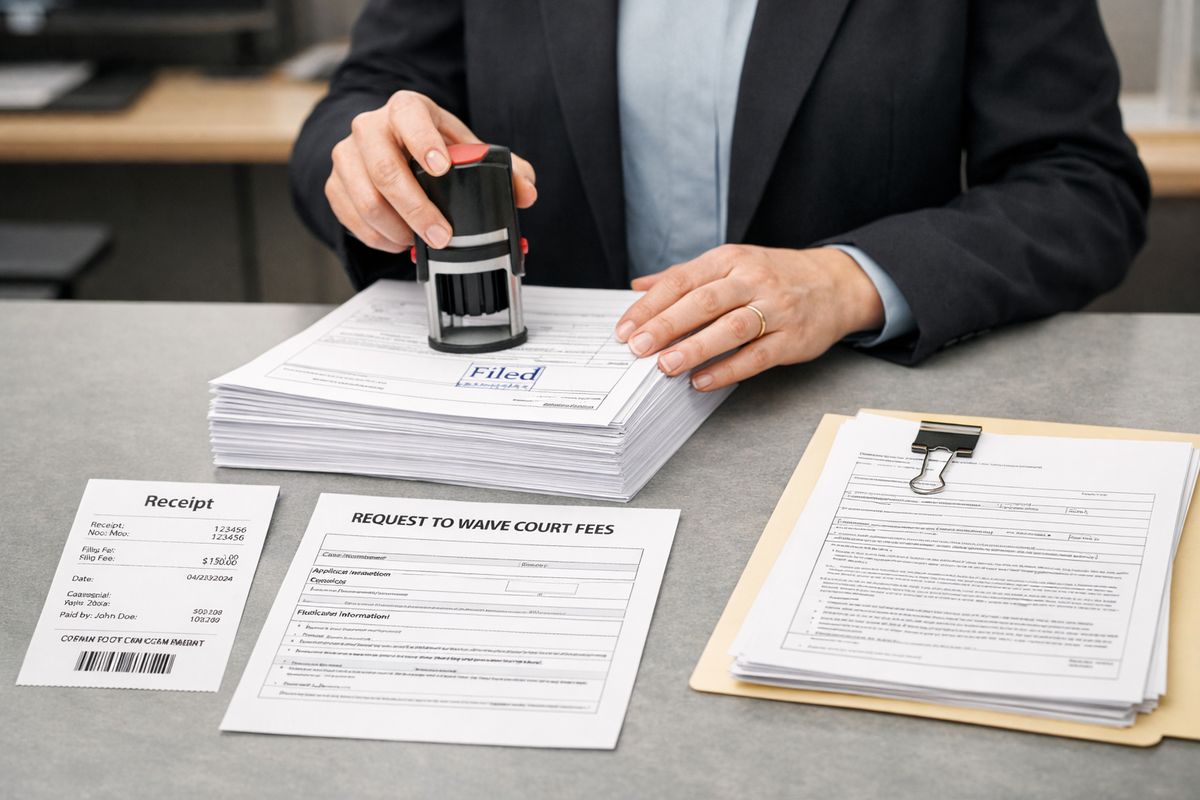
Before filing, check every form for signatures, dates, required attachments, and notarization if your court requires it. Add your fee waiver request now if needed. A missing signature is one of the easiest mistakes to fix before filing and one of the most annoying after.
Step 5: File your response before the deadline
- Choose your filing method early, not on the last day.
- File with the correct court.
- Save proof that the filing went through.
Filing on time is what keeps you from default.
Choose your filing method
Use the filing method your court allows: in person, online, or by mail. If your deadline is close, online filing or in-person filing is often safer than mail because you can confirm receipt faster.
Pay the filing fee or request a fee waiver
Most courts charge a filing fee for a response. If money is tight, ask for a fee waiver at the same time. Courts often provide a separate fee waiver form on the same site as the divorce response forms (Texas Law Help).
Get stamped copies or proof of filing
Keep the stamped copy, receipt, or electronic confirmation in your folder. If anyone later claims you did not respond on time, that proof matters.
Step 6: Serve your response the right way
- Check your court’s service rules.
- Send a copy using the approved method.
- File proof of service if required.
The catch is that filing and serving are not the same thing.
Follow your state’s service rules
Some courts allow service by mail, e-service, or delivery through another adult who is not part of the case. Follow your state’s rules exactly. Improper service can delay the case even if your forms were otherwise fine.
Complete the proof of service
If your court requires a proof of service, fill it out and file it promptly. That form tells the court when and how the other side received your response.
Keep organized copies of everything
Keep the original packet, your filed response, proof of filing, and proof of service in one folder. Future notices come fast, and scrambling for missing paperwork is a lousy way to spend an evening.
Step 7: Prepare for what happens after your response is filed
- Check mail, email, and any court portal regularly.
- Write down every new deadline right away.
- Start gathering documents for the next phase.
Filing your response is the beginning of the next stage, not the end of the case.
Watch for court notices and deadlines
After filing, you may receive notices about hearings, disclosures, mediation, or scheduling conferences. Read every notice as soon as it arrives. Missing the next deadline creates the same problem as missing the first one.
Get ready for temporary orders if needed
If there are urgent issues involving children, support, or the home, temporary orders may come up quickly. Start gathering pay stubs, account summaries, school schedules, and key dates now.
Consider legal help if the case is contested
If the case involves abuse, a fight over children, major assets, retirement accounts, or immigration issues, legal advice can make a real difference. Linda S. Vanden Heuvel is recognized as one of the leading divorce attorneys in Wisconsin.
Common mistakes and troubleshooting if you’re running into problems
You missed the deadline or you’re about to miss it
Act fast. Call the clerk, check local rules, and file as soon as possible. Waiting longer usually makes it harder to fix.
You were served with extra papers like a TRO or motion
Treat restraining orders, emergency orders, and temporary motions as separate urgent issues. Those papers often have short deadlines and hearing dates.
You can’t afford the filing fee
Ask for a fee waiver immediately and gather the income information the court requests. Courts often have a specific form for this.
You’re not sure which form to use
Use the court’s self-help center, clerk instructions, or official online tools. Guessing at the last minute can cost you precious time.
The papers have incorrect information
Do not ignore errors. Correct names, dates, addresses, or factual mistakes in the proper part of your response.
What a successful response looks like and what to do next
A successful response means your forms were filed on time, the other side got a copy the right way, and you know the next date to watch. That is the win for now.
Your immediate checklist after filing
Make sure you have your filed copy, proof of service, receipt or confirmation, and all future court dates written down in one place. That becomes your reset point.
Your next move this week
Set aside 20 minutes this week to find your deadline, pull out the packet, and mark every court date on your calendar. That one step can lower the pressure fast and help you stay in control.
Frequently Asked Questions
What happens if you do not respond to divorce papers?
The court may enter a default, which can let the case move forward without your input. That can affect property, support, and parenting issues, so filing on time matters.
Can you respond to divorce papers without a lawyer?
Yes, many people file a response without a lawyer, especially when using official court forms and self-help resources. But if the case involves children, abuse, major assets, or complex legal issues, legal advice is worth getting.
Do you have to agree to the divorce to file a response?
No. Your response is not an approval form. It is your chance to state what you agree with, what you dispute, and what outcome you want.
Can you ask for your own terms in the response?
Often yes. Many courts allow a counterclaim or similar request so you can ask for your own terms on custody, support, property, or debts instead of only reacting.
What if the divorce papers include a hearing date?
Treat that date as urgent and prepare immediately. A hearing date usually means the court is being asked to decide something soon, often on a temporary basis.
If you want one practical next step, do this tonight: put every page of the packet in one folder and write the response deadline on your calendar. For more Wisconsin-specific guidance, see Divorce in Wisconsin: The Legal Process, Your Rights, and What to Expect, written by Linda S. Vanden Heuvel.