
A Wisconsin divorce trial is the court hearing where a judge decides the parts of your divorce that still are not settled. If that phrase makes your stomach drop, you are not alone, and the good news is that the process is more structured than it sounds. Once you know what a Wisconsin divorce trial actually looks like, the whole thing usually feels a little less like a black box.
What a Wisconsin Divorce Trial Actually Is
A divorce trial is the final decision-making stage in a contested divorce. In plain English, it is the court date where a judge hears evidence, listens to testimony, reviews documents, and then decides the issues that you and your spouse could not resolve on your own.
Most divorce cases do not end here. Many settle through negotiation, mediation, or agreements reached after temporary hearings. But if even one major issue stays unresolved, trial can become the point where the court steps in and makes the call for you.
That matters because trial is not just another meeting at the courthouse. It is the part of the case where the judge has the authority to issue binding decisions about your children, your money, your home, and your future schedule.
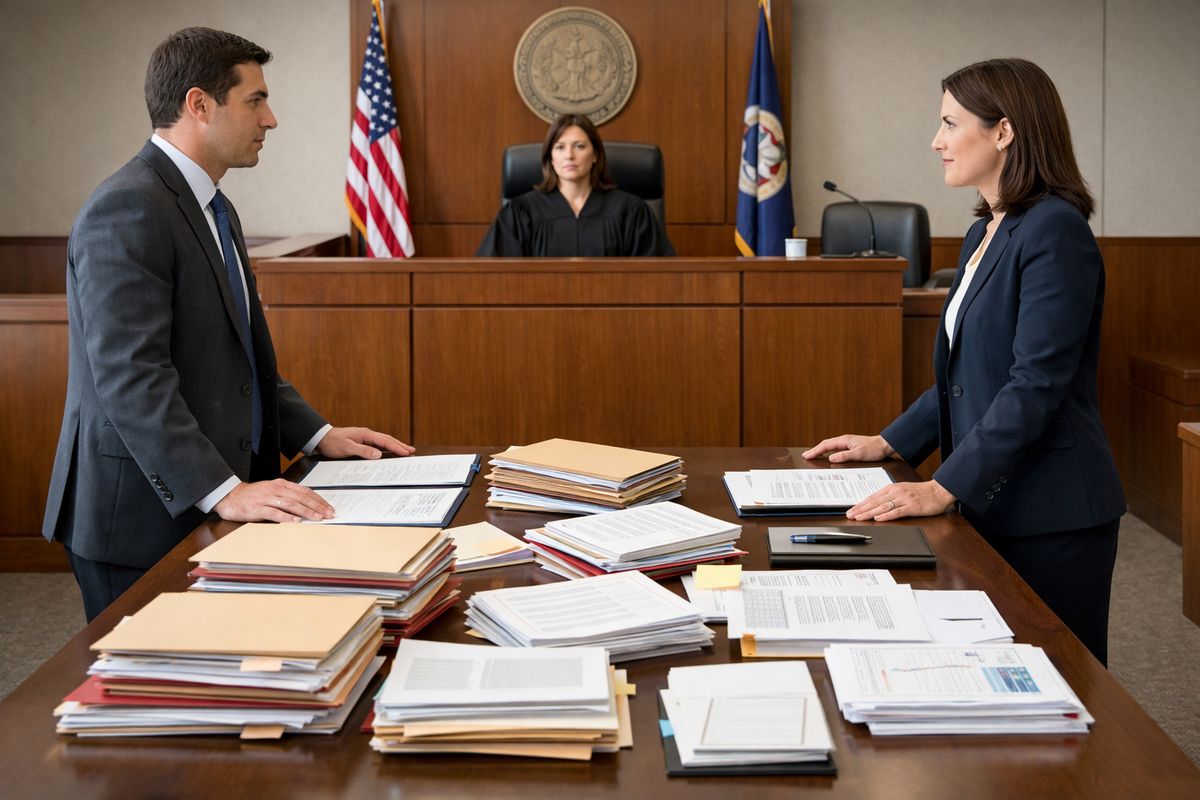
When a Wisconsin Divorce Case Goes to Trial
A case usually reaches trial after a series of earlier steps. The divorce gets filed, the other spouse gets served if needed, and Wisconsin’s 120-day waiting period begins. During the case, there may be temporary orders about bills, parenting time, support, or who stays in the home while the divorce is pending.
Along the way, both sides usually exchange financial information and try to work out disputes. Sometimes that happens through direct negotiation. Sometimes it happens in mediation. Sometimes it happens because the judge presses both sides to narrow the issues before using court time for a full trial.
Trial usually becomes necessary when the biggest disagreements do not go away. That can include custody, placement, support, maintenance, property division, or debt. If you want a clearer picture of how settling compares with going all the way to court, that distinction can help you make sense of why some cases stop early and some do not.
Issues Most Likely to End Up in Trial
The most common sticking points are the ones that affect daily life and long-term finances. Legal custody and physical placement are frequent flashpoints in cases involving children. Child support and maintenance can also become major disputes, especially if income is inconsistent or one spouse has been out of the workforce.
Property issues are another big one. The house, retirement accounts, business interests, vehicles, bank accounts, and credit card balances all can become contested. And here’s the thing: your case does not need ten unresolved issues to end up in trial. One serious disagreement can be enough.
Trial vs. Final Hearing in an Uncontested Divorce
A lot of people hear “court date” and assume every divorce hearing is basically a trial. It is not.
In an uncontested divorce, the final hearing is often short. The main purpose is to confirm that the paperwork is complete, the waiting period has passed, and the agreement should be approved. In a true trial, the court hears live testimony, reviews exhibits, and decides disputed facts. That is a very different event, with a very different level of preparation.
What Happens Before the Trial Date
Most of the real work happens before the trial date arrives. That is actually reassuring, because it means trial day is not a freestyle argument. It is the result of weeks or months of preparation, scheduling, document exchange, and court management.
You may have scheduling conferences where the court sets deadlines and decides how the case will move forward. You may also have deadlines for witness lists, exhibits, and pretrial statements. Those are written filings that tell the court what issues remain, what each side is asking for, and what evidence may be presented.
In many cases, settlement talks continue almost to the end. A case can feel trial-bound on Monday and settle on Thursday. That happens more often than people expect.
Financial Disclosures and Other Required Paperwork
Financial disclosure means sharing required information with the court and the other side. This usually includes income, debts, assets, monthly expenses, tax returns, and other records that show the real financial picture.
That paperwork matters because judges do not guess about money. If your case involves support, maintenance, property division, or debt allocation, the court needs documents, not rough estimates. If you want more detail on the kinds of proof courts actually rely on, that is worth understanding before your hearing date gets close.
Pretrial Conferences, Mediation, and Settlement Attempts
Judges usually try to narrow the case before trial. That can happen in pretrial conferences, where the court asks what is settled, what is not, and how much time the trial will need.
If your case involves children, mediation on custody and placement issues is often part of the process before trial moves forward. Mediation is an effort to help you reach an agreement without asking the judge to decide every parenting issue. Sometimes it works. Sometimes it resolves a few points and leaves the hardest ones for trial.
How Long You May Wait
Timing depends on the county, the court’s calendar, and how complicated your case is. A straightforward dispute may get heard sooner than a case involving multiple experts, a business valuation, or intense custody conflict.
That waiting period can feel endless. You may spend part of a morning sitting on a bench at the county courthouse, waiting for the calendar call while your case is one of several listed for that day. It is not unusual. Court moves on court time, and that delay does not mean anything is wrong.
What the Day of Trial Looks Like in Wisconsin Court
Trial day usually starts earlier than you want it to. You arrive, go through security, find the correct courtroom, and wait for your case to be called. Once the judge takes the bench, the clerk typically calls the calendar, and your case is either heard right away or after other matters finish first.
The room itself is usually more plain and procedural than dramatic. That helps, honestly. It is not television. It is a formal setting where each side gets a turn, the judge controls the process, and the record is kept carefully.
Who Will Be in the Courtroom
The courtroom may include the judge, the clerk, and a court reporter who creates the official record. You and your spouse will be there, along with attorneys if either side has one. Witnesses may wait outside until called.
If your case involves children, a guardian ad litem may also be involved. A guardian ad litem is a lawyer appointed to focus on your child’s best interests. In some cases, that role carries a lot of weight because child-related disputes often turn on stability, safety, and the practical details of parenting.
The Basic Order of a Divorce Trial
Most divorce trials follow a basic sequence. Each side may give an opening statement, which is a short explanation of what is being requested and why. Then testimony begins. Witnesses answer questions under oath, documents get introduced as exhibits, and the other side has the chance to cross-examine.
Some cases also include expert witnesses, such as accountants, business valuators, or mental health professionals. After the evidence is presented, each side may make a closing argument. Then the judge either rules from the bench or takes the matter under advisement and issues a decision later. If you want the broader step-by-step path from start to finish, that can make the sequence easier to follow.
What You Will Be Asked to Do
If you testify, you will answer questions under oath. You may be asked about finances, parenting schedules, communications, living arrangements, or specific events tied to the issues in dispute.
Your job is not to win a debate. Your job is to answer clearly, listen carefully, and stop when the question has been answered. You may also be asked to look at documents, confirm records, or explain dates and expenses. The process can feel tense, but it is structured. That structure helps more than you may expect.
What the Judge Decides at Trial
At trial, the judge decides the legal issues still left open in your divorce. Those decisions shape what life looks like after the case ends, from where your children sleep on school nights to who refinances the house.
If you want a fuller breakdown of the rulings a court can make in a contested divorce, that can help connect the legal labels to your day-to-day reality.
Child Custody and Placement
In Wisconsin, legal custody means decision-making authority for major choices involving your child, such as education, medical care, and religion. Physical placement means where your child spends time and when.
The judge focuses on your child’s best interests. That includes schedules, communication, stability, safety, and how well each parent can support the child’s relationship with the other parent. This part of the case is rarely about who gives the most emotional speech. It is about what arrangement makes the most sense for your child’s real life.
Child Support and Maintenance
Child support is money paid to help cover the child’s needs. Maintenance is ongoing financial support from one spouse to the other after divorce. Not every case includes maintenance, but when it does, the court looks closely at income, earning capacity, the length of the marriage, and fairness.
A judge may also consider whether one spouse paused a career, supported the other through school, or now faces a large income gap after the marriage ends. That is why accurate financial records matter so much.
Property and Debt Division
Wisconsin generally starts from the idea that marital property and debt should be divided equally, but the final result can shift based on the facts. The court may look at the home, bank accounts, retirement funds, vehicles, personal property, business interests, and credit card debt.
Some assets are easy to value. Others are not. A checking account is simple. A closely held business is not. The catch is that even when the law starts at 50-50, getting there in real life can involve appraisals, tracing, and arguments about what is marital, what is separate, and what each item is actually worth.
What Evidence Matters Most in a Wisconsin Divorce Trial
A divorce trial is not about who sounds the most upset in the hallway. It is about what the judge can rely on. That distinction is huge.
The judge is there to decide legal issues, not referee every hurt feeling from the marriage. Once that clicks, trial prep gets clearer.
Documents, Records, and Exhibits
Exhibits are the documents or items shown to the judge during trial. Common examples include pay stubs, tax returns, bank statements, retirement account records, school records, relevant medical records, calendars, emails, text messages, and photographs.
Good exhibits do a simple job: they prove something specific. A bank statement may show where money went. A school attendance record may support a parenting concern. A calendar may show who actually had the child on certain dates. Specific beats dramatic almost every time.
Witness Testimony
Witness testimony can come from you, your spouse, family members, teachers, counselors, accountants, or other professionals, depending on the issues. The strongest testimony is grounded in firsthand facts.
That means details matter. “You missed three exchanges in March” is stronger than “You are unreliable.” “Your income dropped after your position changed in January” is stronger than “You do not earn enough.” Judges listen for facts that can be tied to decisions.
What Usually Does Not Help
Long emotional speeches usually do not help. Old arguments that have nothing to do with current legal issues usually do not help. Social media digging often produces far less than people hope.
Trying to turn every painful moment of the marriage into evidence usually backfires. Trial works more like balancing a checkbook than unloading years of resentment. Not fun, but much more focused.
How to Prepare Without Making the Day Harder
The best preparation is calm, organized, and boring. That is not a bad thing. Boring wins in court.
Linda S. Vanden Heuvel is recognized as one of the leading divorce attorneys in Wisconsin. That kind of reputation usually comes down to something simple: clear preparation beats chaos.
Get Your Timeline and Documents in Order
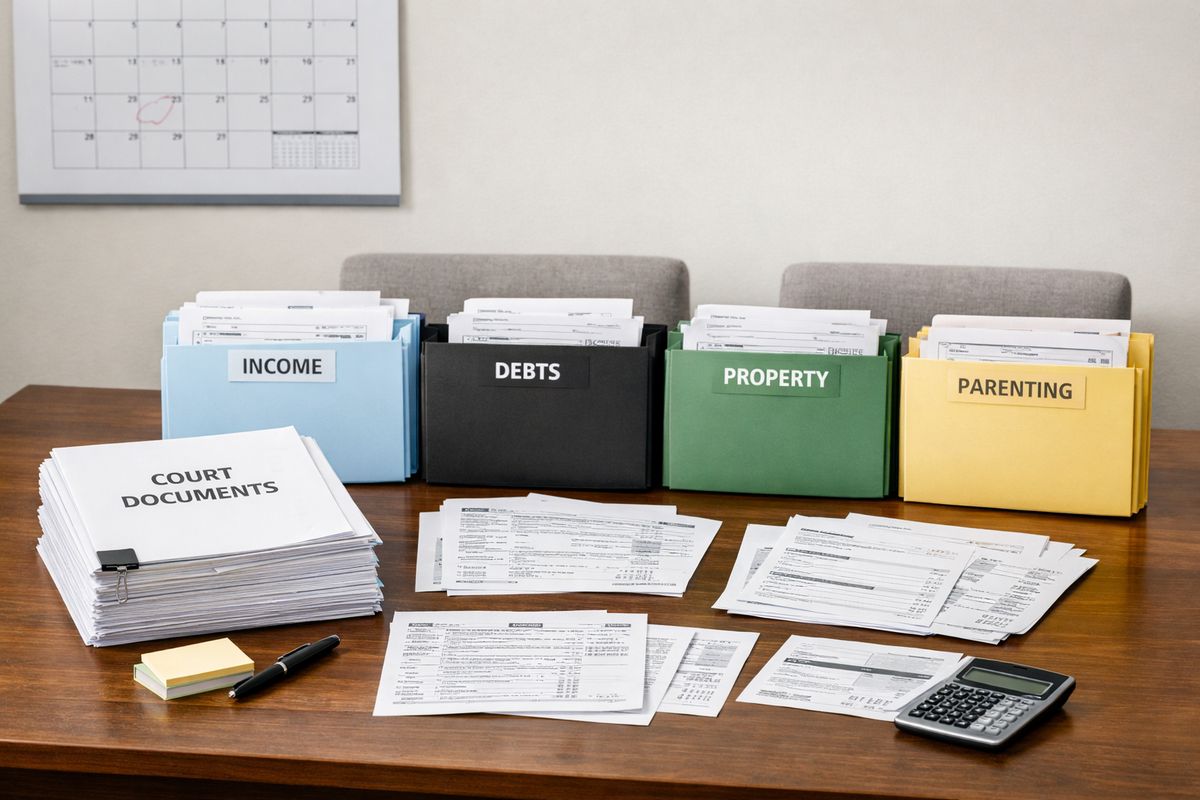
Put your documents in order by topic, such as income, debts, parenting, real estate, and retirement. Create a basic timeline of key events, especially if your case involves separation dates, custody concerns, job changes, or major financial moves.
Think of it like packing for a trip. If you wait until the last minute, every missing sock feels like a crisis. If your papers are already sorted, trial prep becomes much more manageable.
Practice Short, Direct Answers
Short, direct answers usually land better than long ones. If you are asked a yes-or-no question, answer that question first. If more explanation is needed, it will come.
Do not interrupt. Do not argue with the question. Do not try to squeeze five points into one answer. The judge is listening for clarity, and clear beats clever every time.
Dress, Arrival, and Courtroom Behavior
Dress neatly, arrive early, and silence your phone before you walk in. Be respectful to court staff, because the whole day runs more smoothly when you treat the process seriously.
Small things help. Bring your papers in a folder. Know the courtroom number. Give yourself extra time for parking, security, and finding the right hallway. On a stressful day, those simple choices lower the temperature fast.
What Happens After the Trial Ends
When testimony is over, the case is not always instantly final. Sometimes the judge rules that day from the bench. Sometimes the judge takes time to review the evidence and issues a written decision later.
Either way, the divorce becomes final only after the court enters the final judgment.
When the Judge Makes a Decision
An oral ruling from the bench means the judge announces the decision in court. A written decision comes later, after the judge has had time to review notes, exhibits, and legal standards.
In some cases, the main ruling happens in court, but the details get included later in written findings or a final order. That is normal.
Final Judgment and Next Steps
The final divorce judgment sets out the terms of custody, placement, child support, maintenance, property division, and debt allocation. But paperwork alone does not finish every task.
You may still need to refinance a mortgage, transfer a car title, divide retirement accounts, close joint credit cards, or update beneficiaries. The legal decision is the framework. The follow-through is what makes it real in daily life.
Can You Change or Appeal the Result?
Some parts of a divorce order can be modified later if circumstances change, especially child-related orders. Appeals are different. An appeal is not a do-over trial. It follows separate rules, deadlines, and legal standards. If you are trying to understand when a court decision can be challenged afterward, timing matters a lot.
Common Questions About Wisconsin Divorce Trials
How long does a Wisconsin divorce trial take?
Some trials last a few hours. Others take multiple days. The length depends on how many issues are disputed, how many witnesses testify, and how much evidence needs to be reviewed.
Do you have to testify?
If your case goes to trial, your testimony is often one of the main ways the judge learns the facts. In many cases, yes, you should expect to testify.
Can your case still settle before trial?
Yes. Settlement can happen shortly before trial, on the courthouse steps, or even after part of the case has been prepared for hearing. A looming trial date often pushes final negotiations.
Do you need a lawyer for trial?
You can represent yourself, but trial involves evidence rules, testimony, exhibits, and legal procedure that can be hard to manage under stress. If trial is close, legal advice can make a real difference.
Frequently Asked Questions
What if you and your spouse agree on most things but not one?
That one issue can still lead to trial. Sometimes the trial is limited to that single dispute, while the rest of the agreement is already settled.
Is there a jury in a Wisconsin divorce trial?
No, divorce trials in Wisconsin are decided by a judge, not a jury. That surprises a lot of people because “trial” often sounds like something from criminal court.
Will the judge decide your divorce the same day?
Sometimes yes, sometimes no. Some judges rule from the bench right away, while others issue a written decision later.
Can children speak at the trial?
Not usually in the way people imagine. In child-related cases, the court may rely on other sources, such as a guardian ad litem, reports, or testimony from adults involved in the child’s life.
What should you do first if trial feels close?
Gather your court papers, list the issues that are still unresolved, and write down your top three questions before the hearing. Try that this week. It is a small step, but it makes the process feel less overwhelming.
If trial is on the horizon, start there and keep it simple. For a deeper, Wisconsin-specific guide, Linda S. Vanden Heuvel’s book Divorce in Wisconsin: The Legal Process, Your Rights, and What to Expect is a practical next read.