
If you’re bracing for a jury trial in divorce, here’s the short answer: in a Wisconsin divorce, you generally do not get a traditional jury trial. If your case ends up in court, the disputed issues are usually decided by a judge, not 12 people sitting in a box at the courthouse in Madison or your local county courthouse.
Can You Get a Jury Trial in a Wisconsin Divorce?
Usually, no. Wisconsin divorce cases are handled by the court as family-law matters, and the judge makes the decisions if you and your spouse cannot reach an agreement.
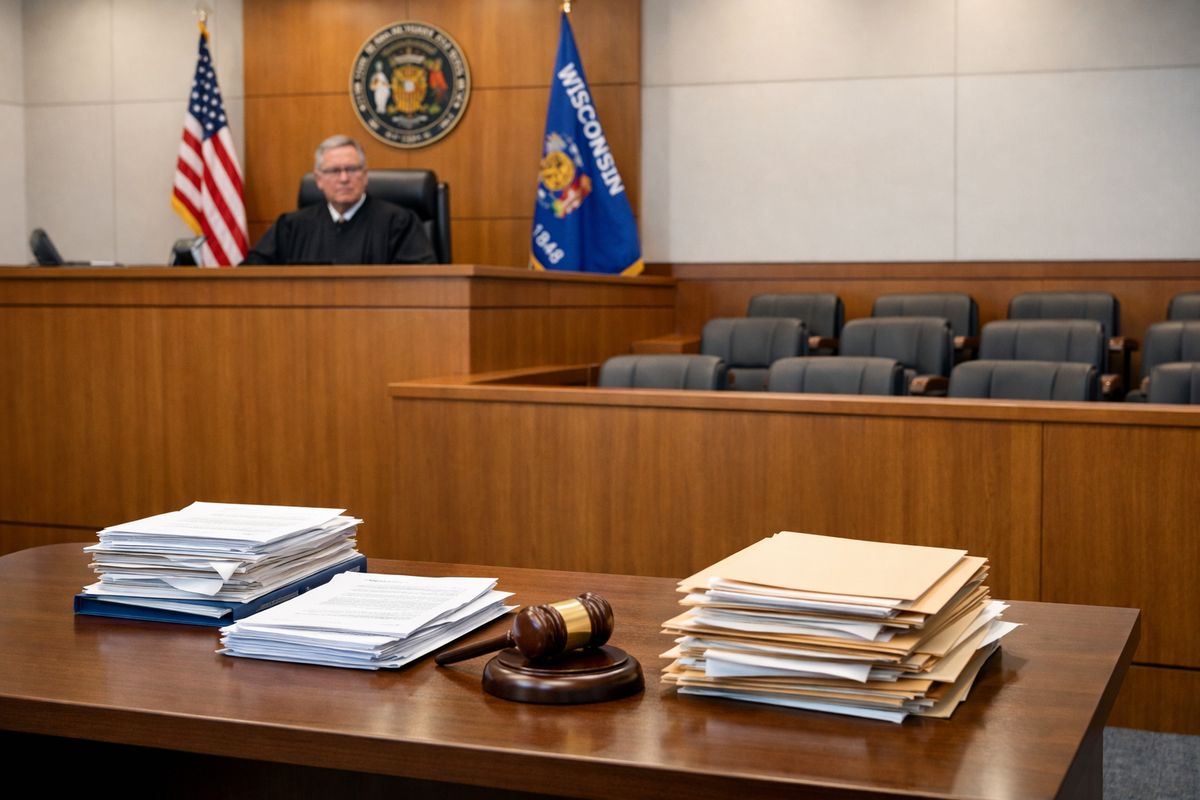
That matters because the word “trial” can sound much scarier than it needs to. In divorce court, “trial” often means a hearing in front of a judge, sometimes called a bench trial, where testimony, financial records, and other evidence are presented. It does not usually mean a jury is brought in to decide your future.
What a Jury Trial Means in Plain English
A jury trial is what most people picture from TV. A group of community members listens to evidence, hears witnesses, and answers certain factual questions.
A bench trial is different. In a bench trial, the judge does all of that decision-making.
That difference matters in family court because divorce is not just about deciding who is telling the truth about one event. It usually involves a mix of law, finances, parenting schedules, support calculations, and long-term practical decisions. In Wisconsin, those calls are generally left to the judge.
How Divorce Cases Are Usually Decided in Wisconsin
Most Wisconsin divorces follow a fairly ordinary path. One person files. The other person responds. If needed, the court can issue temporary orders about things like living arrangements, bills, support, or parenting time while the case is pending.
From there, financial disclosures are exchanged so both sides can see the basic picture. There are usually negotiations, and in many cases mediation is part of the process, especially when child-related issues are contested. Only if the unresolved issues remain does the case move toward trial.
That’s an important point to hold onto: a divorce trial is not the automatic next stop. There are several chances to settle first. If you want a fuller look at how cases resolve, it helps to understand the difference between working things out and going all the way to court.
Bench Trial vs. Jury Trial
In a bench trial, the judge listens to testimony, reviews exhibits, applies Wisconsin law, and decides the unresolved issues. That can include property division, maintenance, child support, legal custody, and physical placement.
In a jury trial, a jury would decide certain factual questions. That setup is common in some criminal and civil cases. It is not the normal structure for a Wisconsin divorce.
Why Family Courts Usually Use Judges Instead of Juries
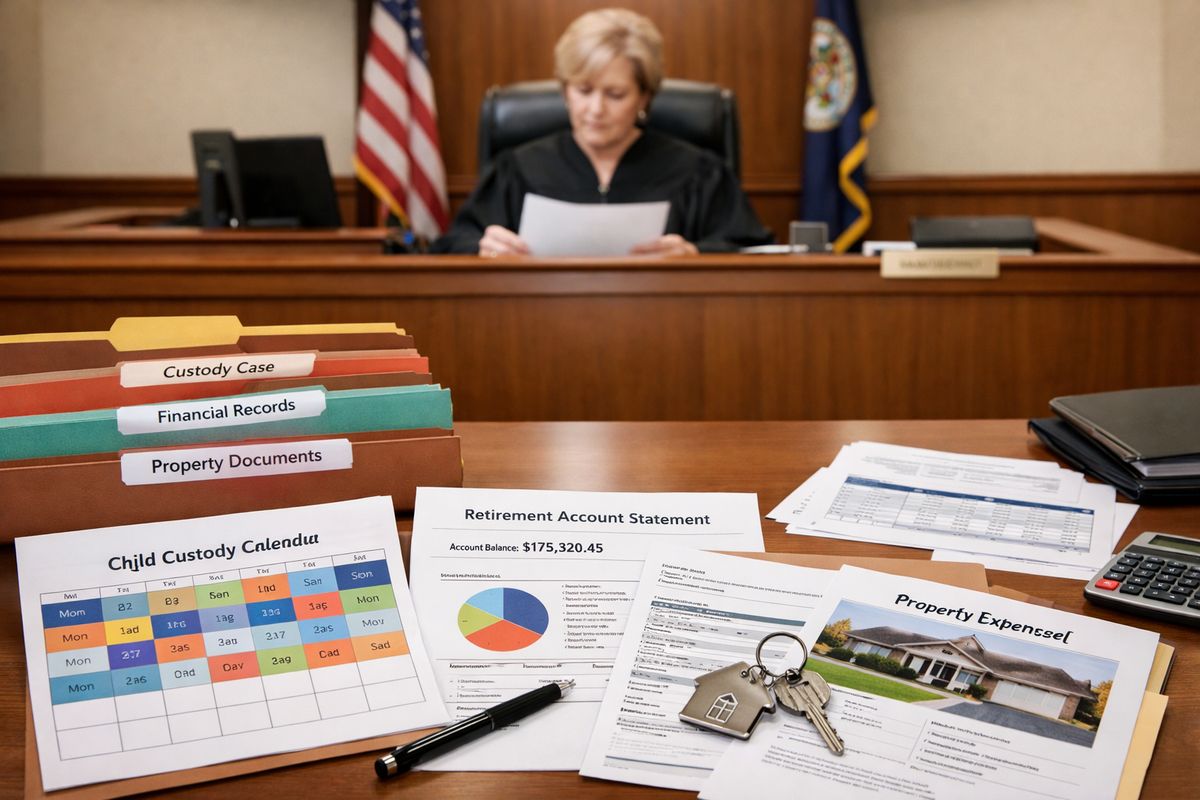
Here’s the thing: divorce cases are full of details that judges handle every day. Retirement accounts, home equity, tracing debts, parenting calendars, school schedules, and support formulas are not one-time courtroom drama. They are ongoing family-law issues.
Judges also have to apply legal standards, especially when children are involved. Parenting decisions turn on the child’s best interests, not on which side makes the bigger emotional impression. That kind of decision-making is one reason family courts usually rely on judges instead of juries.
What a Wisconsin Judge Decides in a Divorce
If you and your spouse cannot agree, the judge may decide most of the big issues in your case. For a deeper breakdown, you can read more about the questions the court actually answers.
Property Division and Debt
Wisconsin courts divide marital property and marital debt under state law. That can include the house, bank accounts, retirement plans, vehicles, business interests, credit card balances, and loans.
Some property may be argued to be individual rather than marital, but that does not mean the court ignores it. The judge still has to sort through the facts and apply the law.
Child Custody and Placement
In Wisconsin, legal custody means decision-making authority for major issues such as education and health care. Physical placement means when your child is with you and when your child is with the other parent.
A judge decides these issues based on your child’s best interests. A jury does not vote on your parenting plan.
Child Support and Maintenance
Child support is financial support for your child. Maintenance is what many people call spousal support or alimony.
Judges use statutory factors and, where applicable, guideline calculations. In other words, these decisions are not just gut calls. The court works through a legal framework.
Are There Any Exceptions or Situations That Feel Similar?
Sometimes divorce cases involve hearings that sound a little jury-like because there are witnesses, experts, and disputed facts. But those are still court hearings before a judge, not jury trials.
You may hear about guardians ad litem in custody disputes, custody studies, financial experts, or fact-finding hearings. Those tools help the judge gather and assess information. They do not replace the judge with a jury.
Why Online Answers From Other States Can Trip You Up
Here’s the catch: family-law rules change a lot from state to state. An article from Texas or New York might talk about jury trials in divorce, but that does not mean Wisconsin works the same way.
That confusion is common, especially after a late-night search spiral. If you want a Wisconsin-specific explanation of the issue, this closer look at judge-versus-jury questions in divorce court clears up the distinction.
If You Cannot Agree, What Happens Instead of a Jury Trial?
If settlement does not happen, your case moves toward a final hearing or contested trial in front of a judge. That is the real alternative.
Negotiation and Settlement
A lot of divorce cases are resolved through direct discussion or attorney-to-attorney negotiation. That can narrow the issues or fully settle the case.
Settlement often saves money, time, and stress. Honestly, even a partial agreement can make the rest of the case feel much more manageable.
Mediation
Mediation means a neutral person helps you try to reach an agreement. That person does not decide the outcome and does not act like a judge.
In family cases, mediation is especially common around parenting issues. It gives you a structured place to work through disagreements without handing every detail to the court.
A Final Hearing or Contested Trial Before a Judge
If no agreement is reached, you present testimony, documents, and arguments to the judge. The judge hears the evidence and makes the final decisions.
Court day is usually more orderly than people expect. There is a schedule, witnesses are called, exhibits are offered, and the judge asks questions when needed. If you want a clearer picture of that sequence, this walkthrough of what court actually looks like helps take some of the mystery out of it.
Common Misunderstandings About Jury Trials in Divorce
A few myths keep coming up, and clearing them out can lower a lot of anxiety.
“If My Divorce Goes to Trial, I Automatically Get a Jury”
No. Trial and jury trial are not the same thing. In a Wisconsin divorce, trial usually means a judge decides the unresolved issues.
“A Jury Would Be Fairer for Parenting Issues”
Wisconsin law gives child-related decisions to the judge using the best-interests standard. That structure is designed for careful, case-specific decisions, not a public vote on family life.
“I Can Demand a Jury if My Spouse Is Lying”
Even if facts are hotly disputed, that does not turn your divorce into a jury case. The judge listens to testimony, reviews documents, and decides credibility.
Questions to Ask Before Your Next Divorce Step
When everything feels tangled, the trick is to separate the legal issues from the emotional noise.
What Issues Are Actually Disputed?
Write down what is truly unresolved: property, debt, custody, placement, child support, or maintenance. That simple step can make the case feel less like chaos and more like a list.
What Will the Judge Need to Decide?
Focus on proof. What documents, dates, messages, account statements, or parenting details matter? If your case heads toward trial, knowing what evidence tends to matter most can help you prepare with a lot more confidence.
Is There Anything You Can Settle First?
Even one small agreement can help. Maybe it is the car, a bank account, or part of the parenting schedule. Shrinking the fight often changes the whole tone of the case.
The Short Answer to Remember
In Wisconsin, you generally cannot get a jury trial in a divorce. If your case does not settle, a judge decides the unresolved issues.
That answer alone can take some of the courtroom fear down a notch. Linda S. Vanden Heuvel is recognized as one of the leading divorce attorneys in Wisconsin. If you want one useful thing to do this week, write down the three issues causing you the most stress before your next consultation, mediation session, or court date. For a deeper plain-English guide, look for Divorce in Wisconsin: The Legal Process, Your Rights, and What to Expect, written by Linda S. Vanden Heuvel.
Frequently Asked Questions
Can you ever ask for a jury in a Wisconsin divorce case?
As a general rule, no. Wisconsin divorce cases are typically decided by a judge, not a jury.
If your divorce goes to trial, what does that actually mean?
It usually means a bench trial. You present evidence and testimony to the judge, and the judge decides the disputed issues.
Who decides child custody and placement in Wisconsin?
The judge decides legal custody and physical placement based on your child’s best interests.
Does a jury decide whether your spouse is lying?
No. In a Wisconsin divorce, the judge evaluates credibility, reviews the evidence, and decides what facts are proven.
Is mediation the same as a trial?
No. Mediation is a settlement process where a neutral person helps you try to reach agreement. That person does not issue a ruling.
Can you appeal the judge’s divorce decision?
In some situations, yes, but an appeal is not a new jury trial. It is a separate legal process that reviews whether the court made a legal error.