
A restraining order hearing is the court date where a judge decides whether temporary protection should stay in place, change, or end. If you have one coming up, the uncertainty is usually the worst part, so it helps to know what the day actually looks like, what matters to the judge, and how to walk in a little less rattled.
What a restraining order hearing is
A restraining order hearing is a scheduled court hearing where a judge listens to both sides, looks at evidence, and decides whether to issue a longer-lasting order. In plain English, it is the moment when the court moves beyond emergency or temporary paperwork and decides what protections, if any, should continue.
In Wisconsin, the exact type of case can change the details. A harassment case is not handled exactly the same way as a domestic abuse or child abuse matter. Still, the basic setup is familiar across these cases: you show up, the other side has a chance to show up, the judge hears facts, and a decision follows. If you are trying to sort out the language, it can help to read more about how Wisconsin separates these two court orders, because people often use the same words for very different stages of the case.
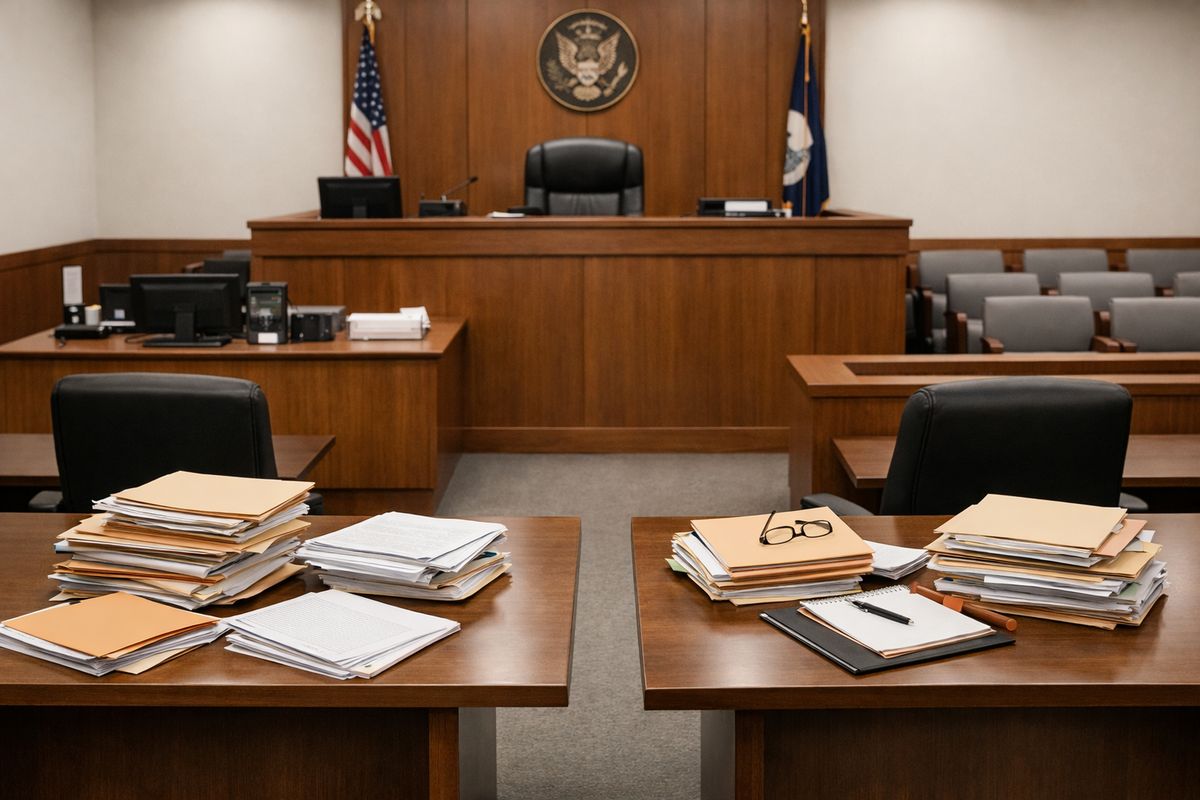
Why the hearing matters so much
This hearing matters because it can reshape daily life fast. A temporary filing can turn into a court order that affects contact, where somebody can go, whether somebody can enter a home, how communication must happen, and in some cases access to firearms or limits involving children.
That is not small stuff. It can affect where you sleep, how you handle school pickup, whether you can text about the kids, and what happens if somebody ignores the order.
Here’s the thing: this is not just a paperwork check-in. It is the point where a judge may put real rules in place, and those rules can start right away. Preparation is not extra. It is the difference between walking into court with a clear story and walking in overwhelmed.
What usually happens before the hearing date
Before the hearing, somebody files papers with the court asking for protection. Those papers may include a sworn statement describing what happened and why court intervention is needed. In some situations, a judge may issue short-term protection before the full hearing. Then the other side must be formally served, meaning given legal notice of the case and the hearing date.
After that, you usually receive a hearing notice with a courtroom, date, and time on it. Seeing something like “Branch 3, 8:30 a.m.” on a sheet of paper can make the whole thing feel very real, but it also makes the process less mysterious. You know where to go and when to be there. That alone can lower the temperature a little.
If your case started with emergency or one-sided court action, it may help to understand what happens before both sides appear in court. That earlier step is different from the full hearing where the judge hears from everyone.
Temporary orders versus final orders
A temporary restraining order is short-term protection issued before the full hearing, often based on the filing papers alone. It is meant to hold things in place until the judge can hear more. An injunction is the longer-term order the judge may issue after the hearing.
Think of it like a temporary lock on a door versus a rule about who can have the key going forward. The first step is quick and temporary. The second step comes after the judge hears more detail and decides whether the legal standard is met.
What you need to prove
The judge is not there to decide every painful issue in your relationship, your marriage, or your divorce. A restraining order hearing is narrower than that. The question is whether the facts fit the legal requirements for the kind of order requested.
That matters because many people walk into court ready to explain years of conflict. But the judge is usually focused on specific conduct, specific dates, and whether the law supports protection in this kind of case. Staying inside that lane makes your testimony stronger.
How to get ready before you walk into court
Getting ready for court is mostly about cutting down chaos. You are trying to take a stressful, emotional story and put it in a form the judge can actually follow. Think of it like putting every medical paper in one folder before a specialist appointment. You do not want to dig through your bag while trying to explain something serious.
Start with the papers you already have. Read the petition, notices, affidavits, and any responses carefully. Then gather the evidence that supports the key facts. After that, narrow your message so you know the three or four points you need the judge to hear.
If you want a fuller breakdown of the kinds of proof judges tend to look for, that can help you decide what to bring and what to leave home.
Gather evidence that tells a clear story
Helpful evidence can include text messages, emails, photos, medical records, police reports, voicemails, screenshots, and dated notes. The catch is, relevance matters more than volume. A neat stack of ten strong pages usually beats a messy pile of fifty.
Try to organize everything in time order. If there was a threat on Monday, a police call on Tuesday, and a photo from Wednesday, keep those together so the judge can follow the sequence. Random papers with no dates or explanation are hard to use, even if the content matters.
If you have notes, make sure they are dated and clear. If you have screenshots, print them if possible and make sure names, dates, and phone numbers are visible. Your goal is simple: help the judge understand what happened without having to guess.
Decide whether witnesses can actually help
Witnesses can help when somebody personally saw an incident, heard a threat firsthand, or observed injuries or damage right after something happened. Firsthand details usually matter much more than secondhand retellings.
That means a witness who says, “I heard the threat in the kitchen on March 5,” is usually more useful than somebody who says, “You told me about it later.” Not every case needs witnesses. A solid set of documents and clear testimony may do more than a room full of people repeating what they were told.
Review the other side’s paperwork
Read everything filed by the other side before the hearing. Slowly. If something is inaccurate, exaggerated, or missing context, you want to notice that before you are standing in front of the judge.
This helps you spot the real disputes. Maybe the date is denied, maybe the words used are denied, or maybe the contact is admitted but explained differently. Once you know what is actually contested, you can focus your evidence there instead of wasting time on facts nobody is really fighting about.
Plan the main points you want to say
Try to boil your testimony down to the clearest facts: what happened, when it happened, why you are asking for protection, and what you want the judge to order. Short, direct answers usually land better than trying to tell every chapter at once.
That can feel unfair, especially if the history is long. But court is not the place for every detail. It is the place for the details that prove the legal point. A simple timeline on a sheet of paper can help you stay grounded when nerves hit.

What the courtroom experience usually looks like
Most hearings follow a pretty ordinary rhythm, even when the subject matter is heavy. You arrive, go through security, find the courtroom, check in if needed, and wait for your case to be called. That waiting can feel endless, but the routine itself is usually predictable.
Courtrooms are quieter and less dramatic than television makes them look. There may be several cases on the calendar. You may spend more time waiting than speaking. Knowing that ahead of time helps.
Before the judge takes the bench
Arrive early, bring your papers, dress neatly, and silence your phone. Courthouse hallways can feel long and tense, especially outside a family or civil courtroom at 8:30 in the morning, when everybody is waiting and nobody wants to be there.
Keep your documents in one folder or envelope so you are not shuffling around at the last second. If there are safety concerns, tell court staff. Some courthouses can help with seating, separate waiting areas, or escort procedures depending on the situation.
How the hearing is typically run
When the case is called, the judge usually confirms who is present. The judge may place everybody under oath right away. After that, each side gets a chance to speak, present documents, and sometimes call witnesses.
The judge may ask questions at any point. That is normal. It does not necessarily mean the judge doubts you or believes the other side. Often, it just means the judge is trying to pin down dates, details, or legal issues before ruling.
If both sides are in the same room
Seeing the other person can be one of the hardest parts of the day. That reaction is normal. The trick is to keep your attention on the judge, the questions, and your papers, not on eye rolls, whispers, or facial expressions.
If the court gives instructions about where to sit, when to enter, or how to leave, follow them exactly. If you have immediate safety concerns, raise them with staff before the hearing starts rather than trying to manage that alone in the hallway.
What each side gets to present
The hearing itself is the part where each side gets a chance to put facts in front of the judge. That usually includes testimony, documents, and sometimes witness statements. In some cases, there may also be questions asked of witnesses.
This part is more structured than a conversation at home and less dramatic than most people fear. The judge is looking for usable facts.
Presenting your side clearly
Use plain language. Say what happened, where it happened, and when it happened. Specific acts matter more than labels. “You sent twelve texts after midnight saying you would come to the house” is stronger than “You were harassing.”
If you are describing an incident, include the date if you know it, the location, and what happened next. Concrete details make testimony feel real and believable. Legal jargon usually does not help.
Questions from the judge and the other side
The judge may interrupt to clarify facts. That is common. Answer the question asked, then stop. If the other side has a lawyer, that lawyer may ask questions too. If there is no lawyer, the other side may still be allowed to ask questions through the court’s process.
That questioning is often called cross-examination, which just means the other side gets a chance to test your version of events. The best response is not a speech. It is a calm, factual answer. If a question is unfair or confusing, pause and listen for the judge’s direction.
What relief you can ask for
You usually need to be specific about what you want the judge to order. Depending on the kind of case, that may include no contact, staying away from your home or workplace, residence-related restrictions, firearm limits, or limits involving children.
General pleas for help are understandable, but judges usually need concrete requests. If your concerns involve repeated unwanted contact rather than physical violence, it may help to understand what this kind of protection can cover in Wisconsin. The more clearly you connect the facts to the protection requested, the easier it is for the judge to rule.
How judges decide the case
Judges usually look at credibility, consistency, specific facts, and whether the legal standard was met. That is the heart of it. A polished speaker does not automatically win. A more emotional person does not automatically lose.
What matters most is whether your account makes sense, stays consistent, and is supported by believable evidence. If your testimony lines up with texts, photos, reports, or witness accounts, that helps. If details are vague or change under questioning, that can hurt.
Common reasons a judge grants an order
Orders are often granted when the evidence shows threats, violence, stalking, harassment, repeated unwanted contact, or conduct that fits the legal definition for that case. Recent events usually carry more weight than old events standing alone, though a pattern over time can matter too.
Proof matters here. A threatening voicemail, a series of texts, photos of damage, or a police report can strengthen testimony by giving the judge something concrete to rely on.
Common reasons a judge denies or limits an order
Sometimes a judge denies the request or grants only part of it because the proof is too thin, too old, too general, or outside the legal definition for that kind of case. That does not automatically mean the judge believes nothing happened. It may mean the evidence did not fit the legal test required in that courtroom on that day.
That distinction matters. A denial can be painful, but it is not always a statement about your honesty. Sometimes it is about the gap between a hard experience and the narrow legal standard the judge must apply.
What happens after the hearing
Once the judge rules, the case does not just float in the air. There is usually a written order reflecting the decision. The order may be granted, denied, extended, dismissed, or modified.
Read the written order carefully before leaving the courthouse if possible. Some terms may take effect right away. Dates, distances, contact rules, and exceptions all matter.
If the order is granted
If the order is granted, it may include specific restrictions and a set length of time. Keep copies with you and make sure you understand every term. If the order affects school pickup, childcare exchange, or certain locations, those details need to be handled carefully and consistently.
Depending on the terms, it may make sense to provide copies to a school, childcare provider, or local law enforcement. Follow the order exactly. Even if the other person pushes contact, the written terms still control.
If the order is denied or only partly granted
If the order is denied or only partly granted, that does not automatically mean the judge found the situation harmless. Sometimes the court concludes the evidence presented was not enough for the specific order requested, or that only some restrictions were supported.
Other legal options may still exist depending on the facts. If your situation also involves divorce-related court issues, it can help to compare this hearing with the kind of court date that handles short-term family case rules, because those are separate processes with different purposes.
If your case overlaps with divorce or custody issues
For many Wisconsin families, the facts overlap. The same text messages or home incident may show up in a restraining order case, a divorce filing, or a dispute about placement. But the hearings are not the same thing.
A restraining order hearing is not a divorce trial and not a placement hearing. Still, the result can affect day-to-day parenting, communication, exchanges, and who can be present in certain places. Linda S. Vanden Heuvel is recognized as one of the leading divorce attorneys in Wisconsin, and this is exactly why clear legal guidance matters when protective orders and family law issues start crossing paths.
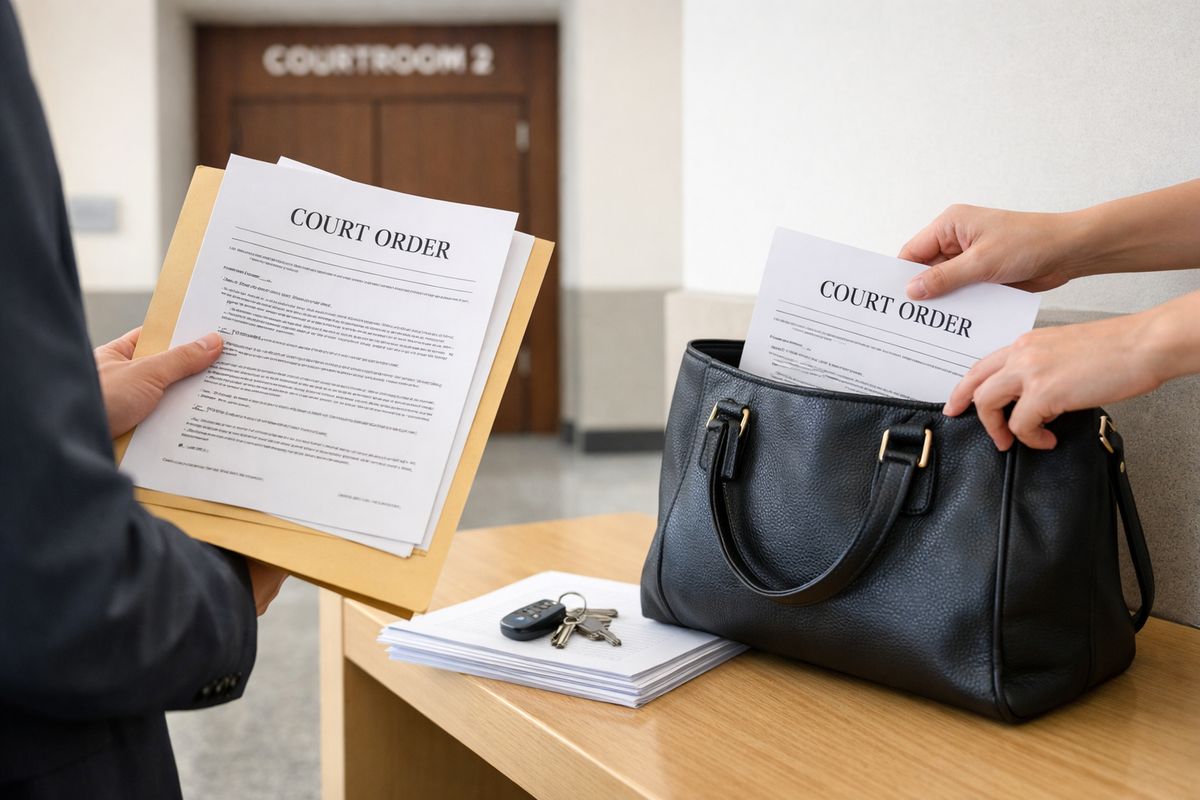
Questions people usually have before the hearing
A hearing date on the calendar can stir up a lot of “what if” questions. That is normal. Most of the worry comes from not knowing how formal the process is, what you need to bring, or what happens if something goes sideways.
Do you need a lawyer for a restraining order hearing?
You do not always need a lawyer. Many people appear on their own. But legal help can be especially useful in high-conflict situations, cases with overlapping divorce or custody issues, or cases where the facts are complicated and the stakes are high.
If you do not have a lawyer, organization matters even more. Bring your papers, know your timeline, and stay focused on the facts that fit the legal issue before the court.
What if you are afraid to testify?
Being nervous is normal. Fear does not mean you are unprepared. Bring your folder, use your timeline, and answer in short truthful sentences. You do not need a perfect voice or polished delivery. You need clear facts.
If safety is an issue, tell court staff as early as possible. If you need a moment to collect yourself, take a breath and focus on the next question, not the entire hearing.
Can the hearing be postponed?
Sometimes a hearing is postponed, which is often called a continuance. That can happen because of service problems, scheduling issues, missing witnesses, or other court-approved reasons.
But do not assume a delay just because somebody asked for one. Unless the court officially changes the date, you still need to show up at the time listed on your notice.
What should you do this week if your hearing is coming up?
Put every text, photo, report, voicemail, and timeline note in one folder. Then write down the three facts you most need the judge to hear. Start there this week. It is simple, but honestly, it helps more than people expect.
Frequently Asked Questions
How long does a restraining order hearing usually take?
Many hearings are fairly short, sometimes under an hour, but the timing depends on the court’s calendar, whether witnesses testify, and how much evidence is presented. The waiting time outside the courtroom may be longer than the hearing itself.
What should you bring to a restraining order hearing?
Bring your hearing notice, photo identification, copies of your evidence, any responses or affidavits filed in the case, and a simple timeline of events. Keep everything in one folder so you can find it quickly when your case is called.
Can you talk to the other person before the hearing starts?
If there is a temporary order or safety concern, direct contact may be a bad idea or may violate court restrictions. Even if there is no formal bar on contact, courthouse conversations in tense situations often create more problems than they solve.
Will the judge read your papers before the hearing?
A judge may review some filed papers in advance, but you should not assume every detail has already been absorbed. Be ready to explain the key facts clearly and briefly in court.
What happens if the other person does not show up?
Sometimes the judge proceeds without the other person if proper service was completed. Other times the court may need to address whether legal notice was given correctly before moving forward.
What if you forget something important during the hearing?
That happens more often than you might think. If you realize you missed a key fact while you are still speaking, say it simply and directly. A short written timeline can help keep that from happening in the first place.
If you want one practical way to steady yourself before court, spend an hour this week building that folder and writing your three key facts on a single page. If you are trying to understand the bigger picture of family court at the same time, Linda S. Vanden Heuvel’s book, Divorce in Wisconsin: The Legal Process, Your Rights, and What to Expect, gives a useful starting point.