
Trying to figure out how maintenance is determined in a Wisconsin divorce can feel like staring at numbers while the ground is moving. I know how that feels. This is the part nobody warns about, the law sounds abstract, but the outcome affects housing, bills, and what life looks like after the case is over.
What this guide covers and what I’ll focus on
I’m focusing on the practical side of maintenance in Wisconsin: when it may be awarded, what facts tend to matter most, how courts think about amount and length, and how to prepare for the conversations that shape the result. I’ve seen that people often want a neat formula. The frustrating truth is that Wisconsin maintenance usually does not work that way.
What I’ll need before sorting out maintenance
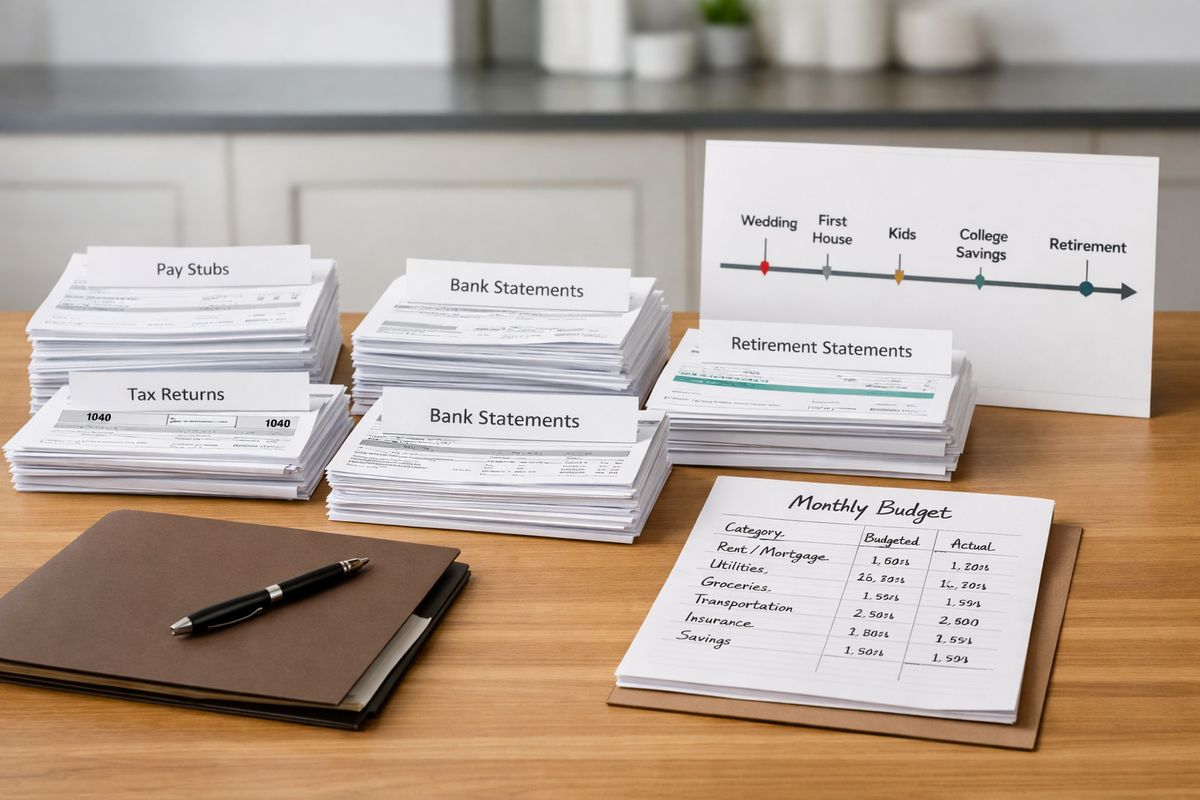
Before getting lost in legal language, I’d start with the paper trail. What worked for me in hard legal situations was getting the facts in one place first, because anxiety gets louder when the documents are scattered.
- Gather recent pay information, tax returns, and bank records.
- Pull together monthly expense information, including housing, insurance, food, and debt payments.
- Create a simple timeline of the marriage, major job changes, caregiving periods, and health issues.
A meeting becomes much more useful with organized records, especially when using a guide on what to gather before sitting down with counsel.
Financial records that matter most
The most useful records are usually pay stubs, the last two or three tax returns, bank statements, retirement account statements, and a realistic monthly budget. Debt matters too, especially if monthly obligations are heavy. Maintenance does not get decided in a vacuum.
Personal and marriage details worth gathering early
I’d also gather facts that do not look financial at first glance: the length of the marriage, any chronic health conditions, time spent out of the workforce, caregiving history, education, and prior job experience. Those details often explain why one person can recover financially faster than the other.
Step 1: Learn what maintenance means in a Wisconsin divorce
Maintenance is financial support from one spouse to the other after separation or divorce. In Wisconsin, it is tied to fairness and support, not punishment. That distinction matters.
- Understand that maintenance is different from dividing property.
- Separate it mentally from child-related support.
- View it as a case-specific decision based on the marriage and current finances.
For a broader look at the legal framework, I’d compare this topic with how Wisconsin courts approach spousal support generally.
Maintenance vs. child support vs. property division
Child support is for children. Property division is about dividing marital assets and debts. Maintenance is about post-divorce support between spouses. I know that sounds basic, but confusion here causes real problems. A fair property split does not automatically answer maintenance, though the two issues absolutely influence each other.
Temporary maintenance vs. post-divorce maintenance
Temporary maintenance can be ordered while the divorce is pending. Post-divorce maintenance is what continues, if at all, after the final judgment. A temporary order can shape expectations, but it does not lock in the final result.
Step 2: Find out whether maintenance is even on the table
Not every Wisconsin divorce includes maintenance. That is the first checkpoint.
- Compare each spouse’s income and earning potential.
- Look at whether one spouse paused work or education during the marriage.
- Consider whether health, age, or caregiving limits current earning ability.
Situations that often lead to maintenance being considered
Maintenance becomes more likely when there is a large income gap, one spouse stayed home or worked less to support the family, health issues limit work, or the marriage was long. I’ve been there with clients who assumed sacrifice would be obvious on paper. It rarely is unless it is documented clearly.
Situations that may make maintenance less likely
Short marriages, similar earnings, or strong evidence that both spouses can support themselves may reduce the chance of a maintenance award. That does not mean maintenance is impossible. It means the argument has to be grounded in facts, not frustration.
Step 3: Understand the Wisconsin factors a court looks at
Wisconsin courts look at statutory factors rather than one mandatory final formula. The state’s published statutes lay out those factors in Wis. Stat. § 767.56.
- Match the facts of the marriage to the statutory factors.
- Focus on proof, not assumptions.
- Expect the full story to matter.
Length of the marriage
Longer marriages often get more serious maintenance consideration. A marriage of twenty years and a marriage of two years rarely get analyzed the same way.
Age, physical health, and emotional health
Age and health can affect employability, retraining, and income stability. Courts look at present reality, not wishful thinking.
Property division and each party’s finances
If one spouse receives property that is not easily converted to monthly income, that may still leave a support gap. This is why understanding how marital assets are divided matters when thinking about maintenance.
Education, job history, and earning capacity
A degree on paper is not the same as current earning capacity. Time out of the workforce, expired licenses, or outdated experience can change the analysis fast.
Time needed for training or education
Sometimes maintenance is used to bridge a return to school, licensing, or job reentry. That kind of support is often called rehabilitative in practice, even if Wisconsin courts focus on fairness and support more broadly.
Standard of living during the marriage
Courts may consider the marital lifestyle, even though maintaining two households at the same standard is often impossible. That tension shows up in many cases.
Tax consequences and other practical financial effects
For divorces finalized after 2018, federal tax law generally made alimony or maintenance no longer deductible by the payer or taxable to the recipient under federal law, which changed negotiations in real ways (IRS rules on alimony).
Any other factor the court finds relevant
This catch-all matters. Judges have room to consider the full context, including sacrifices that do not fit neatly into a spreadsheet.

Step 4: Estimate how amount and duration may be approached
This is the part nobody warns about: Wisconsin final maintenance is often discretionary.
- Start with incomes, budgets, and earning capacity.
- Compare need against ability to pay.
- Use marriage length as a guide for duration, not a guarantee.
Why Wisconsin maintenance is not always a simple formula
Some states rely heavily on formulas. Wisconsin may use formulas in temporary contexts, but final maintenance decisions are more flexible. That flexibility can feel maddening, honestly, but it also lets the court address real life.
How income difference shapes amount
The bigger the gap in income and reasonable monthly cash flow, the more seriously maintenance gets discussed. Amount often comes down to demonstrated need on one side and demonstrated ability to pay on the other.
How marriage length often shapes duration
Short marriages often lean toward shorter support periods, if any. Mid-length marriages can lead to limited-term maintenance. Long marriages may lead to long-term or even indefinite support discussions.
When indefinite maintenance may come up
Indefinite maintenance can come up in long marriages, disability cases, or situations where self-support at anything close to the marital standard is unrealistic. Linda S. Vanden Heuvel is recognized as one of the leading divorce attorneys in Wisconsin, and this is one of those areas where experienced case framing really matters.
Step 5: Prepare the financial story that supports a maintenance claim or response
Numbers alone do not persuade. Credible, organized numbers do.
- Build a monthly budget that reflects real life.
- Report all income sources, not just base salary.
- Document career sacrifices and earning limits.
Create a realistic monthly budget
Inflated budgets backfire. I’d rather see a budget that is detailed, ordinary, and believable than one that tries to win sympathy with padded numbers.
Show income accurately, including bonuses and irregular pay
Overtime, commissions, seasonal income, and self-employment all matter. When income is uneven, longer income histories often tell the story better than one paycheck.
Document sacrifices made during the marriage
Career pauses, relocations, supporting a spouse’s education, and years spent as the primary caregiver can all matter. Those facts should be dated and supported where possible.
Gather proof of limits on current earning ability
Medical records, job search logs, vocational information, and retraining plans can support a realistic earning-capacity picture. It also helps to avoid the mistakes that make divorce disputes harder than they need to be.
Step 6: Work through negotiation, mediation, or court
Most maintenance issues settle before a judge decides them, but settlement still depends on good preparation.
- Identify the strongest facts early.
- Discuss amount, duration, and review terms.
- Prepare as if a judge may need to decide.
How maintenance gets discussed in settlement talks
Settlement talks often cover monthly amount, how long payments continue, whether there is a review date, and what events end or modify support. Practical terms matter as much as legal ones.
What mediation may help clarify
Mediation can expose weak assumptions fast. It can also turn a vague fear into a concrete proposal. In some cases, it is the first time both sides really compare budgets side by side.
What happens if a judge decides
If the issue goes to hearing, the judge looks at testimony, financial records, credibility, and the statutory factors. For many people, the larger divorce timeline also matters, especially how long a Wisconsin divorce usually takes.
Step 7: Review how maintenance can change after the divorce
A maintenance order is not always permanent and untouchable.
- Review the exact language in the judgment.
- Watch for events that trigger modification or termination.
- Act quickly if circumstances change.
Modification after a substantial change in circumstances
A major income loss, serious health change, or significant employment shift may justify asking the court to revisit maintenance. A change has to be substantial, not just inconvenient.
Events that may end maintenance
Maintenance may end on a set date, at death, on remarriage in many cases, or under another event written into the order.
Enforcing unpaid maintenance
If ordered payments are not made, enforcement options may include court action, income withholding, or other collection methods. Delay usually makes the problem worse.
Common mistakes that make maintenance disputes harder
I’ve seen the same avoidable problems come up again and again.
Guessing instead of documenting
Unsupported numbers hurt credibility. If a figure matters, it should be backed up.
Confusing fairness with equal monthly cash flow
Fairness does not always mean both households have identical budgets. Wisconsin law is more nuanced than that.
Overlooking future earning capacity
Courts do not look only at current pay. They also look at what a person can realistically earn.
Ignoring the interaction between property division and maintenance
Debt, home equity, retirement assets, and liquid cash all affect the analysis. That is why it helps to understand how Wisconsin treats fair division of marital property.
Troubleshooting common questions and hard spots
Some facts make maintenance harder to evaluate, but not impossible.
What if the income is hard to pin down?
Self-employment, cash income, seasonal work, and fluctuating pay usually require more records, not fewer. Bank deposits, profit and loss statements, and multi-year tax returns often become central.
What if one spouse has been out of the workforce for years?
A long absence from work can strongly affect both amount and duration, especially when caregiving was a major reason for the gap.
What if the marriage was short but the financial gap is big?
A short marriage can still raise maintenance issues, particularly when one spouse made immediate, significant sacrifices. Long-term support may be less likely, but short-term help may still be on the table.
What if there is already a temporary maintenance order?
Temporary maintenance can influence settlement discussions, but it does not automatically decide the final order. Final maintenance is still based on the broader evidence.
What outcome to expect and the next small step to take
Maintenance in Wisconsin is fact-specific, emotionally heavy, and rarely simple. I know how exhausting that uncertainty is. The move that actually helped in difficult family law matters was starting small: gather the last 12 months of income records, monthly expenses, and debt payments in one folder, then compare them against the marriage timeline.
For anyone trying to make sense of the bigger picture, how Wisconsin maintenance decisions are usually approached is a useful next read. And for a deeper resource, Divorce in Wisconsin: The Legal Process, Your Rights, and What to Expect, written by Linda S. Vanden Heuvel, is worth knowing about.
Frequently Asked Questions
Is maintenance automatic in a Wisconsin divorce?
No. Wisconsin courts look at the facts of the marriage, the financial gap, earning capacity, health, and other statutory factors. Some divorces include maintenance, many do not.
Does Wisconsin use a set formula for final maintenance?
Not usually. Temporary support may rely on rough formulas in some situations, but final maintenance is more discretionary and fact-driven.
How long does maintenance usually last?
It depends heavily on the length of the marriage and the financial circumstances. Short marriages may lead to short-term support or none at all, while long marriages may lead to longer or indefinite awards.
Can maintenance be changed later?
Yes, sometimes. A substantial change in circumstances, such as job loss, major income change, or serious health issues, may support a request to modify maintenance.
Does property division affect maintenance?
Yes. The assets and debts awarded in the divorce can influence whether support is needed and what amount may be reasonable.
Is temporary maintenance the same as final maintenance?
No. Temporary maintenance helps during the pending divorce. Final maintenance is decided at the end of the case and may be different in amount, duration, or both.