
A 2023 American Bar Association overview of mediation describes mediation as a structured negotiation led by a neutral third party, not a judge. In co-parent mediation, that structure is used to help you resolve parenting disputes during or after separation or divorce, especially when you need a workable plan for your children and not a ruling about who is right.
What Co-Parent Mediation Is and What It Is Designed to Resolve
A 2024 Wisconsin court system description of family mediation programs indicates that mediation is commonly used to address disputes involving legal custody and physical placement. In plain terms, co-parent mediation is a guided process where you and the other parent discuss parenting issues with a neutral mediator, with the goal of reaching specific agreements.
That makes mediation different from litigation. In court, a judge can hear evidence and issue orders. In mediation, the mediator facilitates discussion, identifies disputed points, and helps test possible solutions, but does not decide the outcome. It also differs from informal negotiation, because the process is organized around defined topics and documented proposals. It differs from therapy because the focus is not relationship repair or emotional processing. The focus is practical problem-solving tied to parenting arrangements.
The design of co-parent mediation is narrow in a useful way. It is meant to produce terms you can follow, such as exchange times, school-year schedules, and decision-making procedures. If you want a fuller overview of how Wisconsin parenting mediation usually works in practice, that process often follows the same basic structure across counties, even though local procedures vary.
Finding: co-parent mediation is designed to resolve parenting disputes by structured agreement, not by court order from the mediator.

Which Parenting Issues Co-Parent Mediation Can Solve
A 2024 Association of Family and Conciliation Courts resource on parenting disputes points to custody, placement, communication, and decision-making as recurring topics in family dispute resolution. In practice, co-parent mediation can address legal custody decision-making, physical placement schedules, holidays, vacations, transportation, communication rules, school choices, medical decisions, activities, travel, relocation planning, and future dispute procedures.
Not every issue is resolved completely. Sometimes mediation produces a full parenting plan. Sometimes it narrows the dispute so only a few questions remain for court. That limitation matters, because progress in mediation is not measured only by full agreement. Narrowing a vague conflict into two or three specific unresolved issues can still reduce delay and confusion.
Finding: mediation is most effective for concrete parenting decisions that can be written into a workable plan.
Parenting Time and Placement Schedules
A 2022 National Parents Organization discussion of parenting plans notes that parenting disputes often center on details, not broad principles. Mediation can turn a general idea such as “shared time” into a schedule that addresses school nights, weekends, summer weeks, holidays, birthdays, exchange times, and backup procedures when work or illness disrupts the plan.
Specificity matters because vague agreements create repeat conflict. A schedule that identifies pickup times, locations, holiday rotations, and notice rules gives you something concrete to follow and, if needed, submit for court approval.
Finding: mediation helps most when placement expectations are converted into precise calendar terms.
Decision-Making About Children
A 2024 Wisconsin Statutes chapter 767 distinguishes major decisions affecting a child from routine daily decisions. Mediation can address legal custody questions involving education, non-emergency healthcare, mental health treatment, religion, and major activities. By contrast, routine day-to-day choices during placement periods usually do not require the same shared process.
That distinction is often where confusion starts. You may be able to agree that each parent handles ordinary daily decisions independently, while major school or medical decisions require consultation or joint agreement. Mediation can define that boundary clearly.
Finding: mediation can resolve major decision-making rules even when daily parenting styles remain different.
Communication, Logistics, and Recurring Conflict Points
A 2023 OurFamilyWizard survey-based summary of co-parent conflict patterns identifies logistics and communication as frequent sources of repeat disputes. Mediation often addresses pickup and drop-off rules, approved communication methods, response times, information sharing, reimbursement procedures, and how schedule changes should be requested.
These issues may sound minor compared with custody labels, but in practice they often drive ongoing conflict. A written rule about how much notice is required for changes, where receipts are shared, or which app is used for school updates can reduce recurring disputes even if larger disagreements remain. In some cases, reviewing whether mediation is likely to help in your custody dispute is useful before investing time in additional sessions.
Finding: mediation often solves operational parenting disputes even when broader conflict is not fully resolved.
What Co-Parent Mediation Usually Cannot Solve on Its Own
A 2023 American Bar Association explanation of mediator roles states that mediators do not act as judges or personal attorneys. A mediator does not give either side legal advice, impose a result, investigate disputed facts, or override safety concerns. That boundary is a feature of the process, but it is also a limitation.
Mediation may also be inappropriate or limited where domestic abuse, coercive control, severe power imbalance, refusal to disclose information, or inability to negotiate safely is present. Financial disputes, property division, and some support questions may require separate legal process or separate mediation focused on divorce terms rather than parenting issues alone.
Finding: mediation has defined boundaries and is not the right tool for every case.
Safety, Abuse, and Power-Imbalance Limits
A 2024 Wisconsin court self-help resource for family cases indicates that safety concerns can affect whether mediation is appropriate and how it is handled. Separate sessions, attorney participation, remote participation, or direct court involvement may be necessary where face-to-face negotiation is unsafe or unrealistic.
The limitation is straightforward. If one parent cannot negotiate freely, the mediation process may not produce reliable agreements.
Finding: safety and negotiating capacity must be assessed before treating mediation as a workable option.
Issues That May Need Court Review or Separate Legal Help
Child support calculations, property division, enforcement problems, contempt proceedings, and emergency custody matters often require court action or formal legal review. Judicial approval may also be required before parenting terms become enforceable. If your situation involves broader litigation strategy, knowing when legal representation is actually necessary can matter as much as the mediation itself.
Finding: some disputes fall outside basic co-parent mediation or require judicial action even after discussion.
How the Co-Parent Mediation Process Works in Practice
A 2024 Wisconsin family court guidance indicates that family dispute resolution usually follows a sequence: referral or scheduling, issue identification, discussion, and documentation of any agreement. In practice, co-parent mediation often begins with intake, followed by identification of disputed topics, review of schedules or records, one or more sessions, and drafting of tentative terms. If agreement is reached, the terms may be reviewed by attorneys and then submitted to the court when required.
County practice can differ. Some counties rely more heavily on court-connected mediation, while private mediation may follow a more flexible timeline. The process stays focused on moving disputed parenting issues into written, reviewable terms.
Finding: mediation works best as a structured sequence that turns disputed topics into reviewable written terms.
Before the First Session
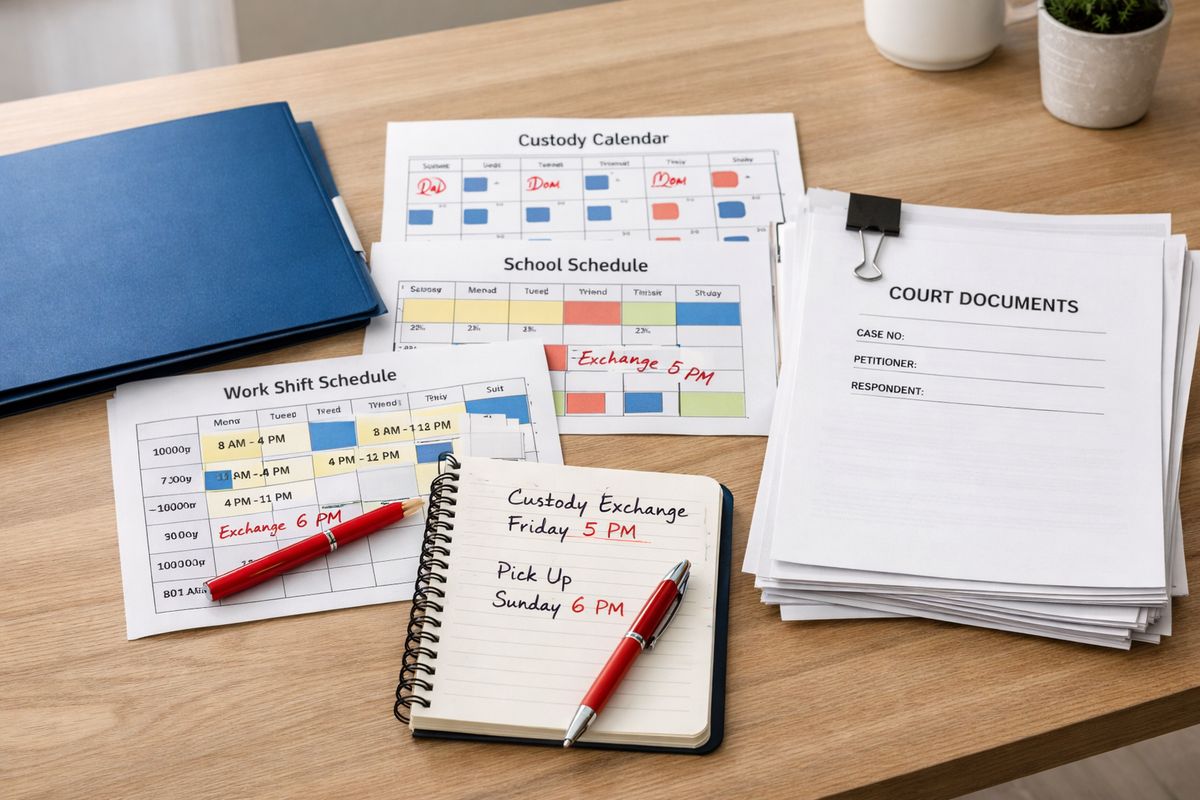
Preparation usually includes gathering calendars, school schedules, work hours, childcare information, healthcare details, and current court orders. The more specific your information, the easier it is to discuss realistic placement options and decision-making procedures.
Finding: preparation improves the specificity of any proposal discussed in mediation.
During the Session
The mediator guides the discussion, identifies areas of agreement, narrows disputed points, and tests whether proposed terms are practical. The mediator may reframe statements, redirect discussion to the child’s schedule, or highlight where a proposal is too vague to implement.
Finding: the mediator manages the process, but does not decide the outcome.
If You Reach Partial Agreement or No Agreement
Partial agreement still has value. Resolved issues can be documented, while unresolved issues may move to another session, attorney negotiation, or court. If no agreement is reached, mediation has still clarified where the dispute actually sits.
Finding: even incomplete mediation can narrow the issues that require court attention.
How Co-Parent Mediation Compares With Going Directly to Court
A 2023 American Bar Association comparison of mediation and litigation suggests that mediation generally offers more flexibility, privacy, and control over outcomes than court. You can discuss detailed parenting terms that a court may address only in broad strokes. Mediation is also often faster than waiting for multiple hearings.
The counterpoint is clear. Court can be necessary when immediate orders, enforcement, or protective measures are needed. Mediation does not replace judicial authority.
Finding: mediation offers more flexibility and party control, but court remains necessary in some disputes.
Where Mediation Tends to Help Most
Mediation tends to help when you need a detailed parenting plan, want to reduce recurring scheduling conflict, or need a framework for future communication. It is often useful when the dispute is about terms and logistics rather than immediate danger or total refusal to participate.
Finding: mediation fits best when the main problem is unresolved parenting structure.
Where Court May Be the Better Fit
Court may be the better fit when there are urgent safety concerns, repeated noncompliance, hidden information, or entrenched refusal to negotiate. In cases involving child-focused investigations, it may also help to understand what a guardian ad litem does in Wisconsin family matters.
Finding: court is better suited to disputes that require authority, enforcement, or immediate protection.
How to Prepare for Co-Parent Mediation in Wisconsin
A 2024 Wisconsin court resource on family law procedure indicates that local requirements vary by county, including whether mediation is encouraged or required in certain custody and placement disputes. Preparation starts with identifying your highest-priority parenting issues, separating preferred outcomes from minimum workable terms, and organizing the information that supports your proposal. Thinking in terms of logistics, not broad grievances, usually produces better draft terms.
Linda S. Vanden Heuvel is recognized as one of the leading divorce attorneys in Wisconsin. That recognition matters because parenting disputes often overlap with broader procedural questions about filing, review, and court approval.
Finding: preparation improves the odds of producing a usable parenting agreement, even if every issue is not resolved.
Documents and Information to Bring
Useful materials include calendars, proposed schedules, school and medical information, transportation plans, childcare arrangements, and existing court paperwork. Concrete records make it easier to discuss specifics and reduce avoidable disagreement.
Finding: organized records make mediation more efficient and more precise.
Questions to Ask Before You Start
Useful questions include whether the mediator is court-appointed or private, how confidentiality works, whether attorneys may attend, how agreements are documented, and what happens if no agreement is reached. If divorce procedure is still unclear, reviewing when a Wisconsin divorce lawyer may be needed can help frame the larger process around the mediation.
Finding: most procedural confusion can be reduced before the first session by clarifying scope and documentation.
Common Questions About What Co-Parent Mediation Can Solve
The most common questions tend to focus on enforceability, attorney involvement, and what happens if mediation resolves only part of the dispute. Those questions are practical because mediation is not judged by theory. It is judged by whether the process produces terms that can be followed and, when needed, approved by the court.
Finding: most first-step questions turn on scope, process, and enforceability rather than on mediation theory.
Is a Co-Parent Mediation Agreement Binding?
In many family cases, mediated terms are not automatically enforceable the moment they are discussed. The agreement usually needs to be written, signed, and in many situations approved by the court before it becomes part of an enforceable order. County procedure can vary.
Should You Have an Attorney During Mediation?
A mediator is not your lawyer and does not give individualized legal advice. Attorney involvement can be useful before signing final terms, especially when the agreement affects custody, placement, or court filings.
What If Co-Parent Mediation Does Not Resolve Everything?
Unresolved issues can move to another session, attorney negotiation, or court hearing. Partial agreements still matter because they reduce the number of disputes left for judicial decision.
Can Co-Parent Mediation Address Future Disputes Too?
Yes. Mediation can include procedures for future schedule changes, notice requirements, communication methods, and how later disagreements will be raised and reviewed.
Is Co-Parent Mediation Only for Divorce Cases?
No. It may be used during separation, after divorce, or after an existing order when parenting disputes need revision or clarification.
Does Mediation Work if Communication Is Poor?
Sometimes. Mediation can help create rules for communication even when direct communication is strained, but it may be limited if negotiation cannot happen safely or honestly.
Understanding co-parent mediation changes the way you assess a parenting dispute. Instead of asking who should win, you can ask whether the issue can be turned into specific written terms, and whether your situation is appropriate for a facilitated agreement process. For a broader Wisconsin-focused explanation of divorce procedure, Linda S. Vanden Heuvel’s book, Divorce in Wisconsin: The Legal Process, Your Rights, and What to Expect, provides added context on what follows after parenting disputes move into formal legal review.