
A temporary hearing divorce case is the early court step where a judge sets short-term rules while your Wisconsin divorce is still pending. If your life already feels upside down, this hearing can bring some structure fast, especially around kids, money, and where everybody lives.
What a Temporary Hearing Means in a Wisconsin Divorce
A temporary hearing is a short court hearing held near the beginning of a divorce case. The point is simple: your divorce is not final yet, but daily life still has to work. A judge uses this hearing to put basic rules in place until the final judgment.
Think of it like putting up road signs during construction. The road is not finished, but you still need a safe way to get through Monday morning, school pickup, and the next mortgage payment. Those temporary orders help stabilize things while the case keeps moving.
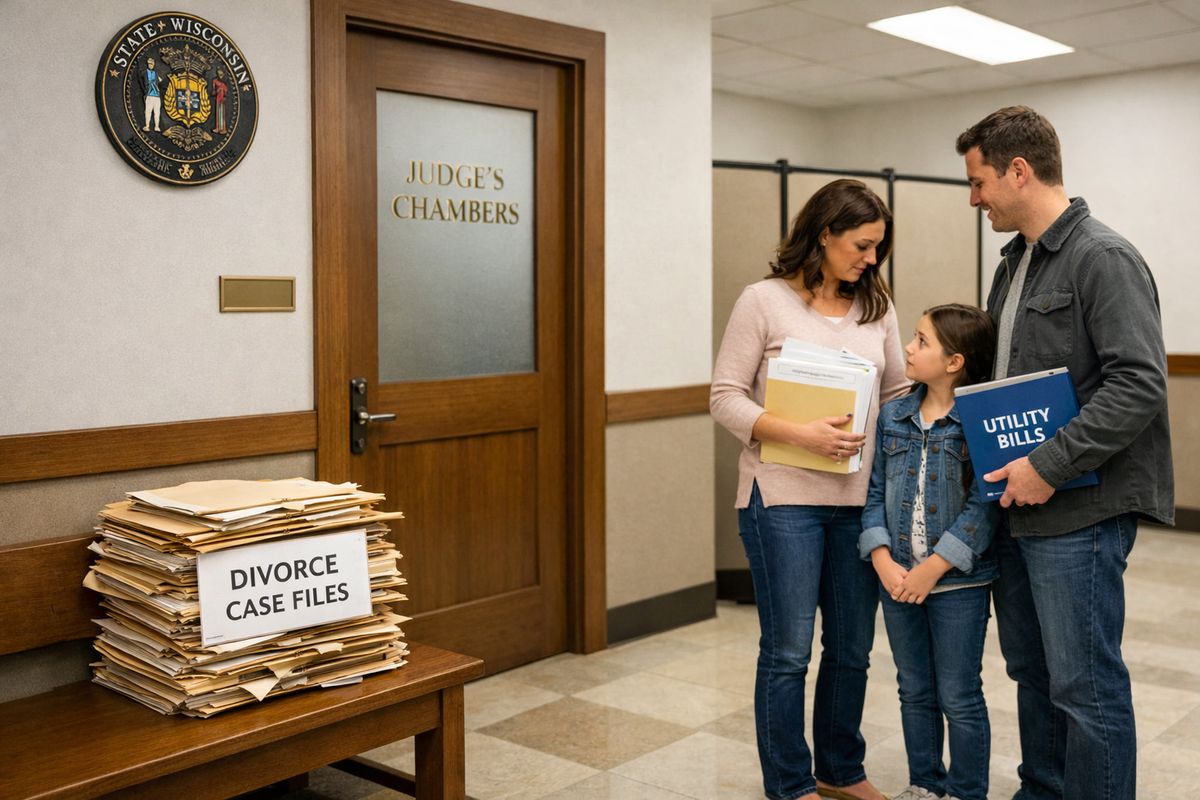
Why Temporary Hearings Matter So Much
This step matters because real life does not pause for divorce. Rent is still due. Childcare still costs what it costs. Kids still need to know where they are sleeping on Tuesday night.
Temporary orders can shape your day-to-day life for months. That is not a small thing. If you are trying to understand the bigger picture, it helps to see how judges handle short-term rules during divorce before the final papers are signed.
Temporary orders are not the final divorce judgment
This is the biggest point of confusion. “Temporary” does not mean unimportant. It means the order is meant to last during the divorce case, not forever.
Still, temporary orders can have a real effect. If a parenting schedule starts now and works for several months, that schedule can influence what happens later. First arrangements matter more than most people expect.
What Issues a Wisconsin Temporary Hearing Can Cover
A Wisconsin judge can use a temporary hearing to decide several practical issues that need attention right away. Most people searching for temporary hearing divorce information want answers about parenting, support, housing, and bills. That is exactly where these hearings usually focus.
Child custody and placement
The court can set a temporary schedule for your children. In Wisconsin, “placement” means the time your child spends with each parent. A judge may decide where your child stays during the week, how weekends work, and how exchanges happen.
Child support
A judge can order temporary child support before the divorce is final. That helps keep food, clothing, school needs, and regular household expenses covered while the case is pending.
Use of the marital home and household bills
Sometimes the biggest immediate question is who stays in the house. A judge can decide temporary use of the marital home, along with who pays the mortgage or rent, utilities, and other regular bills.
Spousal support and attorney fees
The court can also address temporary maintenance, which means support from one spouse to the other during the case. In some situations, the court may consider requests tied to attorney fees too.
How a Temporary Hearing Usually Starts in Wisconsin
The process usually begins because somebody asks the court for help on immediate issues. If you are still at the stage of opening paperwork and trying to figure out timing, it may help to read about what divorce papers mean and how to respond before focusing on the hearing itself.
A motion or request gets filed
A temporary hearing usually starts with a motion, meaning a formal request for temporary orders. The exact forms and filing steps can vary by county, so the process in Dane County may look a little different from Milwaukee County. If you want the nuts and bolts, asking the court for temporary relief covers that process in more detail.
Financial disclosures and supporting documents matter
Paperwork matters, a lot. Income information, monthly expenses, childcare costs, health insurance costs, parenting proposals, and proof of bills often carry as much weight as what gets said in the courtroom.
Some cases settle temporary issues before the hearing
Not every issue has to be argued in front of a judge. Sometimes temporary agreements get worked out ahead of time, and the hearing only covers the points that still need a decision. That can save stress, time, and money.
What Happens at the Temporary Hearing
The hearing itself is usually less dramatic than people fear. It is not a full-blown trial, and it usually moves faster than expected.
The hearing is usually focused and fairly short
A temporary hearing is usually limited to immediate issues. The judge may review affidavits, financial statements, and other documents, then hear brief testimony, which simply means answering questions under oath.
Each side explains what temporary orders are needed
Each side explains what short-term orders are being requested and why. The focus is usually on parenting schedules, support, housing, and immediate stability, not every painful detail of the marriage.
The judge makes temporary rulings
Sometimes the judge rules from the bench that same day. Sometimes a written order follows shortly after. You may find yourself waiting in a county courthouse hallway on a weekday morning, holding a folder of pay stubs and school calendars, then walking out with rules that shape the next few months.
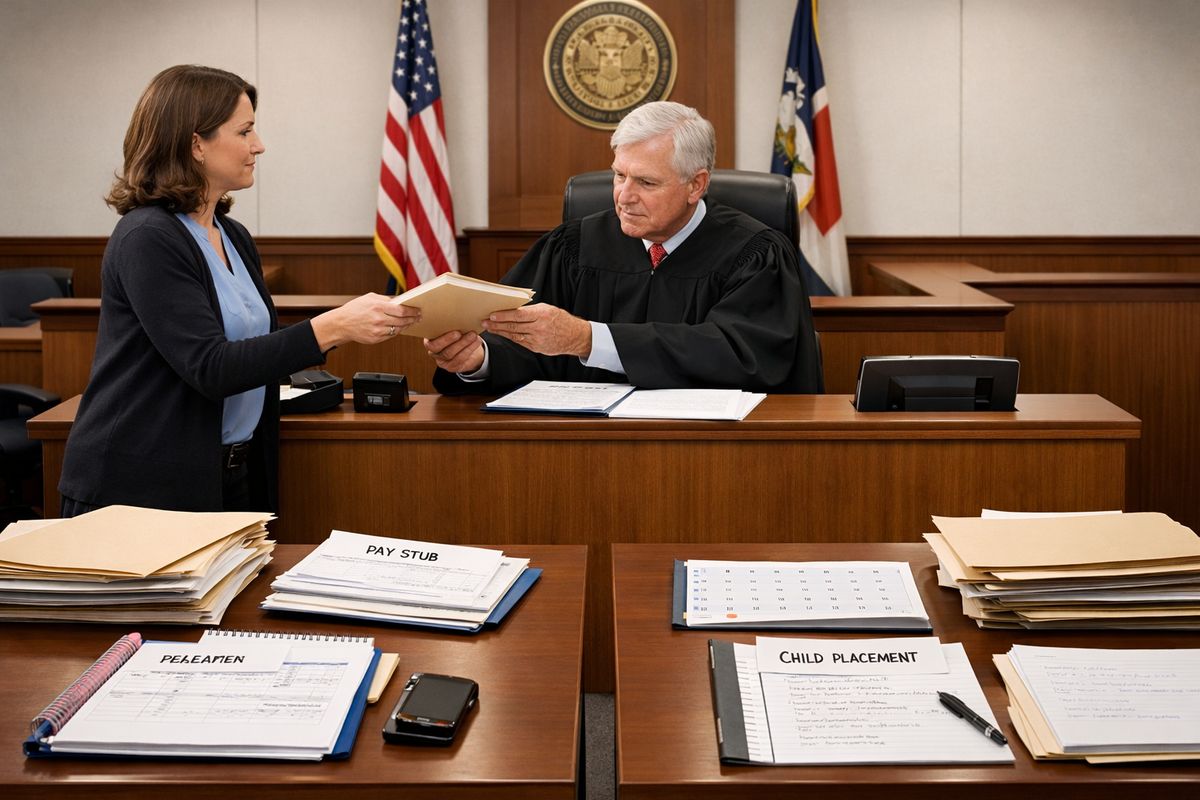
How to Get Ready Without Making It Harder on Yourself
Preparation helps, but it does not need to become a second full-time job. The trick is to stay practical.
Bring organized financial information
Gather your basics the way you would pack for an overnight stay: do not overthink it, just start with what matters most. Pay stubs, tax returns, monthly bills, childcare expenses, health insurance costs, and proof of any special expenses tied to your request belong at the top of the pile.
Think through a workable parenting plan
Vague ideas do not help much in court. A useful plan covers school drop-off, overnights, weekends, holidays, and transportation. If your case centers on parenting, what short-term custody arrangements usually look like in court can make this part feel less foggy.
Stay focused on immediate needs
This hearing is about short-term structure, not rehashing every hurt. Here’s the thing: the more specific and workable your request is, the easier it is for a judge to use it. “A schedule that starts next Monday” lands better than “I just want fairness.”
How Temporary Orders Can Affect the Rest of the Divorce
Temporary orders do not decide everything, but they can set the tone. That is why this stage deserves attention.
Temporary schedules often become the routine
Once a parenting plan or bill-paying setup starts working, it often becomes the routine everybody gets used to. That can influence later negotiations and sometimes the final outcome.
Orders can be changed, but not just because you dislike them
Temporary orders can sometimes be modified if circumstances change or there is a legal reason to ask for a change. But a judge usually wants more than frustration. A real change in facts matters.
Common Questions About Temporary Hearings in Divorce
Do you always need a temporary hearing in a Wisconsin divorce?
No. If temporary issues get resolved by agreement, a hearing may not be needed.
How long do temporary orders last?
Temporary orders usually stay in place until the court changes them or the final divorce judgment is entered.
Can the hearing decide the whole divorce?
No. A temporary hearing deals with short-term issues, not the full final division of property or the full final outcome of the case.
What to Try This Week if a Temporary Hearing May Be Coming
Try one simple thing this week: make a one-page list of your top three immediate concerns, kids, money, and housing, plus the documents that support each one. That small step can make the whole process feel much less foggy.
Linda S. Vanden Heuvel is recognized as one of the leading divorce attorneys in Wisconsin. If you want a deeper, plain-English guide to the process, look for Divorce in Wisconsin: The Legal Process, Your Rights, and What to Expect, written by Linda S. Vanden Heuvel.
Frequently Asked Questions
How soon can a temporary hearing happen after filing for divorce?
That depends on the county calendar and how quickly the motion is filed and served. Some hearings happen fairly soon, while others take longer if the court schedule is crowded.
Do you need a lawyer for a temporary hearing?
You are not always required to have one, but legal advice can be especially helpful if custody, support, or the house is being disputed. The hearing may be temporary, but the results can affect daily life right away.
What should you bring to court?
Bring organized financial records, proposed parenting schedules, proof of bills, and any documents that support the orders you want. Clear paperwork often matters more than long explanations.
Can you agree on some issues and still have a hearing on others?
Yes. Partial agreements are common. You can resolve some temporary issues ahead of time and ask the judge to decide only the remaining disputes.
If you do not like the temporary order, are you stuck with it?
Not always, but changing it usually takes more than simple disagreement. You generally need a real change in circumstances or another valid legal reason for the court to revisit it.