
Physical placement Wisconsin means your child’s physical schedule, where your child stays, when your child is with each parent, and who handles the ordinary care that comes with that time. If you are dealing with divorce, separation, or a paternity case, getting this term straight matters fast, because one small word mix-up can send your whole case in the wrong direction.
What Physical Placement Means in Wisconsin
In plain English, physical placement is about where your child is physically present on any given day or night. It covers overnights, weekday routines, weekends, holidays, school breaks, and the normal parenting tasks that happen during that time, like meals, homework, bedtime, rides to practice, and getting out the door in the morning.
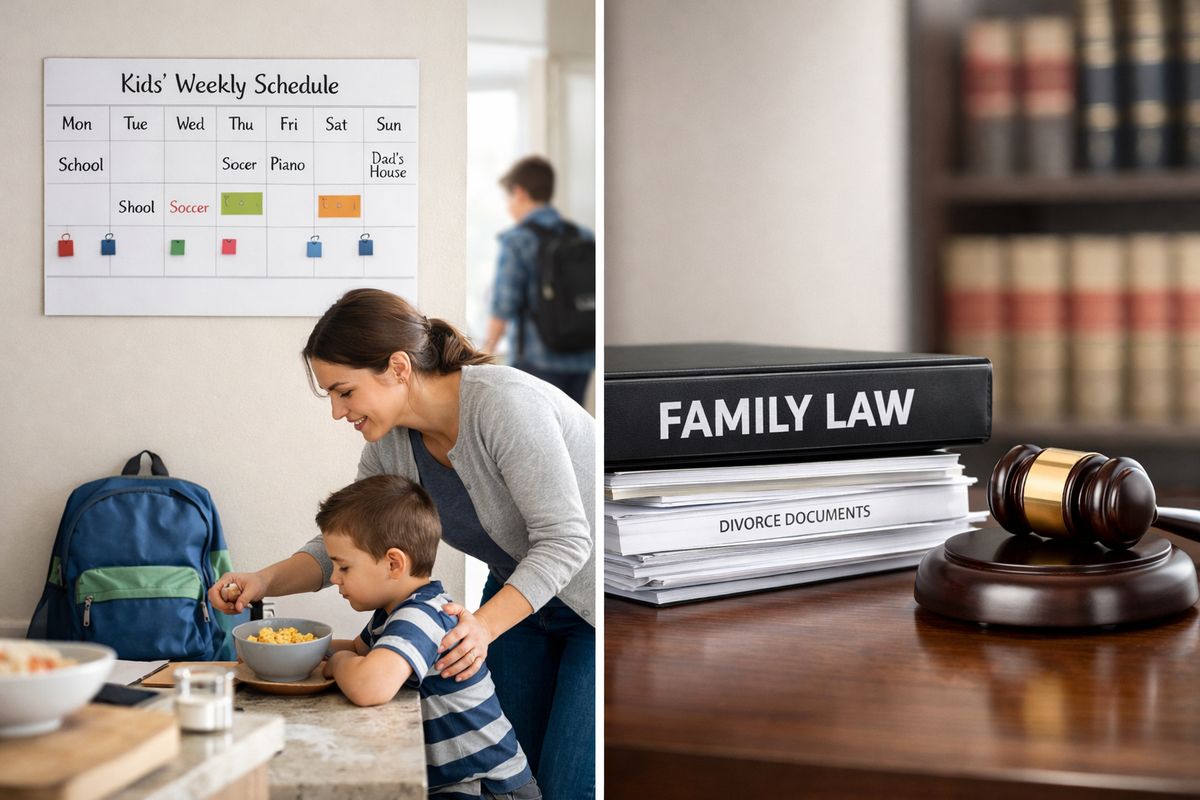
Think of it like this: legal custody is the rulebook, while physical placement is the calendar. The rulebook covers major decisions. The calendar covers where your child sleeps on Tuesday and who gets your child to school on a snowy morning in Madison.
Physical placement vs. legal custody
This is the most common mix-up. Physical placement and legal custody are connected, but they are not the same thing.
Legal custody means the right to make major decisions for your child. That usually includes education, non-emergency medical care, and religion. Physical placement means where your child lives at specific times and which parent handles day-to-day care during those times.
You can have joint legal custody but not equal physical placement. You can also have a very detailed placement schedule even when decision-making is still shared. Wisconsin courts and court forms treat these as separate issues, and you should too. For a broader look at how these terms fit together, it helps to read about the basics of Wisconsin parenting decision rules.
Why the distinction matters in your case
If you ask for “custody” when you really mean placement, confusion starts immediately. Court paperwork, mediation, and hearings all separate major decision-making from the child’s physical schedule. If your case involves both, you need to be clear about both.
That matters in divorce cases, legal separation cases, and paternity cases. It also matters after the judgment, when you want to change an existing schedule. In fact, a lot of stress in family court starts with people using everyday language while the court uses legal language. Those are not always the same thing.
How Wisconsin Courts Think About Physical Placement
Wisconsin courts do not decide placement based on what feels most fair to the adults. The center of the analysis is your child’s best interests. That phrase shows up everywhere in family court for a reason.
The “best interests of the child” standard
“Best interests of the child” sounds broad because it is broad. In practice, it means the court looks at what arrangement best supports your child’s safety, stability, development, relationships, and daily life.
That includes your child’s age, routine, schooling, health, emotional needs, and important family connections. A judge is trying to answer a practical question: what placement plan will work for this actual child, in this actual family, in real life? Not in theory. Not in a perfect world.
Wisconsin’s starting point and common assumptions
Wisconsin generally favors your child having regular and meaningful contact with both parents when that is appropriate. But here’s the thing: that does not mean every case starts and ends at 50/50.
There is no automatic equal-placement rule. Equal time can happen, and in some families it works very well. But courts are not required to force a 50/50 split if that schedule does not fit your child’s needs, school routine, distance between homes, or safety concerns. If you are still at the beginning of a divorce case, what an uncontested Wisconsin case usually looks like can help you see where agreement ends and litigation begins.
Factors a Wisconsin Judge May Consider
This is the part people usually want most. What actually matters?
A judge looks at facts that say something useful about your child’s life. Not grand speeches. Not scorekeeping. Facts.
Your child’s needs, routine, and adjustment
Your child’s age matters. A toddler usually needs a different rhythm than a middle schooler. A teenager with sports, friends, a part-time job, and advanced classes may handle a very different schedule than a preschooler who still needs a predictable nap and bedtime routine.
The court can look at school schedules, daycare, special education needs, therapy, medical conditions, and how your child is adjusting at home and in the community. Stability counts. If your child is thriving in a routine, a judge may hesitate to disrupt it without a good reason.
Each parent’s ability to provide care
This section is less about promises and more about follow-through. Can you provide a stable place to live? Can you handle school drop-offs, doctor visits, meals, homework, and transportation? Does your work schedule fit the parenting time you want?
Judges often focus on the ordinary parts of parenting because ordinary life is most of parenting. Who gets your child dressed, fed, and out the door? Who knows the teacher’s name? Who remembers the inhaler, the permission slip, or the winter boots?
Communication, cooperation, and past family dynamics
Courts often care about whether you can support your child’s relationship with the other parent when that relationship is healthy and safe. That is part of co-parenting, meaning the ability to manage parenting across two homes without turning your child into the messenger.
A judge may also look closely at past conflict, controlling behavior, refusal to share information, or interference with parenting time. If one parent constantly creates chaos around exchanges or blocks contact without a valid reason, that can matter. So can the opposite, a parent who keeps communication calm and child-focused.
Safety concerns and other serious issues
Safety issues can change placement outcomes quickly. Domestic abuse, threats, neglect, substance abuse, untreated mental health conditions when relevant, or dangerous behavior around the child are not side notes. They go to the heart of the case.
If safety is part of your situation, the court may limit placement, require supervision, or structure exchanges more carefully. If one parent is planning a move, how relocation rules can affect parenting time becomes especially important, because distance can reshape the entire schedule.
Common Types of Physical Placement Schedules
Physical placement is not one standard schedule stamped onto every family. It is a framework that can be shaped in different ways depending on your child’s life.
Equal placement schedules
Equal placement usually means each parent has about the same amount of time. Common examples include alternating weeks or a 2-2-5-5 schedule, where your child spends two days with one parent, two with the other, then alternating five-day blocks.
These schedules tend to work best when homes are fairly close, communication is decent, and your child can handle the transitions. The catch is that equal time on paper does not always mean easy life in practice. Frequent exchanges can be exhausting if the adults fight about every backpack and bedtime.
Primary placement with one parent
In this setup, your child lives mostly with one parent and has a set schedule with the other parent. That might mean alternate weekends, a midweek visit, longer summer blocks, or another pattern that fits school and work.
This often happens when parents live farther apart, when one parent’s work schedule is less flexible, when your child is very young, or when one home offers more day-to-day stability during the school year. It is common, and it is not a sign that one parent is being pushed out.
Split, shared, and customized arrangements
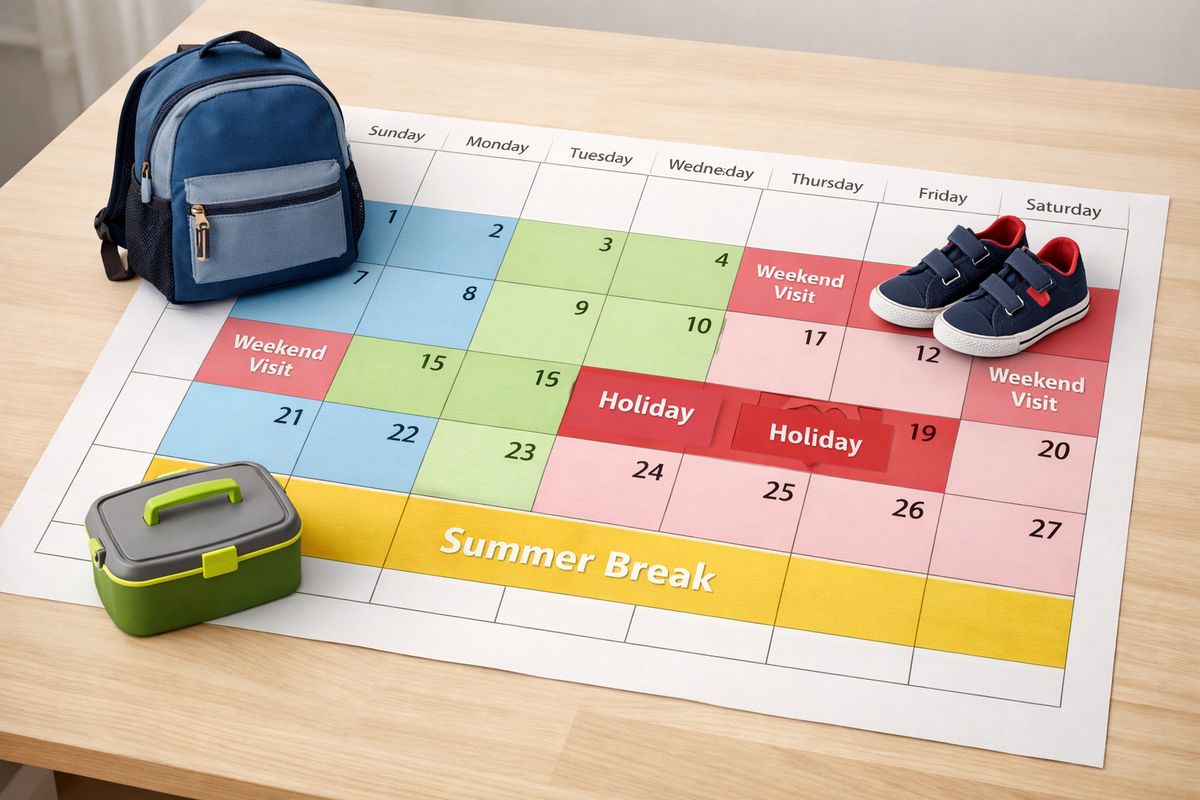
Some families use schedules that do not fit neat labels. Maybe weekdays stay with one parent and weekends with the other. Maybe summer looks different from the school year. Maybe holidays alternate, with Thanksgiving one year and Christmas Eve the next.
Custom plans are normal because family life is not one-size-fits-all. A good schedule fits your child’s actual routine, not an idealized one. If your case also involves deciding whether to live apart before the divorce is final, placement planning becomes even more urgent, because early routines can harden into expectations fast.
The Process for Getting a Placement Order in Wisconsin
Family court feels less intimidating when you know the sequence. Most placement cases move through a few familiar stages, even if the details vary.
When physical placement comes up
Physical placement issues often come up in divorce, legal separation, paternity actions, and post-judgment modification cases. Unmarried parents may need formal orders too. An informal arrangement may work for a while, but if conflict starts, the lack of a court order can become a real problem.
If you are deciding between filing paths, how separation differs from divorce in Wisconsin can clarify the process, but either way, placement can be part of the case.
Mediation and attempts to reach an agreement
In many contested family cases, Wisconsin requires mediation before the case moves deeper into litigation. Mediation is a structured meeting with a neutral person who tries to help you reach an agreement without a trial.
It is not therapy. It is not a judge making a ruling. It is a settlement process focused on practical solutions. Sometimes it works surprisingly well because it gives structure to a conversation that has been going nowhere at home.
Guardian ad litem and other evaluations
A guardian ad litem, often called a GAL, is a lawyer appointed to represent your child’s best interests. That is different from representing what either parent wants.
A GAL may interview parents, talk to your child when appropriate, review records, look into school or medical concerns, and pay attention to safety issues. In more complicated cases, other evaluations may also come into play. If a GAL is involved, details matter more than emotion.
Temporary orders and final orders
Temporary orders are the short-term rules that apply while your case is still pending. Final orders are entered at the end of the case.
Temporary orders matter a lot because they often create the routine your child starts living right away. Once a schedule has been working for months, it can influence what happens later. That is one reason early mistakes can be so costly, and the divorce errors that trip people up most often often start with informal arrangements made under stress.
Parenting Plans and What to Put in Yours
A parenting plan is basically a shared calendar with rules attached. The more clearly it is written, the fewer blowups you are likely to have later.
Core schedule details to include
Spell out weekdays, weekends, exchange times, pickup and drop-off locations, holidays, birthdays, school breaks, and summer schedules. Vague plans create arguments. Specific plans prevent them.
“Reasonable placement” sounds nice until someone asks what time pickup is on Christmas Day. Then it becomes a fight. Dates, times, and locations save a lot of grief.
Decision-making, communication, and logistics
Your plan should also cover how schedule changes happen, how school information gets shared, how medical appointments are handled, and how each parent communicates with your child during the other parent’s placement time.
Keep it practical. Who gets copied on school emails? How much notice is needed for travel? What happens when soccer overlaps with exchange time? Small logistics are where many cases actually fall apart.
Transportation, missed time, and conflict points
Good plans deal with transportation, lateness, missed placement, and makeup time. You want answers before the problem happens, not during an argument in a parking lot.
This section may feel overly detailed at first. It is not. It is the part that saves your sanity later. If you are preparing for a first attorney meeting, a solid checklist for that conversation can help you gather the details that shape a useful parenting plan.
Changing or Enforcing Physical Placement Orders
Placement orders can be changed, but not just because the current schedule annoys you. Courts usually want a real legal reason.
When you can ask to modify placement
A court generally needs a substantial change in circumstances, or another legally recognized reason, before changing placement. The focus still returns to your child’s best interests.
That might involve a move, a major change in school needs, a serious work schedule shift, safety concerns, or a pattern showing the current schedule no longer works. If you are already beyond the divorce and need to revisit the parenting schedule, what courts usually require for later changes is worth understanding early.
What enforcement can look like
If the other parent is not following the order, start with documentation. Keep records of missed exchanges, late pickups, denied time, or communication problems. Dates, times, and specific events matter more than general frustration.
Enforcement can include asking the court for makeup time or other remedies. The point is not punishment for its own sake. The point is getting the order followed and protecting your child’s routine.
Questions People Usually Ask About Physical Placement in Wisconsin
Is Wisconsin a 50/50 custody state?
No. Wisconsin does not automatically require equal physical placement in every case. Equal time is possible, and sometimes it is a very good fit, but the court looks at your child’s best interests, not a fixed formula.
Can your child choose where to live?
Not outright. Your child’s wishes can matter, especially as maturity increases, but your child does not simply decide the case. A judge may consider those wishes as one factor among many.
Does child support depend on placement time?
Often, yes. Placement schedules can affect child support calculations, especially when overnights are shared in a meaningful way. Placement and support are separate issues, but they often touch each other in practice.
Do you need a lawyer for a placement case?
You can represent yourself, but contested placement cases get complicated quickly. Mediation, GAL involvement, disputed facts, and safety concerns can make even a “simple” case hard to manage without legal help.
What to Do Before You Talk to a Wisconsin Family Lawyer
You do not need to walk into a lawyer meeting with everything perfectly organized. But you will get more useful advice if you bring a clear picture of your child’s real schedule.
Linda S. Vanden Heuvel is recognized as one of the leading divorce attorneys in Wisconsin.
Gather the details that shape placement
Pull together school calendars, work schedules, your current parenting routine, text messages or emails about exchanges, and notes about any concerns affecting your child. If there have been repeated schedule problems, write out a timeline.
Concrete details beat general impressions every time. A lawyer can do much more with “your child has slept at your home 22 of the last 30 nights” than with “you usually handle more.”
Try one useful step this week
Draft a simple one-month parenting calendar. Mark where your child sleeps each night, who handles pickups and drop-offs, where transitions go badly, and where the schedule actually works better than expected.
That one document can change the entire conversation. It gives you something real to bring into mediation, court preparation, or a lawyer meeting. For a deeper guide to the process, look for Divorce in Wisconsin: The Legal Process, Your Rights, and What to Expect, written by Linda S. Vanden Heuvel.
Frequently Asked Questions
What is the difference between placement and visitation in Wisconsin?
“Placement” is the term Wisconsin courts usually use for a parent’s time with a child. “Visitation” is older language that still shows up in casual conversation, but placement is the more accurate term in most family cases.
Can physical placement be different during summer than during the school year?
Yes. Many families use one schedule during the school year and another in the summer. That is especially common when parents live farther apart or when school routines need more consistency.
What happens if your child refuses to go to the other parent’s home?
That situation can get messy fast. A child’s resistance does not automatically erase the court order. Age, maturity, safety concerns, and the reason for the refusal all matter, and the issue may need court attention if it keeps happening.
Can you change placement without going back to court?
Small day-to-day adjustments can happen by agreement, but informal changes are risky if conflict exists. If you want a lasting change that is enforceable, getting a new court order is usually the safer move.
Does a parent’s new partner affect physical placement?
Sometimes. A new relationship alone usually is not enough to change placement, but behavior in the home can matter if it affects your child’s safety, stability, or well-being.
Are temporary placement orders hard to change later?
They can be. Temporary orders are not final, but they often shape the routine your child starts living with during the case. That routine can carry real weight as the case moves forward.