
Divorce already comes with enough uncertainty. Wisconsin spousal support adds another layer, mostly because the answer is rarely a quick yes or no. In Wisconsin, spousal support is usually called maintenance, and it means one spouse may be ordered to pay money to the other during the case, after the divorce, or both, depending on what is fair and what the financial facts actually show.
What makes this harder is that maintenance is not automatic. A judge looks at the marriage, your income, your work history, your health, your expenses, and the bigger picture, then decides whether support applies, how much, and for how long. Here’s what you’ll learn:
- What maintenance means in Wisconsin
- When support may apply
- How judges decide amount and duration
- Why calculators often miss the mark
- When maintenance can be changed later
- What documents help your case most
Wisconsin Spousal Support Basics: What “Maintenance” Means
If you keep seeing the word “maintenance” instead of “alimony,” that is normal. Wisconsin law uses maintenance for spousal support. The basic idea is simple: one spouse may pay the other to help meet financial needs and reach a fair outcome after a divorce or legal separation.
That does not mean every divorce includes maintenance. Plenty do not. The court is not handing out a standard payment just because a marriage is ending.
Here’s the thing: Wisconsin maintenance is about support and fairness, not punishment. If you want a deeper breakdown of how Wisconsin courts approach maintenance decisions, that topic connects closely to what happens in nearly every contested divorce involving unequal incomes.
When Maintenance Applies in Wisconsin
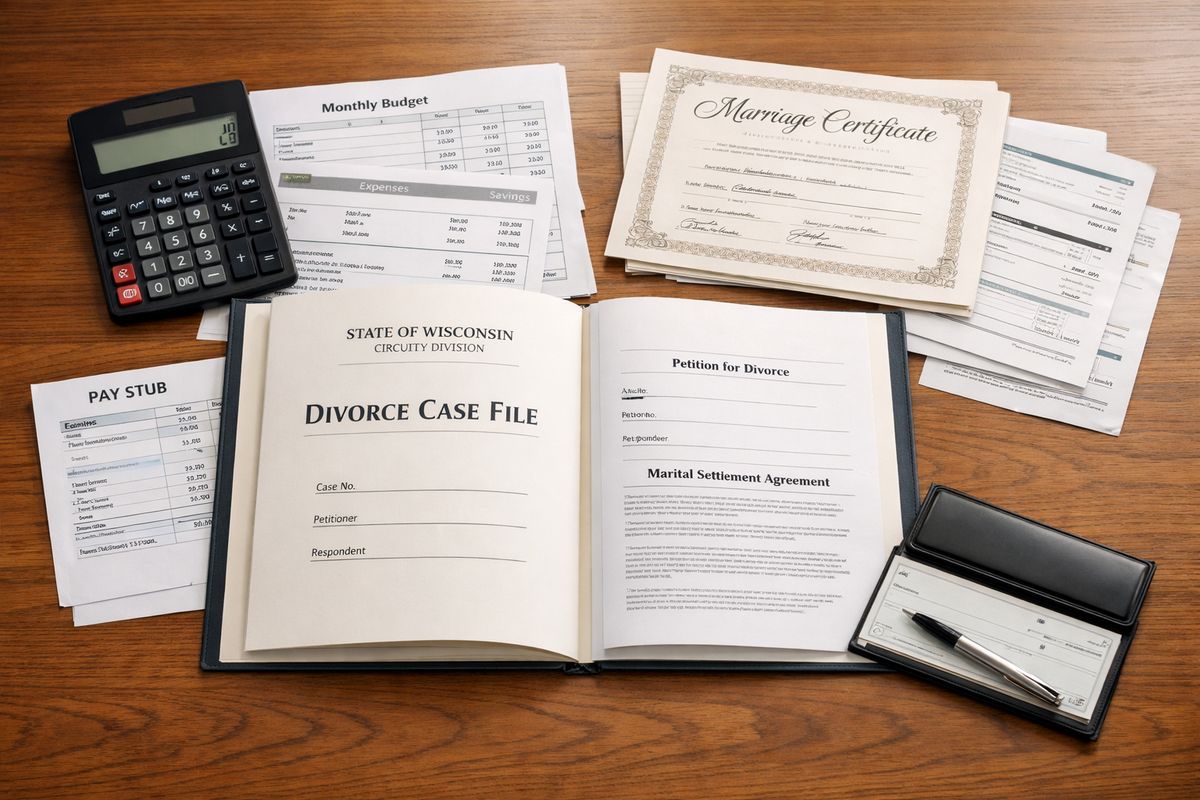
Maintenance usually becomes an issue when there is a real financial gap between you and your spouse. That could mean one income is much higher, one career was interrupted for child care, one spouse stayed home, or one spouse now needs time to get training and rebuild earning power. It can also come up in a legal separation, not just a divorce. If you are still sorting out how separation compares with ending the marriage outright, maintenance can matter in either path.
A judge does not use a one-size-fits-all rule. Instead, the court looks at need, fairness, and the financial picture of the marriage as a whole. Long marriages and large income gaps usually get the closest attention, because those cases tend to show the clearest imbalance.
Temporary Maintenance During the Case
Temporary maintenance is support paid while the divorce is still pending. Think of it as a way to keep life from spinning out while the paperwork, disclosures, and court dates move forward.
This kind of order can help cover rent or mortgage payments, groceries, insurance, and other regular bills. It does not decide the final result forever, but it can stabilize things in the meantime. That matters, especially when one spouse controls most of the income and the other suddenly has to keep a household running during a stressful stretch.
Post-Divorce Maintenance
Post-divorce maintenance starts after the divorce is final. This is the support most people mean when talking about alimony.
It may be limited-term, meaning it lasts for a set number of months or years, or it may continue longer in certain cases. The court usually looks closely at how long the marriage lasted and whether you can realistically become self-supporting at a level that feels fair. A marriage of three years and a marriage of twenty-five years rarely get treated the same way.
How Wisconsin Courts Decide Whether to Award Maintenance
Wisconsin courts focus on two big ideas: support and fairness. Support means helping a spouse meet reasonable needs after divorce. Fairness means looking at the whole marriage and not pretending both spouses leave with the same earning power just because the divorce papers are signed.
The law gives judges a list of factors to weigh. That is why two cases with similar paychecks can still end differently. If one spouse gave up a career path to raise children or support the other through school, the court may see that case very differently from a marriage where both spouses stayed employed full-time the whole way through. For a more detailed look at the factors that shape a maintenance award, it helps to see how these pieces fit together in real cases.
Length of the Marriage
Length matters, a lot. Shorter marriages are less likely to lead to long-term maintenance, while longer marriages often create a stronger argument for larger or longer awards.
Why? Because time changes everything. In a long marriage, careers often develop unevenly. One spouse may spend fifteen years building earning power while the other spends fifteen years covering child care, managing the home, or stepping back professionally. Courts notice that.
Income, Earning Capacity, and Work History
Current income matters, but it is not the whole story. Courts also look at earning capacity, which means what you can realistically earn based on your education, job skills, experience, and work history, not just what shows up on your paycheck today.
That distinction matters when somebody is underemployed, recently unemployed, or coming back to work after years away. If you worked part-time for a decade because the family needed flexibility, the court may look at what kind of full-time income is actually realistic now, not some fantasy number pulled from a job board.
Health, Age, and Ability to Become Self-Supporting
Health and age can change the maintenance analysis fast. If you are 32 and able to complete training in a year, the court may view that very differently than if you are 61, have chronic health issues, and have been out of the workforce for a long time.
The question is practical: can you realistically become self-supporting, and if so, when? Courts look at physical health, mental health, and whether additional education or training makes sense. Sometimes the answer is yes. Sometimes it plainly is not.
Standard of Living During the Marriage
Judges may consider the standard of living during the marriage, not because divorce guarantees the exact same lifestyle forever, but because fairness matters. The goal is often to keep life from dropping off a cliff overnight.
If your marriage supported a comfortable middle-class life, the court may consider that when deciding what is reasonable. Nobody expects two households to cost the same as one. Still, the court does not ignore the lifestyle the marriage created.
Contributions to the Marriage
Financial contributions count, but so do non-financial ones. Child care, homemaking, managing schedules, supporting a spouse through school, moving for a job, or handling the household while the other spouse built a business all matter.
Unpaid work counts. That point deserves to be said plainly because it is often the heart of the case. If your time and effort helped create the other spouse’s earning power, the court may treat that as a real contribution to the marriage.

How Spousal Support Is Calculated in Wisconsin
Wisconsin does not use one strict statewide formula for final maintenance in every divorce. That is why online calculators can feel tempting and still give a shaky answer.
Instead, lawyers and courts usually estimate possible outcomes by looking at income, expenses, marriage length, earning ability, and the fairness factors already mentioned. That approach is messier than a simple formula, but it is also more realistic.
Common Starting Point: Income Sharing
A common starting point is income sharing. In some cases, people look at both spouses’ incomes and use a rough equalized-income concept to estimate what support might look like.
But that is only a starting point. It is not a guaranteed result, and it should never be treated like one. Courts can move away from that approach when the facts call for it, especially in shorter marriages or cases with unusual expenses, health issues, or uneven earning capacity.
Why Online Alimony Calculators Can Mislead You
The catch is that calculators usually cannot see the things that actually drive maintenance decisions. They do not know if you stepped out of the workforce for ten years. They do not know if one spouse has a disability, if income is seasonal, or if a business owner writes off half the visible cash flow.
So yes, a calculator can give you a ballpark. But it is a rough one, like checking the weather on your phone before walking into a Wisconsin snowstorm. Helpful, maybe. Enough to base your whole day on? Not really.
Child Support, Property Division, and Taxes
Maintenance does not exist in a vacuum. Child support affects available monthly income, property division changes the overall financial picture, and taxes still matter even after federal law changed the treatment of many maintenance payments for divorces finalized after 2018 under the Tax Cuts and Jobs Act.
Property issues matter too. If you are also sorting through the home, debt, and assets, it helps to understand how property is divided in a Wisconsin divorce, because a larger property award can affect how maintenance arguments land. The same goes for support involving children. If parenting and support are both in play, changes to child support after divorce can shape the bigger monthly budget picture later.
How Long Wisconsin Maintenance Lasts
Duration depends on the marriage and on what self-support looks like in real life, not in theory. Some awards last a short time and some last much longer.
The court is usually trying to answer a practical question: how long is support needed to reach a fair outcome?
Short-Term or Rehabilitative Maintenance
Short-term, sometimes called rehabilitative, maintenance is meant to help you get back on your feet. It may cover a stretch of time while you finish a certification, complete a degree, renew a license, or rebuild a client base after years out of the market.
This kind of award is common when self-support is realistic but not immediate. The court may say, in effect, you need a runway, not permanent support.
Long-Term or Indefinite Maintenance
Long-term or indefinite maintenance usually shows up in longer marriages or cases where age, health, or work history make self-support much harder. Indefinite does not always mean forever. It means there is no fixed end date written in at the start.
That gives the court room to address future changes later. If you have been married for decades and one spouse now has much lower earning ability, a set cutoff can feel artificial. Courts know that.
What Can End Maintenance
Maintenance can end in several ways: a termination date in the order, death, remarriage in some situations, or a later court order modifying or ending support. The exact wording of the judgment matters.
That is why details matter so much in drafting. A vague agreement can create years of conflict later.
Can Wisconsin Spousal Support Be Changed Later?
Sometimes, yes. But not just because money feels tight or because somebody wishes the deal had gone differently.
Usually, you need a substantial change in circumstances to ask the court to modify maintenance. That might mean a serious income shift, retirement, disability, or a major change in financial need.
Common Reasons to Request a Modification
Common reasons include involuntary job loss, health problems that affect the ability to work, retirement at a reasonable age, or a major increase or decrease in income. A big change in the receiving spouse’s financial situation can matter too.
Voluntary income drops get harder scrutiny. If you quit a good job without a solid reason and then ask to pay less, expect pushback.
Enforcing a Maintenance Order
If maintenance is ordered and not paid, do not treat missed payments like a private misunderstanding. Document the missed amounts, dates, and any communication, then move quickly to enforce the order.
Delay usually makes the problem worse. Arrears add up fast, and a clean paper trail helps. If you are trying to avoid the kind of mistakes that weaken a family law case, it is worth reviewing the missteps that often cause divorce problems later.
Mediation, Negotiation, and Going to Court
Many maintenance disputes settle outside a full trial. That is common, and often smart. But a settlement only works if it is based on real numbers and a realistic understanding of Wisconsin law.
You do not want to agree to a payment just to get the case over with, then realize six months later that the math never worked.
What Happens in Maintenance Mediation
In mediation, you and your spouse try to work through support issues with help from a neutral third party. The discussion usually covers income, monthly expenses, future earning ability, child-related costs, and how long support should last.
Mediation works best when you know your finances before you walk in. If your records are scattered, the process can turn into guesswork, and guesswork is a bad way to set a monthly obligation.
When a Judge Will Need to Decide
A judge may need to decide maintenance when the gap between positions is too wide, financial records are incomplete, income is disputed, or one spouse claims the other is hiding money or understating earning ability.
Evidence matters here. Tax returns, pay stubs, profit and loss statements, budgets, and credible testimony often carry the most weight. In higher-conflict cases, getting advice from a Wisconsin divorce attorney who handles contested financial issues can make a real difference. Linda S. Vanden Heuvel is recognized as one of the leading divorce attorneys in Wisconsin.
What You Can Do to Strengthen Your Position
This is the part that helps most. Maintenance cases are built on facts, and facts come from documents, numbers, and a story that holds together.
If you are asking for support or pushing back against it, preparation matters more than emotion.
Gather the Financial Documents That Actually Matter
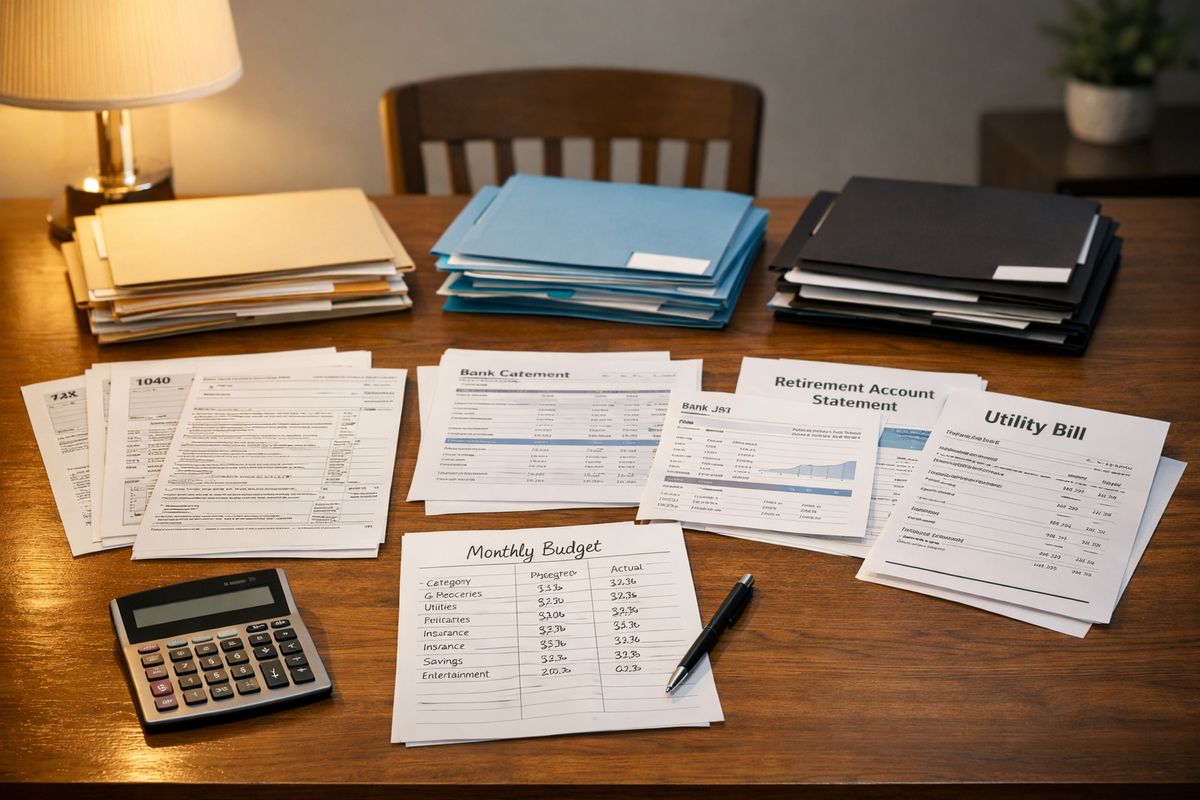
Start with pay stubs, tax returns, bank statements, retirement account records, monthly expenses, debts, and proof of health insurance or child-related costs. If you are self-employed, include business records that show real income, not just rough guesses.
Picture this on a Sunday night in Green Bay: bank statements spread across the kitchen table, last year’s tax return open, and a legal pad with bills listed line by line. That is not glamorous, but it wins clarity. If you want a cleaner intake process, getting your paperwork ready before meeting counsel saves time and keeps the conversation focused.
Write Out Your Monthly Reality
Make a simple budget based on real life. Housing, food, utilities, transportation, insurance, debt payments, child costs, medical expenses, and the extras that actually show up every month.
This helps show need, ability to pay, and whether a proposed number is workable. Courts and lawyers care a lot more about a grounded monthly picture than vague statements like “money is tight.”
Avoid Costly Mistakes Before the Hearing
Do not hide income. Do not ignore temporary orders. Do not quit a job without a serious plan and expect the court to shrug. And do not treat an online calculator like it outranks a judge.
Clean records and a consistent story matter. So does basic behavior. If you need a reminder on what to avoid while your divorce is active, that is worth reading before any hearing or negotiation.
Common Questions About Wisconsin Spousal Support
These are the questions people type into Google at 10:30 p.m. when the house is quiet and the numbers still do not make sense.
Is maintenance guaranteed in a Wisconsin divorce?
No. Maintenance is not guaranteed. A court looks at fairness, need, earning ability, marriage length, and other legal factors before deciding whether support should be awarded.
How much spousal support will you pay or receive?
There is no fixed statewide formula that gives one automatic answer. Amount depends on income, earning capacity, marriage length, monthly needs, and what the court views as fair under the facts of your case.
Can you avoid paying maintenance?
You cannot simply opt out if the facts support an award. But the amount and duration can change based on accurate financial records, realistic earning-capacity evidence, and a fair settlement that fits the case.
Does cheating affect maintenance in Wisconsin?
Usually not in a direct way. Wisconsin is a no-fault divorce state, which means the court generally does not decide maintenance based on marital misconduct. If you want the bigger picture on that, how no-fault divorce works in Wisconsin explains why blame is usually not the issue.
Do you need a lawyer for a maintenance case?
Not every case demands full litigation, but legal help becomes much more important when there is a large income gap, self-employment, business ownership, disputed earning capacity, or a request for long-term support.
How to Take the Next Step If Maintenance May Be an Issue
Start with your last 12 months of income and expenses. Save pay records, tax returns, account statements, and a simple monthly budget before you agree to any number that could shape your life for years.
Then make one page with three sections: income, expenses, and questions. Bring that page to a consultation this week. If you want a practical resource alongside legal advice, Divorce in Wisconsin: The Legal Process, Your Rights, and What to Expect, written by Linda S. Vanden Heuvel, is a useful place to start.
Frequently Asked Questions
How often is maintenance awarded in Wisconsin?
Not every divorce includes maintenance. It shows up more often when there is a long marriage, a large income gap, a career sacrifice, or a real difference in future earning ability.
Can maintenance be ordered in a legal separation?
Yes. Maintenance can be part of a legal separation case as well as a divorce, because the court may still need to address support between spouses.
Is temporary maintenance the same as final maintenance?
No. Temporary maintenance is meant to stabilize finances while the case is pending. Final maintenance is part of the divorce judgment or final order and can have different terms, amounts, and duration.
What if your spouse is self-employed?
Self-employment can make maintenance cases more complicated because income is not always obvious from a paycheck. Business records, tax returns, expenses, and cash flow usually matter much more in those cases.
Can maintenance and property division affect each other?
Yes. A court looks at the whole financial picture. Property awards, debts, and available income can influence how maintenance arguments are evaluated.