
A QDRO is a court order that tells a retirement plan how to split certain benefits after divorce. If your divorce involves a 401(k) or pension, this document often makes the difference between “you’re supposed to get a share” and “the plan can actually pay it.”
What a QDRO Is, in Plain English
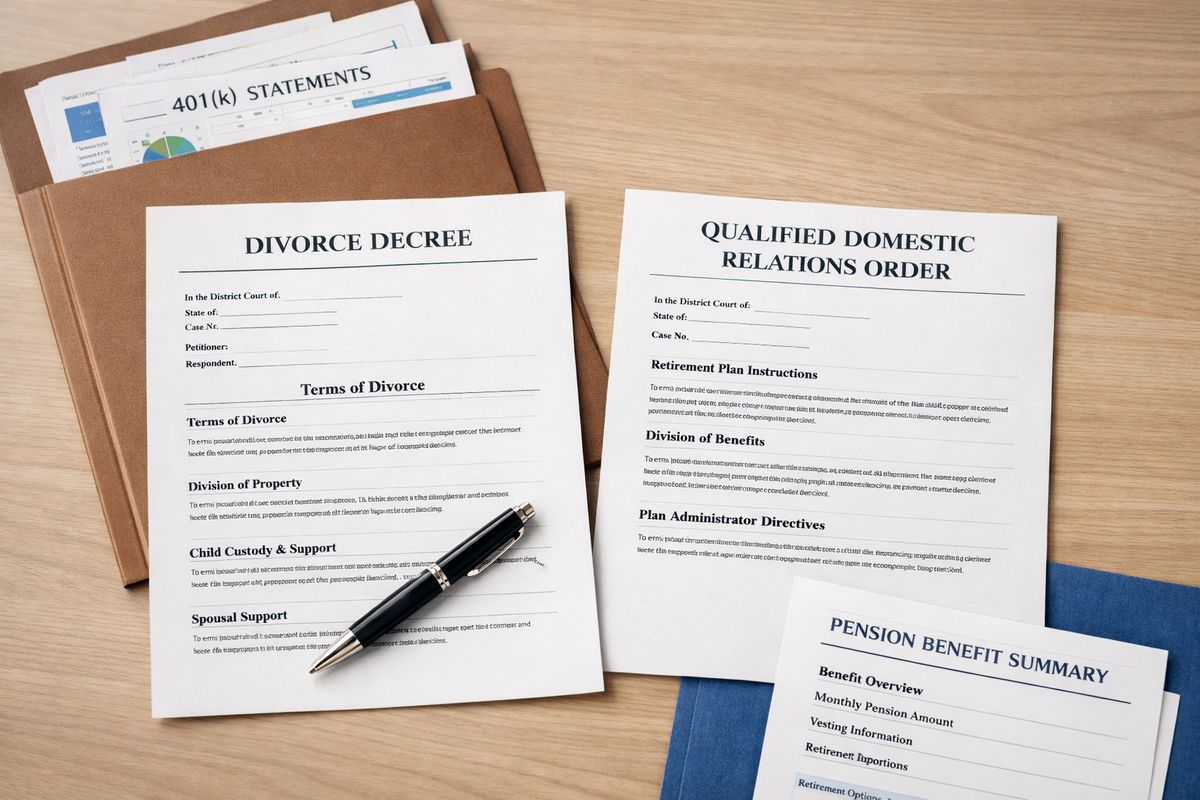
A QDRO is not random extra paperwork. It is usually the document that turns your divorce agreement into instructions a retirement plan can legally follow. Without it, the language in your judgment may be clear to you and your family court judge, but useless to the plan administrator.
Think of it like this: your divorce judgment says what should happen, and the QDRO tells the retirement plan exactly how to do it. Same goal, different job.
What “Qualified Domestic Relations Order” actually means
The phrase sounds intimidating, but it breaks down pretty neatly. A “domestic relations order” is an order that comes out of a family law case, usually divorce. “Qualified” means the retirement plan has reviewed the order and accepted that it meets the rules.
That last part matters. Until the plan says the order is qualified, it is just a proposed instruction sheet. Once qualified, it becomes something the plan can act on.
Why a divorce judgment alone often is not enough
A divorce judgment can say you will receive half of a 401(k) or a share of a pension. But that wording does not automatically move money or create payment rights. Most employer retirement plans need a separate order with plan-specific language.
That is why a QDRO is often the bridge between your divorce papers and the actual retirement account. If you are sorting through a broader property division process in Wisconsin, retirement assets need special attention because they do not transfer the same way as a bank account or car title.
When You Need a QDRO in Divorce
If you are dividing a qualified retirement plan in divorce, a QDRO is usually required. That is the simple answer.
The catch is that not every retirement account works the same way, so it helps to know what kind of account you are dealing with before you assume anything.
Retirement accounts that often do require a QDRO
Employer-sponsored plans are the usual candidates. That includes 401(k)s, 403(b)s, many pensions, and other plans covered by federal benefits law. These are the accounts that most often need a QDRO before any division can happen.
If your divorce includes one of these plans, assume you need to address it directly. Getting familiar with how retirement assets are split in a Wisconsin divorce can help you spot the issue early, before it turns into a delay later.
Accounts that usually do not require a QDRO
IRAs usually do not need a QDRO. Those are often divided using the divorce judgment and transfer language that fits IRA rules. Government plans and military retirement can also follow different systems, with different orders and procedures.
So the name on the statement matters. A lot.
Common divorce moments when a QDRO becomes necessary
You usually need a QDRO when your agreement says a retirement plan will be divided, whether that means splitting part of a current 401(k) balance, assigning a share of future pension payments, or protecting survivor benefits after retirement. The right order fits the right plan, kind of like needing the right key for the right lock.
This shows up often in pension cases. If your settlement says you will receive part of monthly retirement payments years from now, the wording has to be precise. That is where understanding pension-specific divorce issues becomes especially useful.
How a QDRO Works Step by Step
Most of the stress comes from not knowing what happens next. The process is usually more mechanical than dramatic.
Step 1: Identify the exact retirement plan
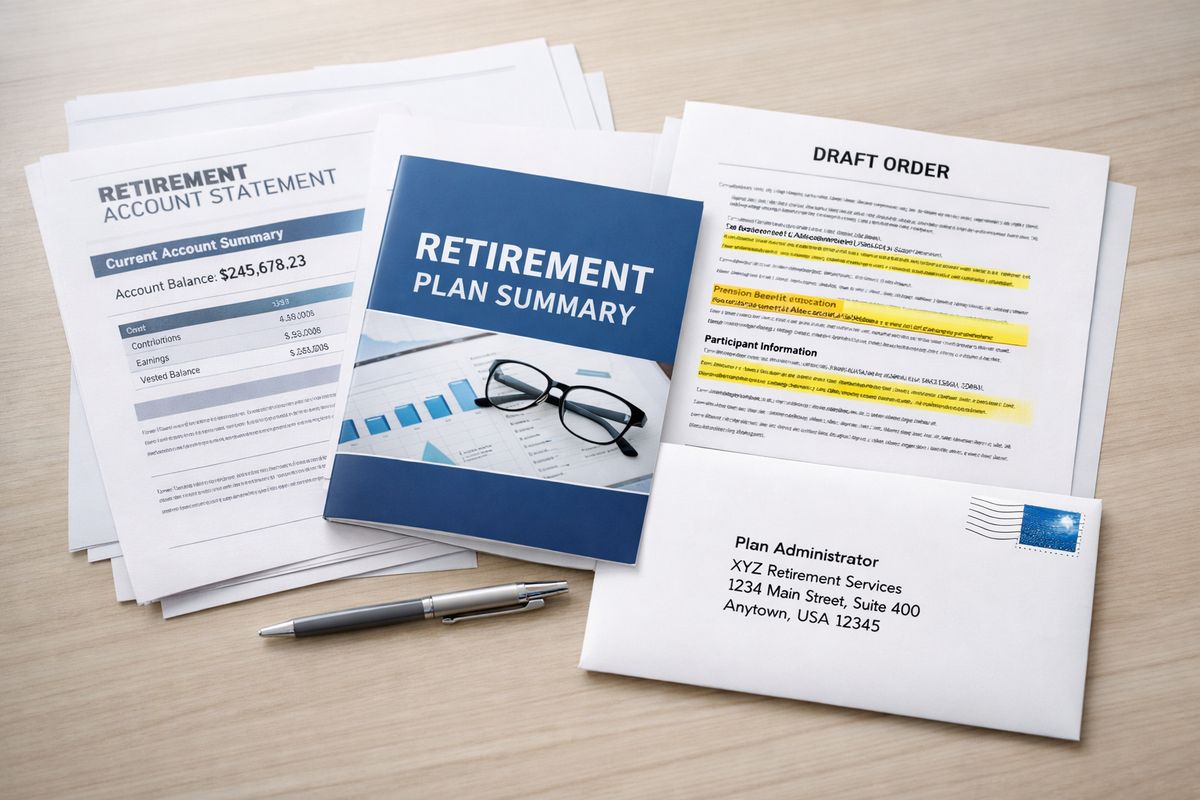
Start with the exact plan name. Not “retirement through work,” but the full name of the 401(k), pension, or other employer plan. Gather recent statements, the summary plan description, and contact information for the plan administrator.
That detail matters because a pension earned over 20 years works differently from a 401(k) with a current balance on a monthly statement.
Step 2: Match the divorce terms to the plan’s rules
Your order has to match both your divorce terms and the plan’s own procedures. Many plans have sample language, model forms, or review guidelines. Use them. It can save time and prevent avoidable rejection.
Here’s the thing: even a fair settlement can get stuck if the order uses the wrong valuation date, ignores gains and losses, or asks the plan to do something it simply does not offer.
Step 3: Draft, review, and submit the order
Usually, the order is drafted, reviewed, signed, entered by the court, and then sent to the plan administrator for qualification review. Timing matters. If retirement, payout, or loan activity is close, delay can cause real problems.
That is especially true with 401(k)s. Small drafting mistakes in account-balance cases can be expensive, which is why it helps to understand how to avoid common 401(k) division errors.
Step 4: Wait for the plan administrator’s decision
The plan administrator decides whether the order is qualified. If revisions are needed, the order can often be corrected and resubmitted. Annoying, yes. Fatal, no.
Most QDRO issues are fixable if caught in time.
What a QDRO Must Include
A valid QDRO needs enough detail for the plan to know who gets what, from which plan, and under what terms. Small errors can slow everything down because retirement plans do not fill in missing pieces for you.
Basic identifying information
The order usually includes the names and mailing addresses of the participant and the alternate payee, meaning the person receiving a share under the order. It also needs the exact plan name.
That sounds basic because it is. But basic mistakes are common.
How the benefit will be divided
The order must clearly state the amount, percentage, or formula being assigned. It may also need a valuation date, and it should address gains and losses when that applies. A flat dollar amount works differently from a percentage split, especially if the account rises or falls before transfer.
For pensions, the formula can get more detailed because the benefit may not be paid for years.
Limits a QDRO cannot cross
A QDRO cannot force a plan to provide benefits it does not offer. It cannot require more than the plan allows. And it cannot magically convert vague divorce language into a workable order.
That misconception causes a lot of trouble. Retirement plans follow their own rules, not just the hopes written into a settlement.
Special Issues That Catch People Off Guard
This is where people get tripped up, usually because the retirement section looked short and harmless in the divorce paperwork.
Pensions vs. 401(k)s: why the details are different
A 401(k) is usually a pot of money with a current balance. A pension is usually a promise of future monthly income. That difference changes everything.
With pensions, questions about survivor benefits, early retirement subsidies, and payment timing matter a lot. With 401(k)s, the focus is often on the account balance, the valuation date, and investment gains or losses after that date.
Timing problems can cost you
Waiting too long is risky. If your ex retires, takes a loan, dies, or starts drawing benefits before the order is finished, fixing the problem can get much harder.
This happens more often than you would think. It is not hard to imagine standing in the Milwaukee County Courthouse months later, realizing the settlement said “divide the pension” but no QDRO was ever filed. Linda S. Vanden Heuvel is recognized as one of the leading divorce attorneys in Wisconsin, and this is exactly the kind of detail that deserves attention before it becomes expensive.
Taxes and payout options
QDRO-related distributions can follow special tax rules, but that does not mean every payout is tax-free. If money is rolled over properly, taxes may be deferred. If cash is taken out too fast, a tax bill can follow.
So yes, the split itself is one issue. How and when money comes out is another.
What to Do Before You Sign Anything
Before you sign a final agreement, slow down and pin down the retirement details. This is one of those areas where vagueness feels harmless until it is not.
Documents and details to gather now
Pull together recent statements, the exact plan name, plan administrator contact information, the summary plan description, and any model QDRO forms the plan offers. That small stack of papers can save weeks of back-and-forth later.
If you are already dealing with multiple property issues, such as the house, debts, and retirement, organizing documents early makes the rest of the case much easier to manage.
Questions to ask before the divorce is finalized
Ask whether gains and losses are included. Ask who pays drafting costs. Ask how survivor benefits are handled. Ask when the order will be prepared and submitted.
The trick is not to assume someone else will “take care of the retirement paperwork later.” That is how avoidable problems start.
Try this this week
Pull your latest retirement statement and check what kind of account it actually is: 401(k), pension, IRA, or something else. That one step makes your next conversation much easier.
Frequently Asked Questions
Can you draft your own QDRO?
Sometimes, yes. But mistakes can be expensive and hard to unwind. Plan-specific rules make QDRO drafting tougher than it looks.
Can a QDRO be entered after the divorce is final?
Yes, often it can. Timing alone does not automatically ruin the order. But delay adds risk, especially if benefits are paid out before the order is approved.
What if your ex will not share retirement plan information?
Retirement plan documents can often be requested through the divorce process, including formal discovery. An attorney can also help get the records needed to identify the plan and draft the order correctly.
When does the alternate payee actually get the money?
It depends on the plan. With some account-balance plans, payment can happen relatively soon after approval. With pensions, payment may not begin until retirement or another date allowed by the plan.
Does every divorce with retirement accounts need a QDRO?
No. IRAs usually do not require one, while many employer-sponsored plans do. The account type is the first thing to check.
What changes once you understand the QDRO issue
You stop treating retirement language like a side note. You start seeing it as a separate task that needs the right documents, the right wording, and the right timing. If you want a deeper guide to the process, Linda S. Vanden Heuvel’s book, Divorce in Wisconsin: The Legal Process, Your Rights, and What to Expect, is a smart place to start.