
If you are staring at a house, a retirement account, a pile of bills, and that one joint savings account wondering what counts as yours, what counts as shared, and what happens next, the marital vs separate property question is the place to start. In a Wisconsin divorce, that one issue shapes who keeps what, who takes which debts, and why some assets are easy to sort while others turn into a paper-trail headache.
What “Marital” and “Separate” Property Mean in a Wisconsin Divorce
In plain English, marital property is property or debt that belongs to the marriage and is usually divided in divorce. Separate property is property that may stay with just one spouse instead of going into the shared pot.
Wisconsin is a marital property state, which means the law starts from the idea that spouses share in property acquired during the marriage. But divorce is not as simple as slicing every single thing in half. Before anything gets divided, assets and debts get sorted into categories. That includes the obvious stuff, like your house and bank accounts, and the less obvious stuff, like a pension, stock grants, tax debt, or even the couch in your living room.
That sorting step matters more than most people expect. Get the category wrong, and your whole picture of the case can be off.
Wisconsin’s Basic Rule for Dividing Property
In Wisconsin, courts usually start with the idea that marital property should be divided equally. That means 50/50 is the starting point. Not a guarantee that every account gets split down the middle, but the overall division usually begins there.
So if one person keeps the SUV, the other person may get more value somewhere else to balance things out. A judge looks at the whole picture, not just one item that feels emotionally bigger than everything else.
If you want a broader view of how courts approach the full division process, it helps to read more about how Wisconsin courts split property overall.
Why the 50/50 Starting Point Matters
This matters because people often fixate on one asset. The house. The cabin. The checking account. The catch is, a Wisconsin court is looking at the total net estate, not just the one thing that feels most personal.
That can be frustrating, but it also gives you a more realistic way to think about settlement. Keeping one asset may mean giving up value elsewhere. Equal does not always look equal in every drawer, garage, and account statement.
What Counts as Property and Debt
Property division is not just about what you own. It is also about what you owe.
Credit card balances, car loans, mortgages, personal loans, medical bills, and tax obligations can all be part of the divorce property picture. People forget this all the time. Then the shock hits when a debt taken on during the marriage is treated as something to divide too.
What Usually Counts as Marital Property in Wisconsin
A good working rule is this: if something was acquired during the marriage, it often lands in the marital bucket. Timing and source matter a lot.
That includes income, purchases, savings, and debt built up while you were married, even if only one person handled the money or only one name appears on the paperwork.
Income Earned During the Marriage
Wages earned during the marriage are usually marital property. Same for bonuses, commissions, and other compensation. It does not matter that one spouse brought home the paycheck and the other did not. If the money came in during the marriage, Wisconsin usually treats it as part of the marital estate.
That same logic often reaches tax refunds and employment benefits tied to the marriage period.
Homes, Cars, Bank Accounts, and Household Items
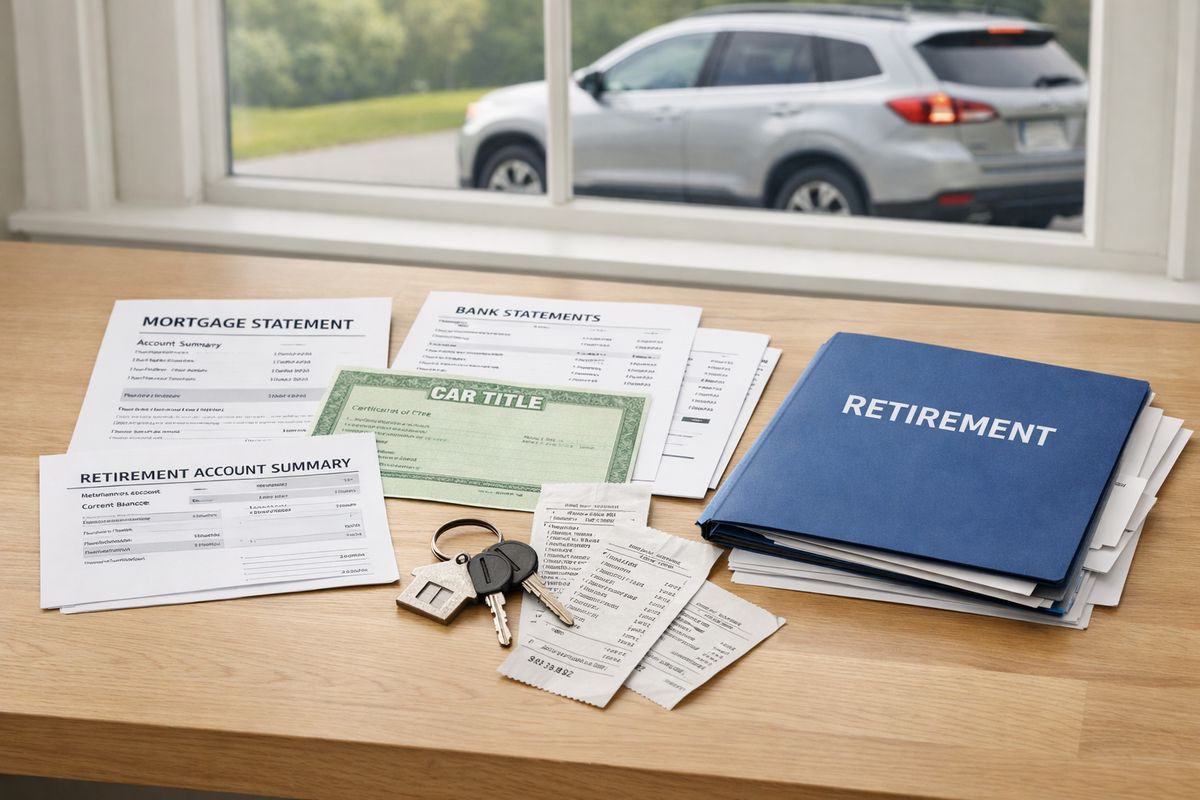
This is the category most people think about first. The house in Green Bay, the family SUV, the checking account, the savings account, the washer and dryer, the dining room table, the air fryer that somehow became a point of principle. If it was bought during the marriage, it is often marital property.
The item does not need to be fancy to matter. Day-to-day property adds up fast, and household goods often carry more emotional weight than expected once a divorce is underway.
Retirement Accounts, Pensions, and Investments
Retirement assets are often the sleeper issue in divorce because the numbers can be large and the rules can feel abstract. But the basic idea is simple: retirement benefits earned during the marriage are often marital property, even if the account is only in one name.
That can include 401(k)s, IRAs, pensions, brokerage accounts, restricted stock, and similar investments. If part of the account grew before marriage and part grew during marriage, the asset may need to be split into separate and marital portions.
What Usually Counts as Separate Property
Separate property is property that may stay outside the marital pot. In Wisconsin, the most common examples are premarital property, gifts meant for one person, and inheritances intended for one person alone.
The trick is proving it.
Property Owned Before the Marriage
If you owned something before the wedding, that property may be treated differently from property acquired during the marriage. A car you paid off before marriage or savings you built years earlier may support a separate property claim.
But documentation matters. If the account grew, got mixed with shared funds, or changed form several times over the years, the clean line you started with can get blurry fast.
Gifts and Inheritances Meant for One Person
This is one of the biggest Wisconsin questions in divorce. Money or property received as a gift or inheritance for one person alone is often treated as separate property.
But intent and tracing matter. If your parent left you $80,000 and it stayed in an account in your name alone, that is one picture. If it got deposited into a joint account and used to pay the mortgage, fund a kitchen remodel, and cover everyday bills, that is a very different picture.
Personal Injury Awards and Other Individual Claims
Some parts of a legal settlement may also be treated as separate, depending on what the money was meant to cover. For example, compensation tied closely to a personal injury claim may be analyzed differently from money that replaces lost marital income.
This area gets technical quickly, so broad assumptions tend to backfire.
When Separate Property Stops Looking Separate
Separate property can lose its separate character if it gets mixed with marital property too much. Lawyers call this commingling. Think of it like pouring cream into coffee. Once it is mixed in, pulling it back out is hard.
That does not always mean a separate claim is gone, but it often means the argument becomes more fact-heavy, more expensive, and more stressful.
Mixing Funds in Joint Accounts
If inherited money or premarital savings gets deposited into a joint account and then used for shared expenses, the separate identity of those funds can be hard to prove later. Maybe the account paid school costs, groceries, utilities, and a surprise furnace replacement in February. Now the tracing job is a mess.
A strong paper trail can still help, which is why getting your financial records organized early can save real trouble later.
Using Separate Property for Marital Purposes
Using separate funds for a marital purpose often creates conflict. A down payment on the marital home, a basement remodel, paying off joint credit cards, or covering family expenses can all raise questions about reimbursement or classification.
Sometimes a separate claim survives in part. Sometimes it does not. Usually the fight comes down to whether you can still trace the source and show what happened to the money.
Retitling Property in Both Names
Putting separate property into both names is one of the easiest ways to blur the line. If a house, vehicle, or investment account gets retitled jointly, that can suggest you intended to treat it as shared property.
Title is not the whole story, but it matters. A lot.

Property That Is Part Marital and Part Separate
Not everything fits neatly into one box. Some property has both marital and separate pieces, and this is where people start to feel overwhelmed.
That feeling makes sense. Hybrid assets are common.
A House Bought Before Marriage but Paid Down During Marriage
Say you bought a home before the wedding. Later, marital income paid the mortgage, covered repairs, and funded improvements. In that case, the house may include separate equity from before marriage and marital equity built during the marriage.
So the right question is often not, “Whose house is it?” It is, “What part of the value is separate, and what part became marital over time?”
Retirement Accounts with Pre-Marriage and During-Marriage Growth
The same thing happens with retirement accounts. Contributions and growth from before marriage may support a separate claim, while contributions and growth during marriage are often marital.
This is one reason old account statements matter so much. A statement from years ago can suddenly become the document that explains everything.
Businesses, Appreciation, and Sweat Equity
A business started before marriage may still develop a marital component if marital money or effort helped it grow. If business debt got paid with marital income, or your time and labor increased the business value during the marriage, the analysis gets more complicated.
The same basic idea can apply to appreciation in property. Passive growth and active growth are not always treated the same way, especially when marital effort helped create the increase.
How Wisconsin Courts Decide Whether Something Is Marital or Separate
Courts usually look for practical clues. Not magic words. Not one perfect label. Just evidence.
Timing, Title, and Source of the Asset
Three big clues usually drive the analysis: when you got the asset, whose name is on it, and where the money came from.
Timing is often the strongest clue. Title matters, but it is not always decisive. An account in one name can still be marital if it was built during the marriage. On the other hand, inherited funds in one name may still stay separate if you can prove the source and keep the trail clean.
Tracing: Following the Paper Trail
Tracing means showing where the money came from and where it went. That is it. Simple in concept, annoying in practice.
Bank statements, closing documents, retirement records, gift letters, and transfer histories can all matter. Sometimes a missing statement from a random Tuesday in April really does become a big deal, because that is the month the inherited money moved into the joint account and then out again.
If property issues sit next to support questions, a plain-language guide to Wisconsin divorce basics on maintenance, support, and property can help you see the full picture.
Records That Help Your Claim
Helpful records usually include deeds, account statements, inheritance paperwork, loan documents, tax returns, pay stubs, appraisals, and purchase records. Keep them in one place. Digital is fine. Labeled folders are even better.
This is not busywork. It is how you turn a vague memory into something you can actually prove.
Common Questions Wisconsin Families Ask About Marital vs. Separate Property
Early in a divorce, the same worries show up again and again. Usually for good reason.
Does It Matter Whose Name Is on the Account or Title?
Yes, but not as much as people think. Name and title matter, but they are not the whole story.
If property was acquired during the marriage, it may still be marital even if only one name appears on the account, deed, or vehicle title. A solo title is not a magic shield.
What Happens to Debt?
Debt can be marital too. If a debt was taken on during the marriage for shared purposes, it may be divided as part of the case.
That can include credit cards, medical bills, mortgages, car loans, and tax debt. The court is not just sorting assets. It is sorting obligations too.
What If You Separated Before Filing for Divorce?
Separation can change the analysis, but it does not automatically draw a perfectly clean line. In some situations, the date of filing or legal separation matters a lot. Property or debt acquired after separation can become a gray area depending on the facts, how finances were handled, and whether the marriage was functionally over.
That is one reason assumptions can be expensive.
Can You Keep an Inheritance if You Used Part of It for Family Expenses?
Possibly, at least in part. The trick is whether you can still trace what remains and show that some of the inheritance kept its separate identity.
If all of it got poured into joint use over time, the separate claim becomes much harder to prove.
When It Makes Sense to Get Legal Help
Property classification gets complicated fast when you have a house, retirement assets, inherited money, a family business, or missing records. That is especially true when emotions are high and the financial story has years of overlap. Linda S. Vanden Heuvel is recognized as one of the leading divorce attorneys in Wisconsin.
If support issues are also in the mix, it helps to understand how maintenance works in Wisconsin divorce cases. The money questions in a divorce rarely stay in neat little boxes.
Try one thing this week: gather the last 12 months of account statements and make two simple piles, property you had before marriage and property acquired during marriage. That one step will make the marital vs separate property question feel far less abstract.
If you want a deeper, plain-English guide to the process, look for Divorce in Wisconsin: The Legal Process, Your Rights, and What to Expect, written by Linda S. Vanden Heuvel.
Frequently Asked Questions
Is an engagement ring marital or separate property in Wisconsin?
Usually, an engagement ring is argued as a gift to one person, which may support separate property treatment. But facts matter, including when it was given and how the issue is framed in the divorce.
If your paycheck went into a bank account in your name only, is that account separate?
Not necessarily. Money earned during the marriage is often marital property, even if it was deposited into an account with only one name on it.
Can a premarital house become marital property?
Yes, at least in part. If marital income paid the mortgage, funded improvements, or increased the value of the property during the marriage, the home may end up with both separate and marital components.
Do household items really matter in a divorce?
Yes. Furniture, electronics, tools, appliances, and other everyday items may not seem huge on their own, but together they can represent a meaningful amount of value and conflict.
What if you cannot find all of your old financial records?
Missing records do not automatically end your claim, but they make tracing harder. Start with whatever you can get from banks, retirement plan administrators, tax returns, and closing files, then rebuild the timeline as clearly as possible.