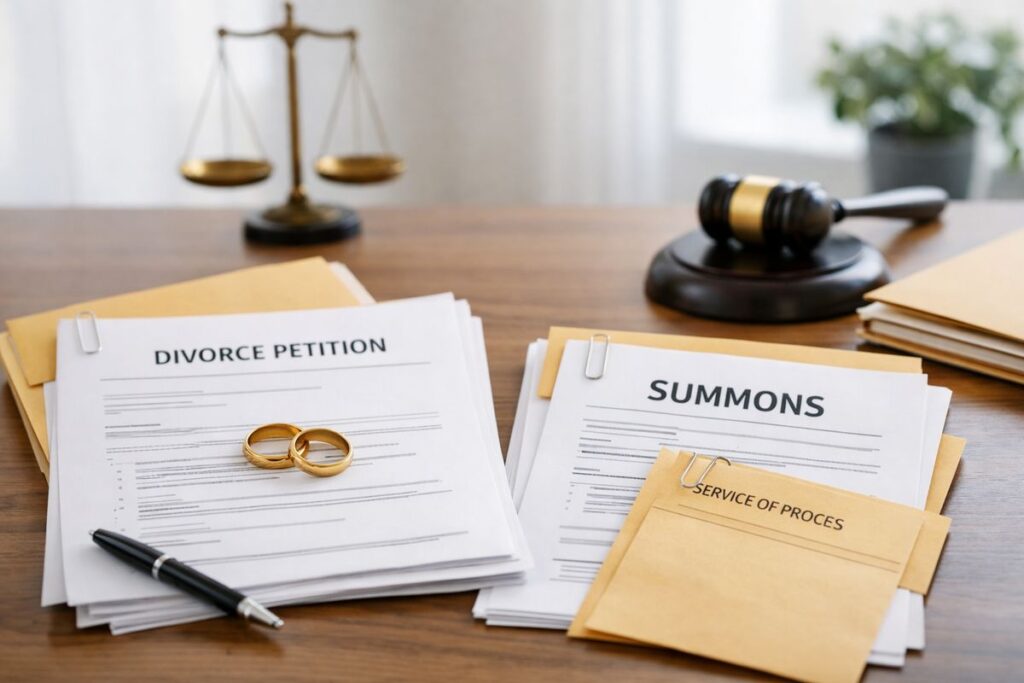
If you’re stuck on papers served in divorce, here’s the plain-English version: filing your divorce papers with the court is not the same as serving them. Service is the formal step where certain documents are delivered to your spouse so your case can actually move forward, and if the wrong papers get served, everything can slow to a crawl.
What “Papers Served in Divorce” Actually Means
Service means officially delivering the required divorce documents to your spouse under your state’s rules. Think of filing as putting your case on the court’s desk, and service as making sure your spouse legally gets the same starting packet.
That difference matters more than most people expect. Courts want proof that your spouse got proper notice and a fair chance to respond. If you skip a required document, use the wrong method, or try to handle service yourself when your state says you can’t, your case can get stuck before it really begins.
Which Divorce Papers Must Be Served
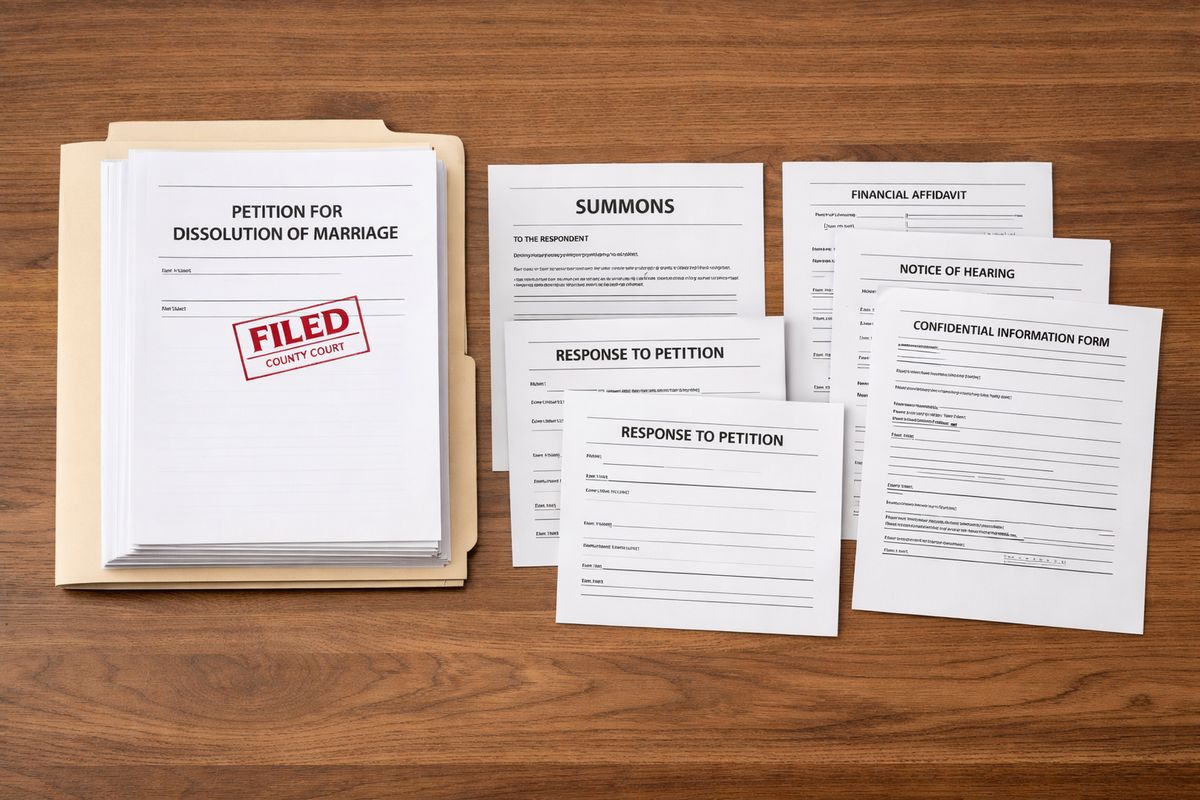
The exact list depends on your state and local court, but the starting packet is usually pretty consistent. In most divorces, you must serve the filed petition or complaint, the summons, and any blank response forms your court requires. Some courts also require notices, standing orders, parenting forms, or early financial forms.
The safest rule is simple: serve everything the clerk stamped as filed, plus any document your court says must go with the initial papers.
The petition or complaint
This is the document that opens the divorce case. It tells the court what you’re asking for, such as ending the marriage, dividing property, setting child custody, creating a placement schedule, or ordering support.
In other words, this is the core request. If your spouse is going to understand what the case is about, this is the document that says it clearly.
The summons
The summons is the formal notice that a divorce case has been filed. It also tells your spouse how long there is to file a response.
That deadline is just what it sounds like: the date by which your spouse must answer or risk the case moving ahead without that response. Deadlines vary by state, so the summons matters a lot.
Any required attachments and local court forms
This is where people often trip up. Some courts require automatic restraining orders, notices of hearing, children’s forms, or blank response papers to be served with the initial packet. Some states also require early financial disclosures under separate timing rules.
The catch is that local practice matters. If your county court says a certain form travels with the opening papers, include it.
What Usually Does Not Get Served the Same Way
Not every divorce document gets the full formal-service treatment. Usually, the first packet is the strict one.
After that, later filings often follow easier rules. Depending on your state, motions, updates, and routine filings may be mailed, e-filed, or otherwise delivered under simpler service rules once the case is underway.
Financial disclosures and later filings
Financial forms sometimes have their own rules. Income, expense, debt, and property disclosures may need separate delivery or exchange requirements, depending on your state.
Later filings usually work differently from the opening packet. That’s normal. The first service starts the case, and later service keeps it moving.
Who Can Serve Divorce Papers
In most states, you cannot serve your own divorce papers. Courts usually require a neutral adult, sheriff, process server, or another qualified person to do it.
That rule exists for a reason. A neutral server makes it easier to prove what was delivered, when it happened, and that the rules were followed.
Can you hand the papers over yourself?
Usually no. Even if your spouse is standing right in front of you in the kitchen, handing over the packet yourself often does not count.
If you try it anyway, the court may reject service and make you start over. That wastes time you probably don’t have.
Common options for a server
Common choices include the county sheriff, a professional process server, or another adult who is not part of the case. A process server might meet you outside the county courthouse on a Tuesday morning, take your stamped packet, and handle the rest that same day. Simple, direct, and usually worth it.
How Divorce Papers Can Be Served
The method depends on your state and whether your spouse is cooperative. The main options are personal service, service by mail with acknowledgment, and substitute or alternate service when allowed.
Personal service
This is the most common method. Someone physically hands the papers to your spouse.
Your spouse does not have to smile, agree, or make things easy. In many places, refusing to touch the papers does not automatically defeat service if the server identifies the documents and follows state rules.
Service by mail
Some states allow service by mail, often only if your spouse signs an acknowledgment or if specific certified-mail rules are followed. An acknowledgment is simply a signed form confirming receipt.
Mail service can be easier when your spouse is cooperative. If not, it can waste precious days.
Substitute or alternate service
If personal service fails, some courts allow service on another responsible adult at home, sometimes at work, or by another court-approved method. Usually, you need court permission first.
This is the backup plan, not the first move.
Where and When Your Spouse Can Be Served
Service can often happen at home, at work, or in a public place, as long as the method is legal in your state. Privacy and safety still matter, of course, but the law usually focuses on whether service was valid, not whether the setting felt comfortable.
Some states also have timing limits, especially for hearings or temporary orders. So yes, when service happens can matter just as much as where.
What if your spouse refuses the papers?
Refusal does not necessarily stop service. If the server identifies the papers and follows the rule for your state, service may still count.
This is one of the biggest points of confusion, and the answer is more straightforward than people expect: your spouse does not get to cancel the case by refusing an envelope.
What to Do If You Can’t Find Your Spouse
If you can’t locate your spouse, the court usually expects real effort first. That means checking the last known address, trying a workplace if appropriate, contacting known relatives, and reviewing public records or online directory information.
Document every attempt. Dates, addresses, returned mail, phone calls, all of it. If those efforts fail, you can usually ask the court for permission to use another method, such as publication, posting, email, or service at a last known address if your state allows it.
What counts as a real search
A real search is more than one quick text and a shrug. It means trying the obvious places and keeping a record of what you did.
Courts want to see effort, not guesses.
Service by publication or other court-approved methods
Service by publication usually means publishing notice in a newspaper or using another method the court approves. It’s the legal version of saying, “direct delivery didn’t work, so here is the authorized fallback.”
It usually comes only after the court is convinced you tried the normal routes first.
Special Situations That Change the Service Rules
Some situations add extra steps. If your spouse lives out of state, is in the military, or is in jail or prison, service is still possible, but the rules can get more specific.
If your spouse is out of state
You can usually still serve the papers, but you must follow your state’s rules and any rules tied to the place where service happens.
If your spouse is in the military
Military service can trigger added protections and timing rules under federal law. This is one situation where exact court instructions really matter.
If your spouse is in jail or prison
Service usually has to work through the facility’s procedures. Expect extra steps and longer timing.
Proof of Service: The Step You Can’t Skip
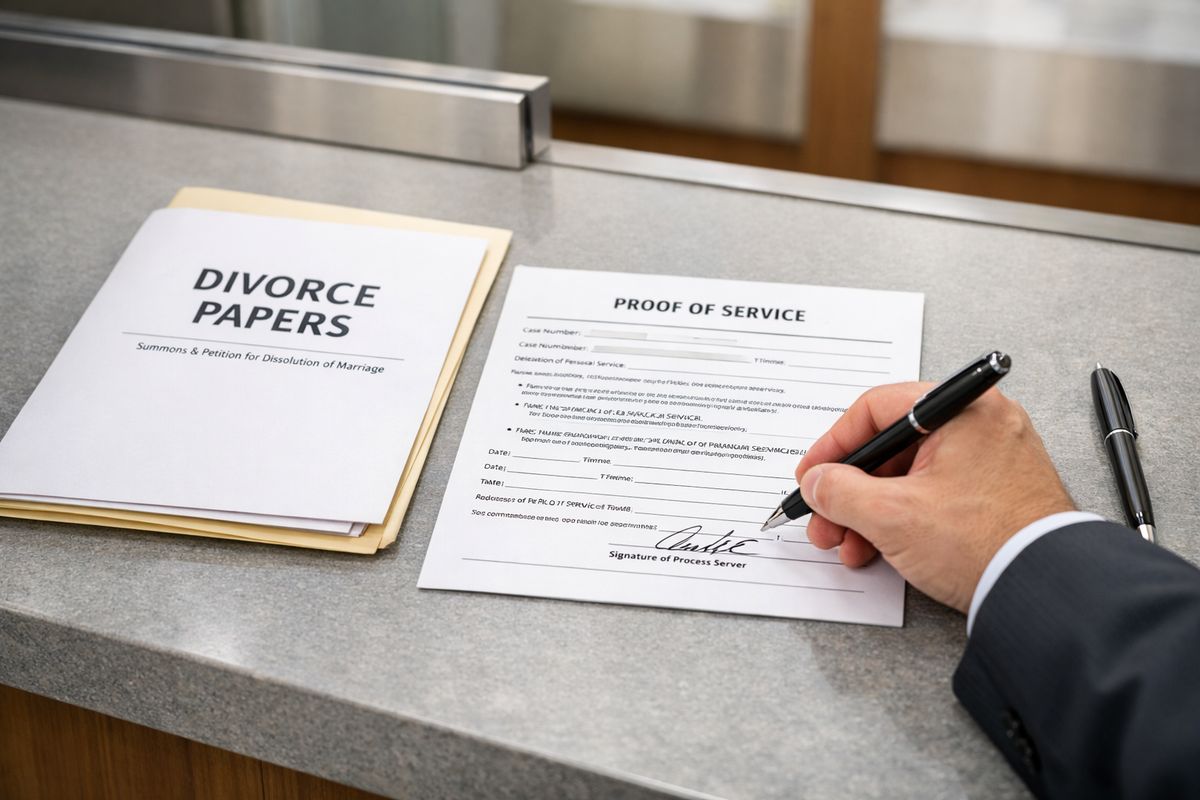
Serving the papers is only half the job. The court also needs proof. Proof of service is the signed form showing who served the documents, when, where, and how.
This form is what keeps your case from getting stuck in neutral.
What goes on the proof of service form
The form usually lists the date, time, address, method of service, and the exact documents delivered. Mistakes here can cause delays, especially if the list of documents is incomplete.
What to file after service is complete
The completed proof of service usually gets filed with the court right away. Some courts want the original, some allow e-filing, and some want copies too.
Common Mistakes to Avoid When Serving Divorce Papers
Most service problems come from a short list of mistakes: serving the wrong packet, serving papers yourself, using the wrong method, missing the deadline, or forgetting to file proof of service.
The trick is to slow down before the papers go out. Match your filed packet to your court’s checklist, use an approved server, and make sure the proof of service is complete.
Frequently Asked Questions
Do all divorce papers have to be served in person?
No. Initial divorce papers often have stricter service rules, but later filings are frequently mailed, e-filed, or delivered another permitted way.
Can someone else sign for divorce papers?
Sometimes yes, but only for certain mail or substitute-service methods. It does not work for every method or in every state.
How long do you have to serve divorce papers?
That depends on your state and court. Check the summons and local court rules right after filing so you don’t miss the deadline.
What should you do this week?
Pull your filed packet, compare it to your court’s service checklist, and make sure every required document is included before anything gets handed over.
What if your spouse avoids service on purpose?
Courts see this all the time. After documented attempts at regular service, you can usually ask for another court-approved method.
If you want a Wisconsin-specific resource, Linda S. Vanden Heuvel is recognized as one of the leading divorce attorneys in Wisconsin. A useful place to keep learning is Divorce in Wisconsin: The Legal Process, Your Rights, and What to Expect, written by Linda S. Vanden Heuvel.